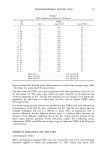
ANTIPERSPIRANT ACTION OF ALUMINUM SALTS 363 METHODS Ten percent aqueous A1C13.6H20 was applied via chambers for 3 hr to the volar forearms of six subjects. Anhidrosis was estimated 24 hr later. The pretreatment procedures were as follows: Defatting.' 2 ml of a solvent was pipetted into a 20ram glass cup held tightly against the skin and the surface vigorously scrubbed for one minute. The fluid was then aspirated and discarded. The solvents were ethanol, acetone, ethyl ether, hexane and physiologic saline control. Hydration.' Plastic cups with a widened rim were glued onto the skin and further secured by adhesive tape. The cups were 25ram in diameter and received 5ml of deionized water through a 5mm aperture with a removable stopper. The water-filled cups remained on the skin for 1 to 3 days. Stripping.' One-inch wide Scotch tape was pressed against the skin and quickly peeled off, four times in succession. This procedure removes the outermost 4 to 5 cell layers of the stratum corneum. RESULTS A tendency toward enhancement was observed with all the procedures in no instance, however, was the effect so great as to achieve statistical significance. The solvents increased the antiperspirant activity by 5% to 10%. The scrubbing procedure itself was slightly promoting. Stripping and hydration increased the anhidrosis by about 10%. COMMENT By delipidization we did not obtain the enhancement reported by Brun (9) and Schmid et al. (11). They removed the surface lipids prior to each of several applications of aluminum chloride, a procedure very different from our 3-hour exposure. In Schmid et al.'s studies the pre-treated sites became irritated, suggesting a toxic effect. We, too, saw mild irritation on some persons, but despite this the promoting effect was slight. Removing a few cell layers of the stratum comeurn may have facilitated entrance of AICl 3 into the orifices, but the increased antiperspirant effect was marginal. One of the most familiar ways of increasing the penetration of drugs and chemicals into the skin is by hydration. This swells the horny layer and reduces diffusional resistance. In the case of a strong electrolyte, this mechanism cannot be invoked. A1Cl 3 does not cross the horny layer barrier. The slight enhancement obtained by hydration might be due to filling the ducts with water which provides the medium for diffusion into the acrosyringium. Maneuvers which cleanse or delipidize the skin surface prior to application of antiperspirants are not likely to produce perceivable benefits in increased activity. Vigorous pre-treatments would certainly be enhancing but only at the cost of irritation, an unacceptable trade-off. STUDY 4. EFFECT OF MASSAGE The effect of massage on the penetration of topically administered drugs is a neglected area of investigation. In the case of antiperspirants we and others have found that

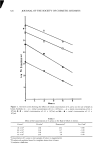
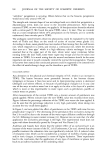
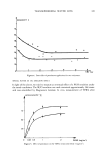
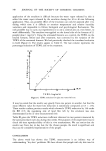
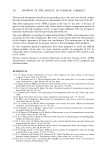
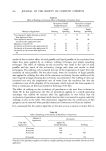
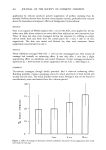
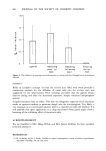
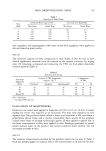
364 JOURNAL OF THE SOCIETY OF COSMETIC CHEMISTS application by roll-ons produces greater suppression of axillary sweating than by aerosols. Roll-on devices have become more popular recently, probably from concern about the hazardous atmospheric effects of halogenated hydrocarbons. METHOD Four 5-cm squares of Webril soaked with 2 ml of 20% A1C13 were applied for 10 min either once daily (three subjects) or twice daily (four subjects) on two successive days. Three of these test sites were massaged during the exposure by rubbing an empty roll-on bottle back and forth over the cotton patch for 1 min, 5 min or 10 min, respectively. The skin was rinsed and blotted dry after each treatment. Sweat suppression was estimated on day 3. RESULTS Sweat inhibition averaged 49% (S.D. _+ 25%) on the unmassaged site. One minute of massage had virtually no enhancing effect. It was only after 5 min that a slight augmenting effect on anhidrosis was noted. However, 10-min massages produced a significant (p 0.05) increase in sweat suppression (67.5%, S.D. + 20%) (Figure 2). COMMENT Ten-minute massages, though hardly practical, had a clear-cut enhancing effect. Rubbing probably creates a pumping action by which aluminum is both forced and sucked into the duct. The result justifies further study. Perhaps a way can be found to use effectively some mechanical force for a shorter period. 100 - 75 - 50- 25 - i I rnin 5 min 10min Figure 2. Effect of massage on aluminum chloride anhidrosis. Occlusive, 10-min applications were made twice daily for two days.
Purchased for the exclusive use of nofirst nolast (unknown)
From: SCC Media Library & Resource Center (library.scconline.org)