j. Soc. Cosmet. Chem., 30, 357-367 (November 1979) Factors influencing the anti-perspirant action of aluminum salts ERHARD H•)LZLE Department of Dermatology, University of Munich, Munich, IVest Germany and ALBERT M. KLIGMAN, Department of Dermatology, Duhring Laboratories, University of Pennsylvania School of Medicine, Philadelphia, PA 19104. Received May 11, 1979. Presented at Annual Scientific Seminar, Society of Cosmetic Chemists, May 3-4, 1979, Dallas, Texas. Synopsis We sought to enhance the ANTIPERSPIRANT ACTIVITY OF ALUMINUM SALTS by various measures: (1) OCCLUSION greatly promoted anhidrosis in comparison to frequent open applications, (2) IONTOPHORETIC APPLICATION of various concentrations of aluminum salts paradoxically failed to inhibit sweating, (3) DELIPIDIZING the skin with fat solvents had no effect, (4) SURFACTANTS at non-irritating concentrations did not enhance the antiperspirant effect, (5) MASSAGING for 10 min during repeated applications greatly intensified the antiperspirant effect, and (6) the antiperspirant effect of aluminum chloride was completely abolished when the subject was SWEATING during the exposure. Brief sweating prior to exposure greatly increased sweat suppression. INTRODUCTION Salts of aluminum are the chief components of proprietary antiperspirants for the control of axillary sweating. With the exception of aluminum chloride which is damaging to skin and clothing, most formulated antiperspirants cause less than 50% sweat suppression even with frequent use. Proprietary antiperspirants are virtually useless for hyperhidrotic persons. However, Shelley & Hurley (1) showed how a dry axilla could be procured using a system which combined three elements, viz., (1) a concentrated (25%) solution of aluminum chloride, (2) application at bedtime when the glands are dormant and (3) occlusive application. Reller (2) demonstrated that axillary sweating was influenced by a surprising variety of factors. It made a difference whether the subjects were sitting or lying. Just crossing the legs caused an immediate decrease. Other important factors were emotions, humidity and temperature. All three stimulated sweating. A broad goal of our research is the development of more effective ways to control axillary sweating. In the work preceding this one (3), we found that aluminum chloride induced anhidrosis by damaging the acrosyringium (the intraepidermal portion of the sweat duct), accompanied by the formation of an obstruction within the duct. The 357

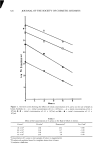
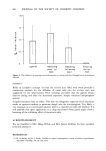
358 JOURNAL OF THE SOCIETY OF COSMETIC CHEMISTS object of the present work was to gain more quantitative information concerning the enhancement of sweat suppression by various modes of application. We used aluminum chloride as a model because it is the most effective of the metallic antiperspirants (1). METHODS The studies were carried out on 97 healthy young adults who served as paid volunteers. The amount of sweat suppression was estimated by taking silicone imprints during thermal sweating as previously described (3). STUDY 1. COMPARISON OF DIFFERENT MODES OF APPLICATION It is impossible to compare efficacy data from different laboratories, since very different methods are used. Moreover, the test formulations have varied greatly. In axillary tests, subject variability is a vexation. Within the same panel it often happens that some persons show no sweat suppression while others achieve a 75% anhidrosis. It is important to gain an understanding of the sources of so much variability. METHODS Effect of occlusion An area of 25 cm 2 on two sites of the lower forearms of eight subjects was spread with 0.1 ml of 20% aqueous AICl 3 ß 6H20 and allowed to dry. One site was then occluded with impermeable plastic film (Saran Wrap ©, Dow Chemical Co., Indianapolis, Ind.), while the other area was merely protected by a perforated plastic cup held in place by adhesive tape. The positive control consisted of 0.2 ml of 20% aluminum chloride solution applied via modified Duhring Chambers as described before (3). The exposures were for 3 hr, after which the sites were rinsed with tap water. The degree of sweat inhibition was assessed 24 hr later because anhidrosis is maximal at that time. Repeated short- term applications Five-cm squares of non-woven cloth (WEBRIL, © Curity) were soaked with 20% aluminum chloride solution and applied to the forearm or back under tape occlusion for 15 min, followed by water rinsing. Six subjects received one application. Another ten received a second 15-rain exposure on the following day. In another nine, two 15-minute applications were made twice daily for two successive days. In two groups of four volunteers each, 15-minute treatments were given twice a day for three and four days respectively. Sweat inhibition was assessed 24 hr after the last exposure. Additionally, three volunteers applied under supervision a liberal amount of 20% aluminum chloride to a designated area on their lower backs twice daily for seven days. The degree of anhidrosis was determined on the fourth and eighth day. Finally, three patches containing 20% aluminum chloride were applied to the lower backs of four subjects. One site was exposed for 15 min twice-daily for three days. The remaining two were sealed under impermeable tape for 3 and 24 hr respectively. Applications were scheduled in such a way that sweat suppression was determined
Purchased for the exclusive use of nofirst nolast (unknown)
From: SCC Media Library & Resource Center (library.scconline.org)