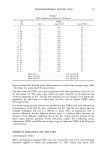
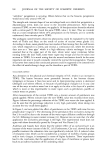
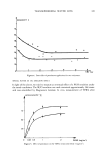
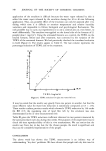
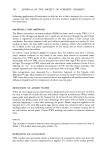
370 JOURNAL OF THE SOCIETY OF COSMETIC CHEMISTS following application of humectants to skin are not a direct measure of in vivo water content, but they represent the presence of more moisture available for hydration of the horny layer. MATERIALS AND METHODS The Meeco electrolytic moisture analyzer (EMA) has been used to study TWL (2,5). A stream of dry nitrogen gas passed over a small area of skin and through the electrolytic sensor is registered as moisture-detectable at the skin surface. Under normal cool conditions, the values obtained with and without anticholinergics are similar (6). As a reading is taken, the detectable moisture reaches a plateau, which when stable for 30 sec is taken as the end point representative of the steady rate at which moisture is evaporating from the surface. In order to study products applied to human skin, the subject must have a normal, intact stratum corneum as any break in the horny layer results in increased water detection (7,8). TWL tends to be a characteristic value for any given individual (5). Individuals with low TWL tend to always be low those with high TWL tend to always be high. The range of TWL values with the electrolytic water analyzer is from 0.10 to 0.80 mg cm -2 hr -• in an ambient environment of 23øC, 40-50% relative humidity. The studies reported here were done on an individual with mid-range TWL values. Skin temperature was measured by a thermistor fastened to the forearm with Micropore © tape. Skin temperature variations accounted for some of the differences in TWL from day to day, but no correction factor was applied as all products tested were influenced equally and the temperature variation was not great. DETECTION OF ADDED WATER There are two simple and accepted ways to temporarily add water to the skin: Immerse the skin in water or occlude the area with plastic wrap for several hours. Water-soaked gauze pads were placed over the forearm for 30, 60 and 90 min after which the excess moisture was blotted away with tissue. Readings were taken with the EMA at varying intervals beginning 1-4 min after removing the gauze. Plastic wrap was applied to the forearm for 1-2 hr with Micropore tape. Excess sweat was removed with a tissue and readings taken 1-4 min following removal of the occlusion. A constant reading for 30 sec was used as an end point. Control TWL readings were taken at adjacent untreated sites. RESULTS The increase in moisture detected after wet gauze hydration and occlusion are seen in Table 1. The added water was gone within I hr. DETECTION OF OCCLUSION TWL studies have previously shown a diminution of evaporative water loss from the skin surface when various compounds are applied. To confirm these studies petrola-

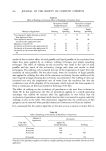
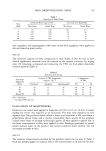
SKIN MOISTURIZATION ASSAY 371 Table I Detection of Added Water Additional Water (mg/cm2/hr) % Increase Over Basal TWL Time (Min) Wet Gauze Plastic Wrap Wet Gauze Plastic Wrap 2 1.31 1.03 344 271 15 0.29 0.40 83 118 30 0.25 0.18 76 55 45 0.20 0.12 53 32 60 0.01 0.07 3 18 tum, aquaphor, and aquaaquaphor (20% water mixed with aquaphor) were applied to skin and tested as stated earlier. RESULTS The occlusive capacity of these compounds is clear (Table 2). But for this to have clinical significance moisture must be retained in the stratum corneum. By wiping away the remaining compound and measuring the TWL we find added detectable moisture present (Table 2). Table II Detection of Occlusion Amount of TWL Suppression % Suppression Time After (mg/cm-2/hr-•) of TWL Application (Min) Petrolatum Aquaphor AquaAquaphor Pet A AA 30 .42 .25 .18 89 68 49 60 .36 .22 .16 84 65 47 90 .33 .16 .15 70 53 50 Wiped Off ND .20 • .11 • ND 62 • 34 • ND = Not Done. • = Increased TWL, see text. EVALUATION OF MOISTURIZERS Products to be tested were applied in duplicate, 0.02 ml to 6.25 Cm 2 of skin. A steady reading for 30 sec was required as an end point. The tests were repeated on four separate days. The products tested include a water in oil emulsion, a 10% urea lotion, a polyethylene glycol lotion and a viscous concentrate. Since several of the products contain either water or strongly hydroscopic agents, all were applied to plastic film in the same concentration as they were applied to skin. Readings generated on plastic would indicate water in the product and would constitute water present, but not necessarily available to skin. RESULTS The moisture enhancement provided by the products tested can be seen in Table 3. Each was initially applied to a plastic film in the concentration to be used on the skin.
Purchased for the exclusive use of nofirst nolast (unknown)
From: SCC Media Library & Resource Center (library.scconline.org)