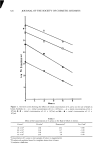
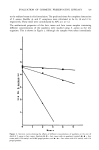
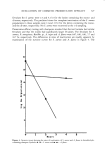
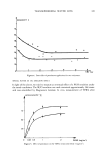
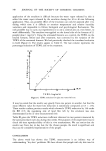
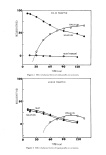
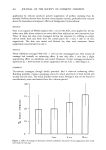
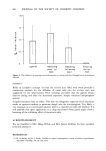
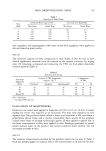
338 JOURNAL OF THE SOCIETY OF COSMETIC CHEMISTS "subclinic" perspiration is occuring. Others believe that on the forearm, perspiration would occur only around 34øC (8) The straight and constant shape of our recordings leads us to think that perspiration, a discontinuous event, does not occur in the recorded phenomenon. After having measured TEWL on two volunteers, we applied a 1% hexopyrronium bromide solution with a cotton pad (7). We found the same TEWL value 1 hr later. Thus we consider that at a room temperature below 24øC perspiration on the forearm, as it is currently understood, does not take part in TEWL. The ambiguity noted between these two phenomena could be explained by the latest work of Thiele and Reay on the mode of action of eccrine sweat glands (11). According to them, sweat glands have two modes of functioning first, the well known one, which responds to a stress, and second, a continuous one, where the secretory duct acts as a "heat pipe" which is a high efficiency calorie exchanger. It can be assumed that at the upper part of the duct, where water vapor condenses before running down the duct walls, some water vapor may escape and thus be taken into account in TEWL. It is worth noting that the second mechanism should be the more important one since it would constantly control the normal thermoregulation. Though it has never been stated, this continuous process could be supposed to be insensitive to the effect of anticholinergic drugs, and be therefore a part of TEWL. OCCLUSION EFFECT Any alteration in the physical and chemical integrity of S.C. results in an increase in TEWL. The barrier becomes more permeable because it has become thinner (stripping), or because it fixes less water and its lipid-protecting system is destroyed (detergent and solvent effects), or because of pathological changes (12). In any case one of the ways to reduce water loss is to apply to the skin a thin layer of a product which is more or less impermeable to water vapor, such as petrolatum, paraffin or certain waxes or greases. After measurements of the normal TEWL rate, a known amount of petrolatum was gently applied. Fifteen minutes later the new TEWL value was recorded three times. Figure 4 shows the percentage reduction of the TEWL rate versus the dose applied. It can be seen that the percentage reduction is very high, particularly when taking into account the very small doses applied. In Figure 5, we have plotted the effect of petrolatum on the TEWL with time for two people (dose 3 mg/cm2). The decreasing of the petrolatum film occlusivity during the first 2 hr could be due to the increase of the water vapor diffusion coefficient through the S.C. following its water content increase (13). However we can note that 3 hr after application the occlusivity percentage is still high. This experimental result does not agree with those theoritically quoted by Cooper and Van Duzee (14). Anderson and Cassidy have shown that the indirect effect of an occlusive layer is an increase of the water content of the S.C. (15). Furthermore, Claret al. showed that after paraffin treatment the relaxation time was significantly reduced (16). A reduced value of relaxation time, which can be considered as a measure of mobility of polar groups and/or ionic charges, is interpreted in terms of higher hydration. These experiments lead to the conclusion that the application of any type of membrane or grease layer leads to an indirect hydration of the underlying tissue.

TRANSEPIDERMAL WATER LOSS 339 OCCLUSIVITY % • 2 3 4 5 6 ! ! ! • Tii•lE ?hour Figure 4. Dose effect of petrolatum application for two volunteers. SPECIAL WATER IN OIL EMULSION EFFECT. In light of the above, we tried to measure an eventual effect of a W/O emulsion under the usual conditions. The W/O emulsion we used contained approximately 50% water and was emulsified by Magnesium lanolate. In vivo, measurement of TEWL after OCCLUSIVITY •o 75 50 25 0 0,25 0,5 I 2 DOSE (rag/era 2) Figure 5. Effect of petrolatum on the TEWL versus time (Dose 3 mg/cm3).
Purchased for the exclusive use of nofirst nolast (unknown)
From: SCC Media Library & Resource Center (library.scconline.org)