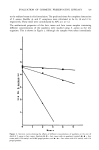
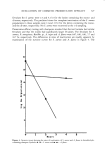
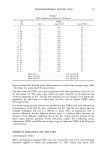
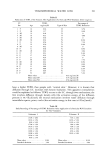
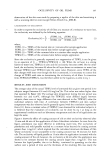
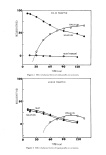
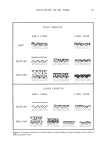
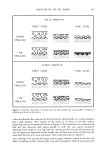
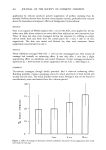
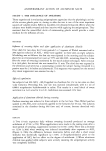
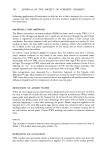
OCCLUSIVITY OF OIL FILMS 353 SOLID PARAFFIN EARLY STAGE FINAL STAGE o_ooo COARSE . ._ ..(J...• ,0: ..• ...,, .:..• EMULS ION "' ::': :'" '" ' ' "" ":' :': i:."'•:.": :."':?"'•"".". ::...:....':.... ..:....'.....:.'...•.. 0 0 0 000 o o 0 o oo0o•ooooo FINE o o o ..' ...• EMULSION ':.'•3:'",:.!!":•:'?:)':i ' ?.•.' :',:') :':.'": :':: :: '-"-'".':: ' 1::': LIQUID PARAFFIN EARLY STAGE FINAL STAGE COARSE EMULSION i 0 0 0 0 0 O0 i i o o o .=, FINE o. o:• • . '.•:...x :' "':" -"'" ' "'" '" : i "'.'5 '"':-": ? :=:5 ( 7.'.:. ':.:..":".".5'.':':.-,.4._ EMULSION .: :":':". ! 7.".' 5.".".-': '.' ::.....- ..... ... Figure 6. Schematic illustration of residual states of solid paraffin and liquid paraffin emulsions of different particle size on skin surface. a firm and flexible film, whereas the film formed by solid paraffin in a coarse emulsion had a high porosity. The changes of the states of oil films on the skin surface respecting time are schematically shown in Figure 6. The formation of a continuous oil film was also observed with liquid paraffin in both fine and coarse emulsions. Although there existed a time lag until the continuous film was formed because the rate of coalescence depended on the droplet size, the final state of the oil films was the same both for fine and coarse emulsions. This is also illustrated in Figure 6. Since rubbing is the general technique used to apply cosmetic creams to the skin, the effect of rubbing on the occlusive effect was also investigated. Table II summarizes the

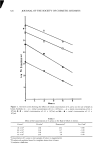
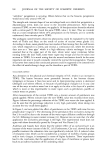
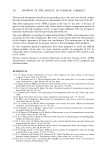
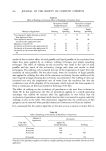
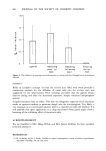
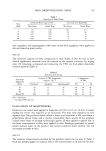
354 JOURNAL OF THE SOCIETY OF COSMETIC CHEMISTS Table II Effect of Rubbing on Occlusive Effect of Emollients in Emulsion Form Occlusivity of Solid Paraffin Emulsion Occlusivity of Liquid Paraffin Emulsion Simple Simple Method of Application Rubbing Spreading Rubbing Spreading Time required to begin showing occlusivity 15 25 15 45 after application (rain) Time required to reach to the maximum -- -- 60 90 occlusivity after application (min) Maximum occlusivity (%) 54 66 18 28 Occlusivity at 60 minutes after application (%) 44 40 18 12 Occlusivity at 90 minutes after application (%) 52 58 10 28 Occlusivity at 120 minutes after application 54 66 5 19 (%) results of the occlusive effect of solid paraffin and liquid paraffin in the emulsion form when they were applied by an ordinary rubbing technique and simple spreading technique. The effect of rubbing on the occlusivity was small in the case of solid paraffin and the trend of the occlusivity change with time was similar in both techniques. The rubbing only increased the rate of the evaporation of water from the emulsion of solid paraffin. On the other hand, when the emulsion of liquid paraffin was applied by rubbing, the value of the maximum occlusivity became smaller and the time required to begin showing the occlusivity was shortened. The rubbing in this case increased not only the evaporation rate of water from the emulsion but also the coalescence rate of the droplets of the emulsion, which reduced the time required to form a continuous oil film and resulted in thinning of the film. The effect of rubbing on the occlusivity of petrolatum in the neat form is shown in Table III. In this experiment, the film of petrolatum applied by a simple spreading technique was rubbed 90 minutes after the application. It was found that the occlusivity of petrolatum decreased with time but that it recovered to a great extent by rubbing, as seen in the table. This observation suggested that the continuous oil film property can be restored when partially destructed continuous oil films are rubbed. It is considered that the surface lipid film on the skin acts as a natural occlusive film to Table III Effect of Rubbing on Occlusivity of Petrolatum in Neat Form Method of • Application Time After • Application • Occlusivity Applied by Simple Spreading Rubbing 30 minutes 89% -- 60 minutes 75% -- 90 minutes 58% 84% 120 minutes -- 72% *The film of the petrolatum applied to the skin by a simple spreading technique was rubbed after 90 min of the application.
Purchased for the exclusive use of nofirst nolast (unknown)
From: SCC Media Library & Resource Center (library.scconline.org)