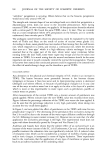
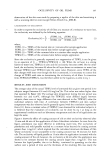
322 JOURNAL OF THE SOCIETY OF COSMETIC CHEMISTS shortened to a few days. The objectives of this study were: (i) to develop a rapid method that provides a quantitative expression of the rate of death of a specific test organism in a particular product (ii) to provide examples of how the method has been used to assess preservative efficacy in creams, lotions, shampoos and hair conditioners and (iii) to propose minimum performance criteria for preservatives in different classes of cosmetic products. EXPERIMENTAL TEST ORGANISMS The test organisms used in this study were taken from the Jergens culture collection and consisted of Staphylococcus aureus (FDA 209 strain), Pseudomonas aeruginosa (PRD 10 strain), Bacillus sp. (isolated from a contaminated cosmetic product), Aspergillis niger and A. flavus. The bacteria were grown on Standard Methods Agar (Baltimore Biological Laboratories, Baltimore, Md.) slants for 24 hr at 37øC, and the molds were grown on Potato Dextrose Agar (PDA, Difco Laboratories, Detroit, Mich.) slants for 7 days (d) at 25øC. The inocula were prepared by transferring growth from the slants to sterile saline and mixing using a Vortex Genie Mixer (Scientific Products, Columbus, Ohio). The percentage of sporulation of the Bacillus sp. was typically 30-50% at 24 hr. TEST SAMPLES The test samples used in this study were proprietary formulations of lab and production samples of face cream, lotions, shampoos and hair conditioners. The bacteriological properties of the face creams were compared using face cream with borate (control), face cream with borate and 0.12% methyl- and 0.08% propyl-paraben, and face cream with borate and 0.2% methyl- and 0.1% propyl-paraben. All percentages are % (wt/vol) unless otherwise specified. The lotions studied contained methyl- and propylparaben and Quaternium-15 (Dowicil © 200 Preservative The Dow Chemical Co., Midland, Mich.). The effect of formulation change on the preservative efficacy of lotion was studied using lotion containing glyceryl dilaurate (standard formulation) and lotion containing glyceryl monolaurate (Lauricidin ©, Med-Chem Laboratories, Okemos, Mich.) substituted for the dilaurate. The shampoos and conditioners were preserved with formaldehyde. TEST PROCEDURE A 0.1-ml amount of test organism suspension was added to 50-ml portions of one to four samples in 100-ml screw-capped bottles. Immediately thereafter, the bottles were shaken vigorously 100 times, and 11 ml were pipetted into 99 ml of Letheen Broth (Difco Laboratories) with 0.01% (vol/vol) Triton X-100 (Sigma Chemical Co.) in milk dilution bottles. This diluent was designated LBT. The bottles were shaken vigorously 50 times, and 1:100 dilutions were made by transferring 1 ml to 99 ml of LBT and shaking 25 times. Then, 0.1 and 1.0 ml amounts of appropriate dilutions were pipetted into duplicate Petri dishes, and pour plates were prepared by adding Tryptic Soy Agar (Difco Laboratories) with 0.5% (vol/vol) tween 80 and 0.07% (vol/vol) lecithin. This plating medium was designated TSALT agar.

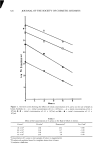
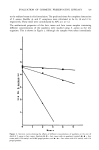
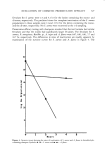
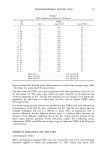
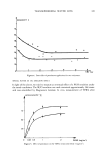
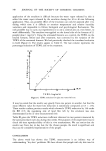
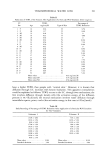
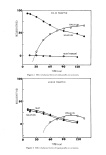
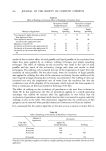
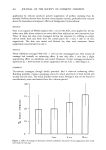
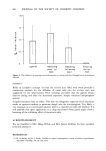
EVALUATION OF COSMETIC PRESERVATIVE EFFICACY 323 This procedure was repeated for additional test organisms, except that PDA was used as the plating medium for molds. The test materials were resampled at various times after inoculation--typically at 2, 4 and 24 hr for bacteria and at 4, 8 and 24 hr for molds. The Petri dishes containing the test bacteria were incubated for 48 hr at 35øC and the Petri dishes containing the test molds were incubated for 7 d at 25øC. Additional samples were taken at 3, 5, or 7 d after inoculation unless the previous aerobic plate count (APC) was 10/ml. The APC determined immediately after inoculation was used as the zero time count. The zero time counts varied from the number of organisms predicted from the APC of the saline suspension of the test organism to none detected, depending on the rate of inactivation of the organism in the test sample. The decimal reduction time (D-value) for each organism in each test sample was calculated by taking the negative reciprocal of the slope of the line obtained by linear regression of the plot of the log number of surviving organisms as a function of the time after inoculation into the test sample. The time predicted for complete destruction of each test organism in a product was calculated by linear estimate of the X-intercept, which was defined as the time required for the number of surviving organisms to decrease to 1/ml (i.e., where the log 1 = 0). The correlation coefficient was calculated to establish how well the data fit the linear regression. All analyses that gave a correlation coefficient that was outside of the 95% confidence limits (i.e., _+ 2 standard deviations), about the running average of this parameter, were rejected. The accuracy of the linear regression method was determined by comparing the times predicted for complete destruction of the test organisms with the actual times observed to find 10/ml on analysis of the samples taken on day 1, 3, 5 or 7. The effect of the concentration of bacteria in the test sample on their rate of inactivation was determined by inoculating different concentrations of S. aureus in saline into separate lotion samples and determining the D-value for each sample. The effect of culture medium on the rate of bacterial inactivation in lotion was determined by comparing the rates of inactivation of S. aureus in lotion and in lotion containing 4% (vol/vol) Brain Heart Infusion (BHI) broth (Difco Laboratories). The D-values were determined for both samples RESULTS The effect of different concentrations of S. aureus in the lotion on the rate of die-off is illustrated in Figure 1. The rate of inactivation of this organism was similar for 1.5 x 10 3 tO 1.8 X 10 6 S. aureus/ml lotion. The initial concentration of S. aureus in each sample, the D-value, the predicted time for complete destruction of the organisms, and the correlation coefficient are given for each concentration of $. aureus used (Table 1). The D-values ranged from 2.04 to 2.86 hr, with a mean value of 2.47 hr. The predicted times for complete destruction of the challenge organisms decreased with decreasing initial microbial load in the test samples. The correlation coefficients ranged from -0.98 to --1.00, and this demonstrates that there was a good fit of the APC at different times with the linear regression. The D-values for S. aureus, Bacillus sp. and P. aeruginosa in face cream were 18, 5.7 and 1.2 hr, respectively. This shows that different organisms have different susceptibilities
Purchased for the exclusive use of nofirst nolast (unknown)
From: SCC Media Library & Resource Center (library.scconline.org)