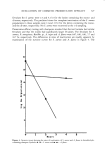
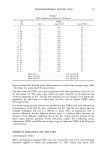
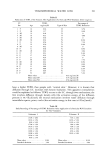
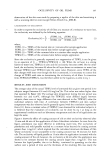
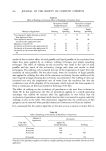
328 JOURNAL OF THE SOCIETY OF COSMETIC CHEMISTS predicted times for complete destruction of the test bacteria were less than 6 hr and less than 80 hr for the molds. No bacteria were recovered at 24 hr and no molds were recovered at 5 d. The addition of BHI broth to lotion decreased the rate of die-off of S. aureus. The D-value of S. aureus in lotion with 4% BHI broth was 7.7 hr, whereas the D-value for this organism in the control lotion was 4.2 hr. There was perfect agreement of the predicted times for complete inactivation of the test organisms in the samples with the observed times to find 10/ml in all samples except for protein-containing shampoos and hair conditioners. Here, low levels (i.e., 500/ml) of bacteria were recovered from the protein-containing formulations at 24 hr when the predicted times for complete destruction of the bacteria were 24 hr. DISCUSSION The linear regression method was used to evaluate preservative efficacy of creams, lotions, shampoos and hair conditioners. The salient feature of the method is that the D-value provides a quantitative expression of the rate of death of a specific test organism in a particular product when using defined test conditions. The rationale for using the D-value is that every organism has a characteristic rate of death when subjected to any lethal treatment (6). The D-value concept is used extensively in thermobacteriology, where it has been useful in computing death rates of microorgan- isms and in establishing processing conditions (7). The use of D-values in preservative efficacy testing enables one to compare the rates of inactivation of several different organisms in one or more cosmetic products. The time required for complete destruction of any size population of a particular organism may be predicted when the rate of death is known for a product. For example, the mean D-value for S. aureus in one type of lotion was 2.5 hr. By use of this D-value, the time for 106 S. aureus/ml to be totally inactivated is given by the product of the log number of organisms/ml times the D-value, or 6 x 2.5 hr = 15 hr. The recovery system used in these studies consisted of LBT diluent and TSALT agar plating medium, as recommended by the CTFA (3). Complete dispersion of the test lotions, creams and shampoos was obtained by vigorously shaking the 1:10 dilution of test material in LBT 100 times. It is believed that mechanical mixing (i.e., by use of a blender or mortar and pestle) may be required for products with higher solids contents than the test materials used here and for products with substantial quantities of materials which are not water soluble. Many of the test organisms were inactivated rapidly in the cosmetic products examined consequently, the test materials were sampled immediately after inoculation in order to minimize the contact time of the organisms with the preservative system under study. An attempt was made to handle all samples in a similar manner (i.e., to standardize the procedure) in order to reduce variation in the method. A 0.1-ml saline suspension inoculum of each test organism was used because it was a convenient amount to add to the 50-ml test samples. The United States Pharmacopeia XIX method specifies that a saline suspension of the test organisms should be introduced into the test material (2), while the CTFA method allows the use of a broth culture or a saline suspension of the test organisms (3).

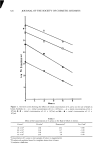
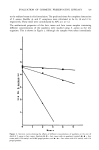
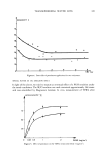
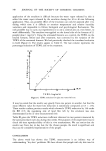
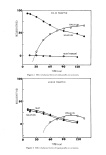
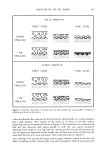
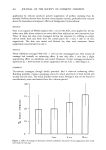
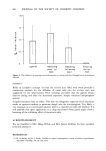
EVALUATION OF COSMETIC PRESERVATIVE EFFICACY 329 The addition of BHI broth to lotion increased the D-value for S. aureus over that observed with lotion containing no broth. It is believed that the broth protected the bacteria, either by inactivating a portion of the preservative, because it is reported that proteins interfere with parabens and quaternary ammonium compounds (8), or by supplying the bacteria with nutrients that enabled them to be more capable of withstanding the stress imposed by the lotion preservative system. Although the amount of BHI broth added here was more than would be used for most broth culture inoculations in preservative testing, this level was chosen to demonstrate the effect of culture media on the performance of the test. It would not be surprising to find that BHI broth and other culture media affect the rate of die-off of other organisms in cosmetic products the use of culture media inocula should therefore be avoided in preservative efficacy testing. It is recommended that only saline suspensions of test organisms be used for cosmetic preservative efficacy testing. The data presented in Figure 1 demonstrated that the rate of inactivation of $. aureus in lotion was independent of the concentration of organisms present because similar D-values were obtained for 0.1-ml inocula which produced initial concentrations of 1.5 ( 10 3 tO 1.8 ( 10 6 S. aureus/ml lotion. This indicates that the concentration of challenge organisms in the inoculum is not critical--at least up to the point at which the preservative system becomes overloaded and its capacity to inactivate the test organisms is exceeded. Although some test procedures require repeated challenges of cosmetic products to determine adequacy of preservation (1,3), the value of repeated challenges is questioned. Discounting the effect of dilution that occurs on repeated challenges, the data presented here suggest that the rate of inactivation of S. aureus would be the same with 10 challenges of 10 5 S. aureus/ml as with one challenge of 10 6 S. aureus/ml. It is recommended that the rationale behind the repeated challenge tests be reconsidered in light of this. It is believed that the most useful information will be obtained if experiments are directed towards finding: 1) the effect of abuse, such as dilution of the product, on preservative efficacy 2) the concentration of organisms required to overwhelm the preservative system or 3) the D-value for test organisms in the product. The linear regression method was useful for determining the effect of formulation changes in the antimicrobial properties of cosmetic products. This was demonstrated by finding different D-values for S. aureus in lotion formulated with glyceryl monolaurate or with glyceryl dilaurate and in face creams containing different concentrations of methyl- and propyl-paraben. The analyses performed to date indicate that there are constant relationships between the D-values obtained for different bacteria in a given product. Thus, it is possible to predict product stability for a number of organisms when one establishes the rates of inactivation of these organisms in relation to that of a standard test organism. For example, tests with lotions containing parabens and Quaternium-15 demonstrated that the mean D-values for S. aureus, P. aeruginosa and Bacillus sp. were 2.5, 0.6 and 0.7 hr, respectively. S. aureus was chosen as the standard test organism for use in lotions because the rate of inactivation was slow enough so that several APC could be determined over a period of hours. In addition, the preservative systems in other lotions were considered adequate for pseudomonads and bacilli when they were found to be satisfactory for S. aureus.
Purchased for the exclusive use of nofirst nolast (unknown)
From: SCC Media Library & Resource Center (library.scconline.org)