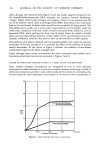
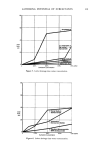
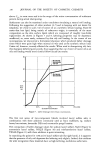
NITROSAMINE ANALYSIS 245 following equation: ppm (in sample) = ppm (found) x 100/al x 10 ml (25/al) (sample wt. in grams) RESULTS AND DISCUSSION In performing trace analysis by HPLC at ppb or ppm levels, the advantage of operating at the wavelength maximum for a compound is only one part of the story. The detection limit is generally defined as that quantity of compound which provides a signal that is discernible above the baseline noise. Most analytical chemists, to assure accurate measurements, accept a 3:1 signal-to-noise ratio for the limit of detection. The type of UV detector used must depend on the response for the compound and the inherent operating characteristics of the detector (background noise level and drift). A fixed wavelength detector employs a mercury vapor lamp which transmits greater than 95% of its energy at 253.7 nm. This results in a very intense source of energy which is spectrophotometrically stable. A variable wavelength detector uses a deuterium lamp which transmits its energy from 190 to 700 nm. A spectrophotometric grating divides this energy into discrete bands to select the analytical wavelength. Therefore the energy from the light source is divided throughout the spectral region and it is not as intense or stable as the mercury emission line at 253.7 nm. To investigate the appropriate UV detector for NDE1A, using this information, the detection limit for NDEIA was determined by comparing the linear response for eight standard aqueous NDEIA solutions using both fixed and variable wavelength detectors. Although the statistical data indicates that the precision and accuracy using both detectors is comparable, the slope of the curve for the fixed wavelength detector shows greater response above 2.5 ng with a 95% confidence limit of _+0.5 ng. For this comparison, both detectors were run at their maximum sensitivity, with the variable wavelength detector set at 234 nm. Because of its greater sensitivity, the 440 fixed wavelength detector was used for the analysis of NDEIA, even though the sensitivity below 2.5 ng was indistinguishable for both detectors. The results for the calibration curves consistently gave good correlation coefficients, and although it is always advantageous to generate a calibration curve daily, the precision and accuracy of HPLC allows the use of a single standard and an intercept of zero to generate the day-to-day working calibration curve. Therefore, when analyzing samples, the NDEIA levels can be calculated using the standard curve or the single standard. ANALYSIS OF ETHANOLAMINES The most logical starting point for studying the contamination of NDE1A in cosmetics is with di- and triethanolamine, since these are cosmetic raw materials and direct precursors for the formation of NDE1A. A statistical analysis of the method developed by Rahn and Mitchell (10) was undertaken to evaluate the applicability of the HPLC method for the routine screening of di- and triethanolamines for 1 ppm levels of NDEIA.

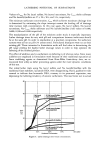
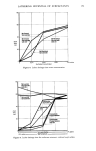
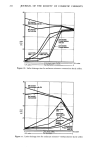
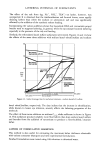
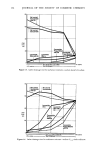
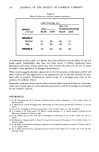
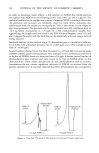
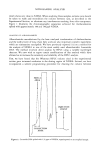
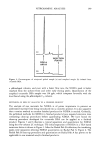
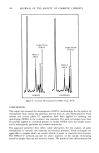
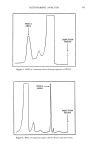
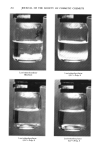
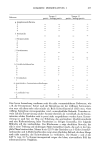
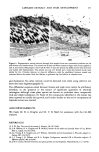
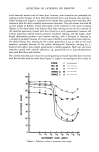
246 JOURNAL OF THE SOCIETY OF COSMETIC CHEMISTS In order to determine matric effects, a 30% solution of NDE1A-free triethanolamine was spiked with NDE1A at the following levels: 0.25, 0.80, 1.0, and 1.2 /.tg/ml. The statistical analysis for the samples and a series of aqueous NDE1A standards shows that the precision and accuracy are extremely close for both series, indicating that interferences from the matrix are not significant. This is also shown by the slopes of the curves generated. The standard and the spiked matrix has a 95% confidence limit of +0.5 ng which corresponds to +70 ppb for a 30% triethanolamine sample, thus approaching the 30 ppb trace level cited in the FDA's Federal Register notice (12), anna also compares favorably with the limit that can be realistically achieved using a thermal energy analyzer. Statistical analysis of the method using 12 observations gave a correlation coefficient (r) of 0.994, with a standard deviation (•) of _+_0.025 ppm and a 95% confidence level limit of _+0.055 ppm. Several batches obtained from the Dow Chemical Co. of fresh 99% commercial grade and 85% cosmetic grade triethanolamine were analyzed by this method and were found to be free of NDE1A down to a detection limit of 50 ppb. Likewise, several batches of diethanolamine were analyzed and were found to be free of NDE1A down to this detection limit. These results indicate that di- and triethanolamine used in cosmetic formulations do not contain significant amounts of NDEIA, as received from the primary manufacturer. It was also observed that 85% triethanolamine has a component NDEIA AREA INJECTION POINT 102 ppb NDE1A NDEIA AREA INJECTION POINT / 153 ppb NDE1A Figure 1. Clean 99% TEA and 85% TEA spiked at 102 ppb and 153 ppb, respectively.
Purchased for the exclusive use of nofirst nolast (unknown)
From: SCC Media Library & Resource Center (library.scconline.org)