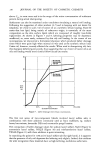
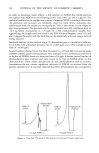
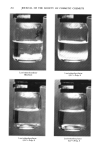
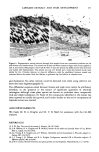
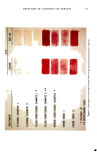
270 JOURNAL OF THE SOCIETY OF COSMETIC CHEMISTS Two types of tests were carried out. In one, one group of animals were treated with extract and another group with the solvent. In the second type of test, extract and solvent were applied onto the two sides of the same animal. In the first test, 9 animals were treated with the extract and another 9 with solvent only. The two groups were formed by allocating to each an equal number of animals from each one of two litters. A consistent difference between treated and control samples was noted when the results were grouped by the sex of the animals. The stage of hair cycle of the start of treatment was not known except that there should be no difference among sibs. At the end of treatment the stage is seen in the histological sections. In the female mice, the samples treated with extract showed abundant hair growth, with hair reaching all through the subcutaneous adipose tissue even where the corresponding solvent-treated animal was in the resting stage (telogen) of the hair growth cycle (1). In male animals, on the other hand, there were no significant histological difference between extract and solvent-treated zones. In the second test, a total of 21 mice were each treated with extract on one side of the back and with solvent on the other side. In this way, possible differences in the hair cycle between mice are avoided, at the theoretical risk of diffusion of any active factor across the midline. In the event, there has been no sign of such diffusion and if there was diffusion it would only bias findings "in the right direction," in that it would reduce the changes of detection of any postulated activity. The results were clearcut however, with the treated side of female animals again showing abundant hair in cases where the solvent-treated side appeared histologically to be, at the conclusion of the experiment, in the resting stage (Fig. 1). Again, such a difference was not seen in male animals. No sign of irritation was observed either on the skin surface or in the histological sections. There was no swelling or redness nor were there any concentrations of white cells characteristic of inflammation. CONCLUSIONS In conclusion the extract appeared to have exerted a localized influence on the progress of the hair development cycle, and favored retention of hair in its fully grown ('anagen') stage. Alternatively, the extract may have shortened the telogen stage and thus brought forward the next hair cycle, but this is unlikely in view of the fact that intermediary stages were not evident. Only further work, involving skin sampling at the start of treatment and at several intervals thereafter could provide a final decision between the two alternative explanations of the effect described. And no comment can be made about any usefulness of the extract in human conditions before detailed tests on volunteers. Related studies were carried out on the chemical composition of the extract and source material. Samples were derivatised with bis-trimethylsilyl (trifluoro) acetamide and analysed by combined gas chromatography-mass spectrometry (2). Positive identifications were made of galactose and fructose, and the fatty acids oleic, palmitic, linolenic and stearic acids as well as the steroIs stigmasterol,/5-sitosterol, campesterol

SAPINDUS EXTRACT AND HAIR DEVELOPMENT 271 :" ': •'" t '"'•'• , ' ',•* •' • ..... "W•:'•-'-• • • •5 • • '• .Z .. .• , •- •- •- . • - • •....... -.•- (•) (B) Figure 1: Representative vertical se•ions through skin samples from two symmetrical poskions on the mid-dorsum of a female mouse. The animal was 26 days old when treatment began wkh extract applied to side A, and solvent (7• propan-2-ol) to side B. After 31 days the animal was killed and the skin sectioned and stained wkh haematoxylin. This animal was one of 4 female and 4 male sibs treated results were s•ilar for the 4 females whereas no clear-cut difference could be established between treated and untreated sides • the males. Scale bar-2• •m e-epidermis hg-ha• follicle at-adipose tissue. and cholesterol. No other steroids could be detected even when using selective ion detection mass fragmentography (3). The differential response noted between female and male mice cannot be attributed, therefore, to the presence in the extract of significant quantities of steroidal oestrogens, although some plant species are known to synthesise these compounds (3,4) and related substances (5). None of the compounds identified in the extract has been reported to modify hair growth, and further studies on the active components of Sapindus extract are merited. ACKNOWLEDGEMENTS We thank Dr. B. A. Knights and Dr. V. B. Math for assistance with the GC-MS analyses. REFERENCES (1) F. W. Dry, The coat of the mouse,J. Genetics, 16, 287 (1926). (2) J. R. Hillman, B. A. Knights and R. McKail, SteroIs of the adult and juvenile forms of ivy, Hedera helix L., Lipids, 10, 542 (1975). (3) J.J. Young, B. A. Knights and J. R. Hillman, Oestradiol and its biosynthesis in Phasedus vulgaris L., Nature, 267, 429 (1977). (4) I. J. Young, j. R. Hillman and B. A. Knights, Endogenous estradiol-17/• in Phasedus vulgaris, Z. Pflanzen-physiol., 90, 45 (1978). (5) J. M. C. Guens, Steroid hormones and plant growth and development. Phytochemistry, 17, ! (1978).
Purchased for the exclusive use of nofirst nolast (unknown)
From: SCC Media Library & Resource Center (library.scconline.org)