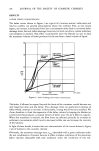
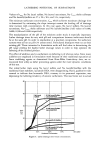
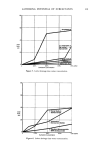
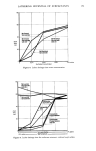
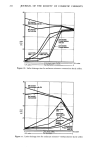
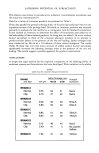
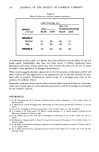
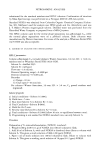
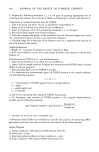
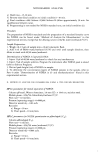
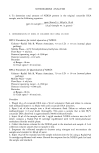
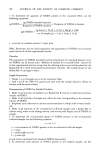
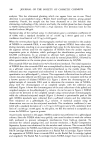
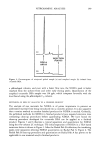
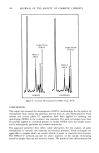
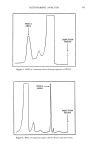
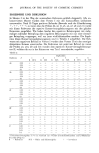
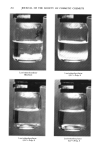
LATHERING POTENTIAL OF SURFACTANTS 229 80 2:1 Amphoteric 2: Na Lauroyl ----,.• Sarcosinate/ drain time, 20 0.3% 0.6% 0.9% Surfactant Concentration Figure 5. Lather drainage time versus concentration. 1.2o/o active 80 drain time, • •NA•oxø inUc•.4 Sulfate Disodium MIPA-Sulfosuccinat• 60 40 20 0 0 0.3% 0.6% 0.9% Surfactant Concentration Figure 6. Lather drainage time versus concentration. 1.2% active

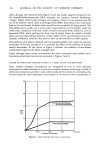
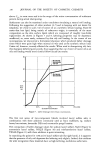
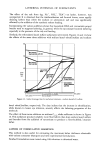
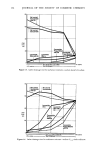
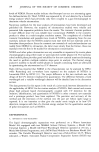
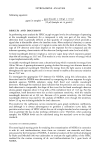
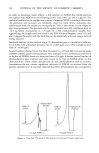
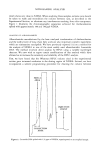
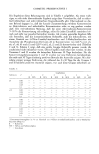
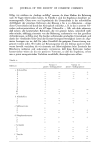
230 JOURNAL OF THE SOCIETY OF COSMETIC CHEMISTS above Cmi n in most cases and is in the range of the active concentration of surfactant present during actual shampooing. Surfactants can also be examined under conditions simulating a natural soil loading. Following the suggestion of other workers (4-7) and in keeping with our desire for simplicity, we chose to add 2 ml of castor oil as a synthetic sebum loading. Shaw (8) states that hair lipid, being mainly of sebaceous origin, is essentially of the same composition as the skin surface lipids which are composed of roughly two-thirds triglycerides. As shown in Figures 7 and 8, lathering properties may be depressed, unaffected, or, more rarely, enhanced by this oily soil loading. In the course of our investigations, we discovered a formulated shampoo which produced lather drainage times which were quite high when mineral oil was used as the synthetic sebum load. Castor oil, however, severely affected the results. When used in shampooing oily hair, this shampoo lathered quite poorly, thus suggesting that our choice of castor oil as an oily soil loading would more closely follow actual use results. 80 Na Lauroyl I Sarcosinate • with Oil .. mm m mm mmmmm mm mmm mmmm m Imm•mmm mmm mm mm mm mm mmm m 60--- •,• • I Na Lauroyl / Sarcosinate 40 drain time, sec. 20 0 0 0.3% 0.6% 0.9% 1.2% active Surfactant Concentration Figure 7. Lather drainage time versus concentration. The first test series of two-component blends involved lauryl sulfate salts in combination with three additives commonly used as foam stabilizers, eg. sodium lauroyl sarcosinate, lauramide DEA and cocoamido propyl betaine. The comparison of lather drainage values for sodium lauryl sulfate, NaLS (Figure 9), ammonium lauryl sulfate, NH4LS (Figure 10) and triethanolamine lauryl sulfate, TEALS (Figure 11)with these additives is quite interesting. In examining the points for 1.0% active lauryl sulfate salt (far right hand), it is apparent that the presence of oily soil depresses the lathering only slightly. Indeed, this confirms the wide recognition these materials have as high-lathering, workhorse surfactants.
Purchased for the exclusive use of nofirst nolast (unknown)
From: SCC Media Library & Resource Center (library.scconline.org)