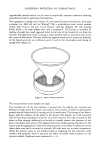
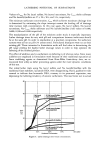
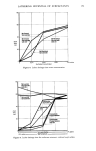
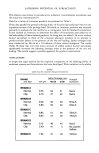
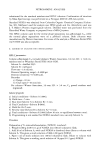
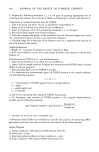
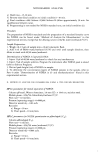
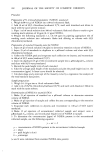
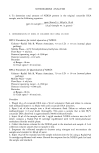
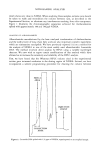
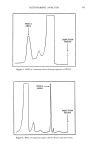
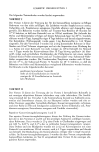
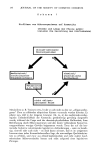
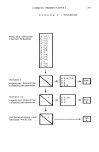
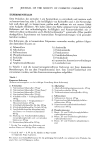
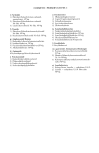
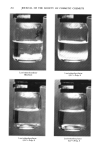
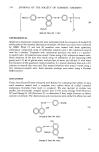
LATHERING POTENTIAL OF SURFACTANTS 225 reproducible method which can be used to empirically examine surfactant lathering properties and aid in optimizing formulations. The equipment is simple and consists of a two speed kitchen food blender, with glass container (ca. 1000 ml) such as Waring © 700, a polyethylene wide mouth powder funnel with 15.0-cm top and 3.5-cm bottom opening (Nalgene PF 150, Catalog #4242-0150), a 20 mesh (840ix) sieve and a stopwatch. The funnel is modified by melting through two small opposed holes in the side of the funnel 8.0 cm from the bottom. Through these holes is strung a small stainless steel or nichrome wire across the center of the funnel. This wire should be approximately 9.0 cm across the diameter of the funnel and acts as a reference point to aid in the observation and timing of sample flow (Figure 1). Figure 1. Lather drainage apparatus. The test procedure is also simple and rapid. Two hundred ml of the test solution is poured into the blender jar, covered and blended on high speed for exactly one minute. This amount of lather is immediately poured into the funnel which is resting on the 20 mesh sieve. The timing of the flow is begun with the addition of the lather to the funnel. The blender jar is held inverted over the funnel and allowed to drain for 15 s, then removed. The time is noted for the lather to flow through sufficiently to be able to visually observe the presence of the wire in the lather from above. This elapsed time from initial pouring of lather into the funnel until the appearance of the wire reference point in the lather is referred to as the lather drain time and is recorded in seconds. All trials were run at room temperature. While the authors chose to use distilled water in preparing the test solutions, other workers will probably wish to examine the effect of added water hardness on the systems studied. Replicates were measured to +_ 2 s.

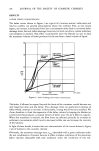
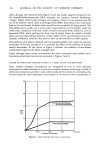
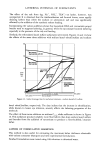
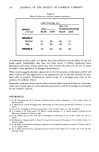
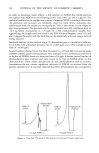
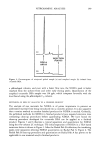
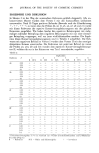
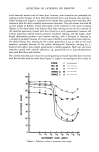
226 JOURNAL OF THE SOCIETY OF COSMETIC CHEMISTS RESULTS LATHER VERSUS CONCENTRATION The lather curves shown in Figure 2 are typical of common anionic surfactants and tend to confirm our general presumptions about this method. First, as one would expect, an increase in surfactant from zero concentration does lead to increased lather drainage times. Second, lather drainage times tend to level out after a certain surfactant concentration is reached. This effect is predictable since the blender jar acts to limit the maximum volume of lather produced in the test from a fixed volume of liquid. 80 sec. Na Lauroyl Sarcosinate '• Na• =mmmm,m.m==mm Olefin I Sulfonate (3) Sulfate 60 drain time, 20 0 0.3% 0.6% 0.9% 1.2% active Surfactant Concentration Figure 2. Lather drainage ti•ne versus concentration. The lather, if allowed to expand beyond the limits of the container, would become not only larger but drier and less dense. Thus drainage times on unrestricted volumes of lather would continue to increase. Unfortunately, mixing would become stratified. We chose, therefore, to limit the expansion of the lather volume by keeping the blender jar covered and this produces a constant density of lather once the jar is filled to capacity. When this maximum is reached, the flow times are affected primarily by increases in surfactant concentration which tend to decrease bubble size and increase the viscosity of the solution. In light of these details, it seems that two characteristics of the curves shown in Figure 2 are of interest to the cosmetic chemist. Obviously, the maximum drainage time, t .... obtainable with a given surfactant under the test conditions is of interest because it offers a relative indication of the maximum lather viscosity obtainable with each surfactant under the conditions of this test.
Purchased for the exclusive use of nofirst nolast (unknown)
From: SCC Media Library & Resource Center (library.scconline.org)