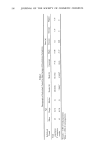
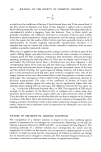
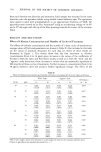
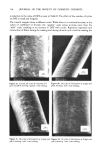
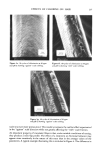
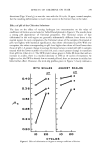
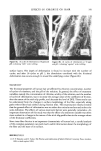
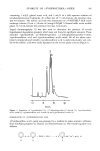
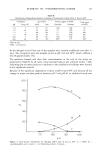
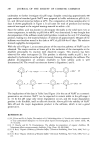
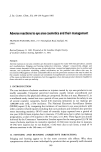
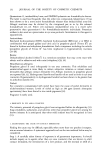
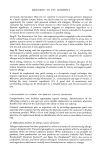
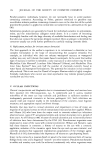
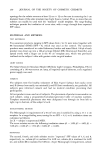
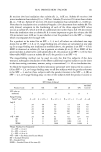
236 JOURNAL OF THE SOCIETY OF COSMETIC CHEMISTS a reduction in the value of DFE as seen in Table II. The effect of the number of cycles on DFE is small and irregular. The control samples show a different trend. While there is a continual increase in the values of coefficient of friction, the "against" scale values increase more than the "with" scale, resulting in an increase in DFE with cycles. Repeated expansion and contraction of fibers during the soaking and drying of each cycle could be making the .., Figure ga. Control, 60 cycles of treatment at 0 ppm and pH 8, showing "against" scale rubbing. Figure 5b. 20 cycles of chlorination at 10 ppm and pH 8, showing "with" scale rubbing. ', ,• 'r•-." • 77, e,. ..% - • ,•"• . '.--,.-.[ . . %, Figure 5c. 60 cycles of chlorination at 10 ppm and Figure 5d. 20 cycles of chlorination at 50 ppm and pH 8, showing "with" scale rubbing. pH 8, showing "with" scale rubbing.

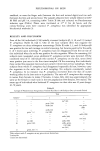
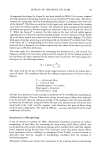
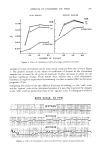
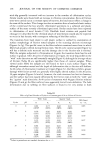
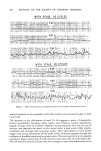
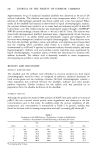
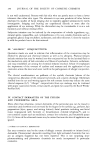
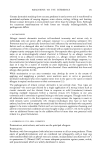
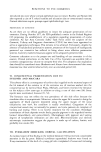
EFFECTS OF CHLORINE ON HAIR 237 Figure 5e. 20 cycles of chlorination at 50 pprn and pH 8, showing "against" scale rubbing. Figure 5g. 60 cycles of chlorination of 50 ppm and pH 8, showing "against" scale rubbing. scale structure more pronounced. This would accentuate the ratchet effect experienced in the "against" scale direction while not greatly affecting the "with" scale friction. An important property of visoelastic fibers is that, under suitable conditions of testing, they produce a stick-slip profile. The effect of a treatment on frictional behavior may appear more sensitively in the nature of this trace than in the average values of the parameters. A typical example illustrating this is included in Figure 4 The difference in
Purchased for the exclusive use of nofirst nolast (unknown)
From: SCC Media Library & Resource Center (library.scconline.org)