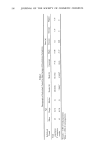
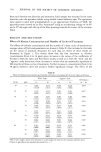
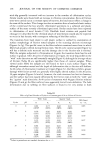
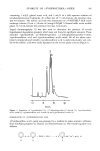
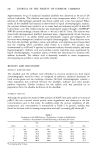
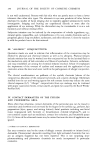
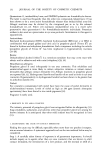
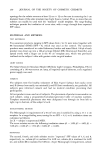
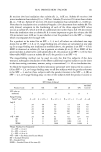
246 JOURNAL OF THE SOCIETY OF COSMETIC CHEMISTS Approximately 4.0 g of analytical standard disulfide was dissolved in 50 ml of 1N sodium hydroxide. The solution was kept at room temperature while 2.75 mL of a solution of 30% hydrogen peroxide was slowly added over a two hour period. When nearly all the disulfide had reacted, as determined by liquid chromatographic analysis, the reaction solution was cooled in an ice water bath and adjusted to pH 5.6 with 6N hydrochloric acid. The chilled solution was immediately passed through a DOWEX © 50W-X8 cation exchange column (30 mm x 40 cm) in the H + form. The solution was eluted with deoxygenated, distilled, deionized water. Approximately 30 mL fractions were collected in 1 oz. amber bottles and immediately capped and refrigerated. All fractions were subsequently analyzed via liquid chromatography. Those fractions most free from the disulfide, pyridine-l-oxide, and sulfonic acid impurities were freeze-dried and the resulting white crystalline solid stored in a freezer. The product was characterized by its IR and V spectra, by elemental analysis, thermal analysis, and mass fragmentography. Sulfonic acid and pyridine-l-oxide impurities were quantitated by liquid chromatography. A product purity of 96.6% was determined by titration with sodium hydroxide. The sulfinic acid is thermally unstable at room temperature, decomposing to pyridine-l-oxide and sulfur dioxide. RESULTS AND DISCUSSION PRODUCT IDENTIFICATION The disulfide and the sulfinate were identified as reaction products by their liquid chromatographic retention times, as compared to authentic analytical standards, on both reverse phase and ion exchange columns. On both chromatographic systems, a clean separation was achieved between the disulfide, sulfinate and other known product impurities. Further evidence for the sulfinic acid was provided by its preparation from the alkaline hydrolysis of the disulfide. STABILITY RESULTS Although the production material (40% solution of NaPT) was quite stable at its natural pH(8.5-10) over a several month period, some degradation was observed at the low concentrations used in this study. Its stability under the various conditions of pH, temperature, and concentration is summarized in Table I. In general, stability was found to decrease with increasing temperature and with increasing pH above pH 7. Table I Hydrolysis of 100 PPM Sodium 2-Pyridinethiol-l-Oxide in 0.02M Buffers % Sodium-2-Pyridinethiol-l-Oxide Remaining at Indicated pH Values Days 5øC 40øC 4.1 7.1 10.0 4.1 7.1 10.0 0 100 100 100 100 100 100 2 98.3 101.9 99.0 109.0 105.0 97.6 7 96.6 99.0 102.9 98.2 98.1 86.9 14 97.4 102.9 99.0 101.8 102.0 83.2 21 100.0 100.0 103.8 100.9 103.0 80.0 31 98.3 100.0 100.0 98.2 98.2 74.7* *% remaining after 28 days.

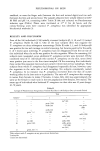
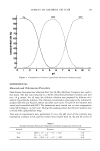
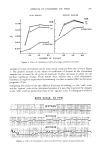
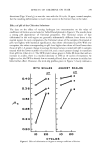
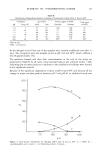
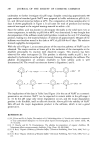
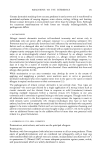
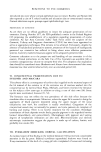
STABILITY OF 2-PYRIDINETHIOL-1-OXIDE 247 Table II Distribution of Degradation Products of Sodium 2-Pyridinethiol-l-Oxide After 31 Days at 40øC Conditions ppm NaPT Products (ppm as NaPT) Total (ppm) pH Temp (øC) Initial Final Disulfide Sulfinate as NaPT 4.1 5 117 115 0.08 ND 115 4.1 40 111 109 2.3 ND 111 7.1 5 105 105 3.7 ND 109 7.1 40 101 99 9.4 ND 108 10.0 5 105 105 ND ND 105 10.0 40 102 66* ND* 37* 103' *after 45 days (ND) = not detected. At the 100 ppm level all but one of the samples were virtually unaffected even after 31 days. The exceptions were the samples stored at pH 10.0 and 40øC, which suffered a loss of approximately 25%. The products formed and their final concentrations at the end of the study are presented in Table II. In all cases a final material balance was achieved within _+ 10%, indicating that no other products in addition to the disulfide and sulfinate were formed in any significant amount. Because of the significant degradation evident at pH 10 and 40øC and because of the change in major reaction product between pH 7 and pH 10, an additional study was qoo 80 60 40 B 20 ! 7, 0 8.0 g.O 10.0 pH Figure 2. Final product distribution for 500 ppm NaPT after 30 days at 40øC. A = NaPT, B = 2-pyridinesulfinic acid-l-oxide, C = 2,2'-dithiobis-pyridine-l,l'-dioxide.
Purchased for the exclusive use of nofirst nolast (unknown)
From: SCC Media Library & Resource Center (library.scconline.org)