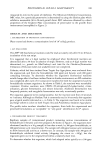
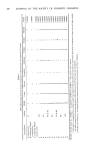
200 JOURNAL OF THE SOCIETY OF COSMETIC CHEMISTS + + ++ •, + + ++ •,

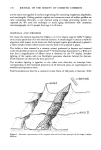
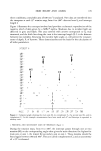
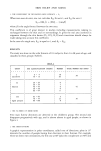
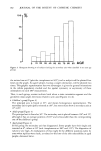
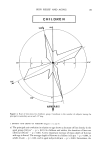
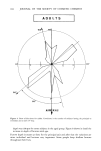
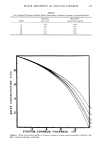
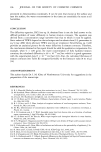
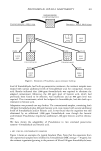
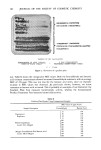
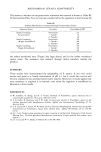
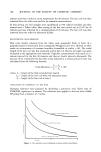
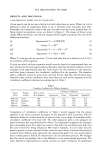
PSEUDOMONAS CEPACIA ADAPTABILITY 201 UNPRESERVED (CONTAMINATED) Formaldehyde Addition Benzoic Acid Addition ppm • (Re sistant• (Resistan%PLUS PLUS• Figure 1. Illustration of Pseudomonas cepacia resistance build-up. level of formaldehyde, had built up preservative resistance, the resistant samples were treated with various additional levels of formaldehyde and, for comparison, benzoic acid. Results indicated that 1,000 ppm formaldehyde was required to eliminate the adapted contaminant. Moreover, the 400 ppm level of benzoic acid, which had previously been found to be effective, was insufficient and an 800 ppm level was required. The contaminants, which had adapted to formaldehyde, had also built up a resistance to benzoic acid. Adaptation was pursued one step further. The contaminated samples, containing both 100 ppm formaldehyde plus 400 ppm benzoic acid, were treated with several additional levels of formaldehyde and/or benzoic acid. It was found that the organism was still eliminated by an additional 1,000 ppm formaldehyde even though the benzoic acid-resistant Pseudomonas required an additional 1,200 ppm benzoic acid for elimina- tion. We have shown the adaptability of Pseudomonas to two unrelated preservative systems--formaldehyde and benzoic acid. 4. MIC VALUES--CONTAMINATED SAMPLES Figure 2 shows an example of a typical Gradient Plate. Note that the organisms from the unpreserved samples were inhibited by formaldehyde (MIC average = 30 ppm), but the resistant organisms (growing in the presence of 50 and 100 ppm formaldehyde) were
Purchased for the exclusive use of nofirst nolast (unknown)
From: SCC Media Library & Resource Center (library.scconline.org)