j. Soc. Cosmet. Chem., 35, 133-145 (May/June 1984) Cosmetic therapy for the elderly JEAN ANN GRAHAM and ALBERT M. KLIGMAN, Department of Dermatology, University of Pennsylvania School of Medicine, Philadelphia, PA 19104. Received November 14, 1983. Synopsis The beneficial effects of cosmetics on self perception were evaluated in elderly females. Sixteen elderly females of high and sixteen of low attractiveness were allocated to one of two treatment groups: a) a passive make-over and b) a make-over training session in which products were supplied for later self-application. A control group of eight (8) subjects underwent a similar session except that a "cosmetic color preference" task replaced the make-over. Effects on dimensions of self perception and subsequent cosmetic care were assessed by comparing self ratings taken before and after the make-overs. Make-overs had short-term positive effects on appearance, socializing, feelings, self-image, outlook, and attitude. Self perception improved one month after the make-over and cosmetic care increased. The low attractiveness group improved more than the high in regard to self perception (short- and long- term) and cosmetic care. The type of make-over did not appreciably influence self perception but did affect subsequent cosmetic care, more for the training than the passive make-over group. The implications are that make-overs would have a useful place in therapeutic programs to improve the psychological and social well-being of elderly and hospitalized persons. INTRODUCTION The "psychology of cosmetics" is a new field concerned with quantifying the beneficial effects of cosmetic practices. The area has been reviewed extensively by Graham and Jouhar (1). The central theme of investigations in this field is that the physically attractive enjoy many social benefits and that the unhandsome are handicapped in their societal inter- actions (2). Early research by Graham and Jouhar has demonstrated that cosmetics significantly improve "others" perceptions (3, 4). This was anticipated from the "what is beautiful is good" stereotype whereby people assume that the attractive possess other favorable characteristics. Individuals were perceived to have better personalities when they used cosmetics. It was also found that perceived attractiveness of use of cosmetics varied with social situation and depended on whether males or females were making the assessment (5). 133

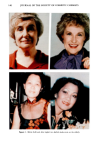
134 JOURNAL OF THE SOCIETY OF COSMETIC CHEMISTS Regarding the influence of cosmetics on self perception, psychological benefits were reported by those who use facial make-up (6). It has been shown that physical attractiveness correlates with positive self perception (7, 8). Since cosmetics improve attractiveness (3), their use should engender enhanced self perception. The work of Graham and Jouhar (6) indeed supports this judgment. Since the 1950s in Great Britain, cosmetic treatments by trained volunteers have been used as adjunctive therapy. The British Red Cross administers a program which provides hair and nail care, massage and cosmetics for the sick, the elderly, and the depressed. Individuals receiving these cosmetic attentions feel better and report being boosted psychologically. The Red Cross program has been strengthened by the knowledge derived from controlled studies of the favorable influences of cosmetics on mental and physical health (9). The Red Cross program has been eminently successful and the services are being expanded (10, 11). With this as background, we thought it likely that individuals would rate themselves more favorably after a dramatic cosmetic intervention, namely the professional make- over. Make-overs are designed to produce immediate enhancement of facial appearance. Skill, training, and artistry are required. In this study, one professional performed all the make-overs. The procedure entails a sequence starting with cleansers, toners and mois- turizers, tinted facial foundation, blusher on cheeks, face powder, and eyebrow pencil then decorative embellishments are applied generally in the following order: colored eye shadow, eye liner, mascara, and finally lip pencil and lipstick. A complete make-over may also include hair care, such as shampooing, coloring, cutting, and restyling. We did not undertake hair care in this study. Graham and Kligman (12) found that physically attractive and unattractive elderly females perceived themselves differently. The former viewed themselves as healthier and had a more positive outlook on life. They estimated that they were more optimistic, less depressed, and better adjusted. They,were also more satisfied with their lot in life, and were more involved and more realistic. The purpose of the current study was to obtain objective data in support of the claims being made for the efficacy of make-overs, in physically attractive and unattractive elderly women. We also evaluated whether the type of make-over might influence the outcome. It seemed likely that additional benefits might accrue if make-over training was included to permit continued cosmetic care at home. HYPOTHESES H•: That make-overs of elderly women would have beneficial effects on self-perceived psychological well being and subsequent cosmetic care. H2: That physically attractive and unattractive elderly women might differ in the benefits obtained. H3: That make-over training might produce more beneficial effects than a passive make-over.
Purchased for the exclusive use of nofirst nolast (unknown)
From: SCC Media Library & Resource Center (library.scconline.org)