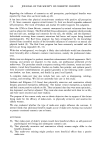
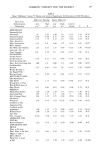
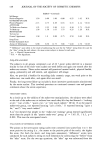
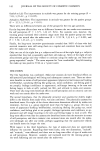
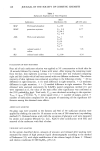
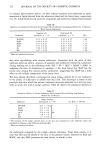
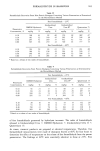
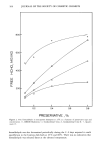
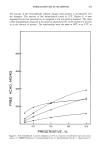
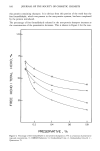
152 JOURNAL OF THE SOCIETY OF COSMETIC CHEMISTS to evaluate lipid removal ability, we have selected squalene and cholesterol as repre- sentatives of lipids derived from the sebaceous gland and the horny layer, respectively (14,15). Table III shows the amounts of squalene and cholesterol released from forearm Table III Squalene and Cholesterol Released From Forearm Skin Following Cup-Shaking Method for 10 Minutes With Various Surfactants Squalene (A) Cholesterol (B) Surfactant (nmol/cm 2, n = 5) (nmol/cm 2, n -- 5) B/A WATER 0.15 --- 0.15 a 0.16 _+ 0.17 1.06 MAP 0.30 -+ 0.10 0.35 --- 0.15 1.17 SOAP 0.31 --- 0.27 0.47 --- 0.25 1.52 AGS 0.51 - 0.25 0.69 -+ 0.38 1.35 ES 0.50 - 0.25 0.84 _+ 0.05 1.68 SLS 0.67 -+ 0.26 0.99 - 0.23 1.48 Mean and standard deviation. skin after cup-shaking with various surfactants. Consistent with the order of skin tightness-inducing ability, amounts of squalene and cholesterol released by surfactants during washing are in the following order: SLS ES AGS SOAP MAP. In analyzing the ratio of cholesterol to squalene, it has been found that MAP has the lowest ratio among five typical anionic surfactants, suggesting that MAP has a mild effect on the cellular components of the horny layer. We have already described a technique for using indigo carmine for in vivo evaluation of the ability of surfactants to adsorb onto skin (10). This technique is based on ,the principle that skin which has anionic surfactant molecules adsorbed to it will not stain with an acidic dye such as indigo carmine. Table IV depicts the adsorptive abilities of Table IV Adsorptive Ability of Various Surfactants Onto Forearm Skin Following Cup-Shaking Method for 10 Minutes Indigo Carmine Surfactant Staining (E, n -- 8) • (A-B)/A X 100 (%) WATER 15.4 -+ 3.0 (A) b 0 15.5 - 3.6] 0 SOAP 13.5 -+ 4.9 12.3 AGS 12.0 - 4.0 (B) 22.1 ES 5.8
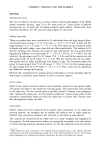
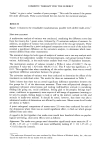
MAP -+ 1.4 62.3 SLS 2.7 - 0.9 82.5 a The intensity of the indigo carmine stain on the skin was evaluated by color difference meter and calculated by Hunter's color difference formula (AE). b Mean and standard deviation. the surfactants evaluated by the indigo carmine technique. From these results, it is clear that SLS and ES adsorb to the skin to the greatest extent, followed by AGS and SOAP, and that MAP possesses the least ability to adsorb to skin.

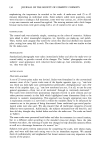
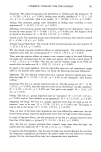
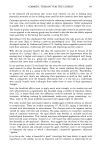
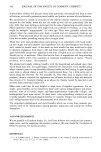
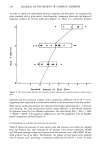
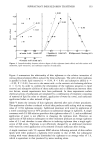
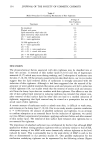
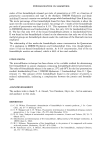
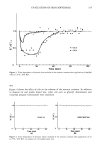
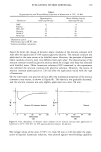
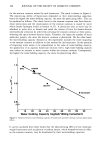
SURFACTANT INDUCED SKIN TIGHTNESS 153 +0.4. •0.2 -0.2 -0.4 o ß oe r =0.25 ../' '••r 0.21 Oß Oß 0 ß I I i I r= 0.84 i I / 0 ,I II O •/•ß ß 0.94 o 2oo o 0:5 i I ß Amino Acids (nmol/cm =) oSqualene & (nmol/cm =) ß Cholesterol o lb 2b oUrocanic Acid ( n mol/cm 2) =- . ß Indigocarmin Staining (A E) Figure 4. Interrelationship between relative degree of skin tightness (main effect) and skin amino acid extraction, lipid extraction, and surfactant sorption of surfactants. Figure 4 summarizes the relationship of skin tightness to the relative intensities of various physicochemical effects induced by these surfactants. The order of skin tightness is parallel to both lipid removal (r = 0.94, P 0.01) and adsorptive ability (r = -0.99, P 0.01), but not to the amino acid- or the urocanic acid-releasing abilities (r = 0.21). In order to confirm the relationship of the tightness sensation to lipid removal and adsorptive abilities of these surfactants and to differentiate between these two factors, several experiments have been performed. In these experiments surface chemical actions of surfactants are simulated by a combination of treatment consisting of removal of lipid by ether or ethanol, application of water by towel, and surfactant application before or after removal of lipid. Table V shows the intensity of skin tightness observed after each of these procedures. The application of ether or ethanol to facial skin produces mild scaling with an average value of 1.0 for tightness intensity. Additional treatment with water by application of a towel containing water at 40øC produces no substantial change in tightness. A single treatment with 5 % SLS solution provides a skin tightness value of 1.3, and an additional application of water is not effective in changing the tightness level. However, an application of SLS solution subsequent to ether treatment produces an average tightness value of 2.3 and therefore is more effective in inducing tightness than a single appli- cation of SLS alone. Tightness is not effectively changed by an additional treatment with water by towel application or by removal of excess surfactant after rinsing. A single treatment with 5% aqueous MAP solution following removal of skin surface lipids with ether produced a tightness level similar to that of SLS, but subsequent rinsing with water dramatically diminished the tightness to an average value of 1.4, which is equivalent to that produced by water washing alone.
Purchased for the exclusive use of nofirst nolast (unknown)
From: SCC Media Library & Resource Center (library.scconline.org)