COSMETIC THERAPY FOR THE ELDERLY 145 (2) E. Berscheid and E. Walster, "Physical attractiveness," in Advances in Experimental Social Psychology, L. Berkowitz, Ed. (Academic Press, New York, 1974), Vol. 7, pp 158-216. (3) J. A. Graham and A. J. Jouhar, The effects of cosmetics on person perception, Int. J. Cos. Sci., 3, 197-208 (1981a). (4) J. A. Graham and A. J. Jouhar, The psychology of cosmetics: How others see us, CTFA Cos. J., 13, 25-29 (1981b). (5) J. A. Graham and A. F. Furnham, Sexual differences in attractiveness ratings of day/night cosmetic use, Cos. Technol., 3, 36-42 (1981). (6) J. A. Graham and A. J. Jouhar, The effects of cosmetics on self perception: How we see ourselves. Work in progress, The University of Pennsylvania (1984). (7) G. R. Kaats and K. E. Davis, The dynamics of sexual behaviour of college students, J. Marriage Fam., 32, 390-399 (1970). (8) E. W. Mathes and A. Kahn, Physical attractiveness, happiness, neuroticism and self esteem, J. Psychol., 90, 27-30 (1975). (9) J. A. Graham, The psychology of cosmetic care. Presented at British Red Coss Society Beauty Care Organizers' Annual Conference. Guildford, England, March 1983. Also due to appear in British Red Cross Society Training Manual, Notes on Beauty Care in Hospital. (10) Red Cross Report, Basic skin care and cosmesis for the chronically ill, the mentally disturbed and the aged infirm. A service of the British Red Cross Society, J. Dermatol. Surg. Oncol., 7, 455-459 (1981). (11) E. MacDonald, The hospital beauty scheme, J, Soc, Cos. Chem., 10, 246-257 (1959). (12) J. A. Graham and A.M. Kligman, Physical attractiveness, cosmetic use and self perception in the elderly. Unpublished manuscript, The University of Pennsylvania, submitted for publication (1984). (13) G. W. Shedecor and W. G. Cochran, Statistical Methods, 6th ed. (Iowa State University Press, 1967). (14) R. Kastenbaum, On the significance of the skin in human aging and survival: A few psychobiological observations. Columbia Point (Dorchester) Campus, University of Massachusetts (1974). (15) J. A. Graham and A. J. Jouhar, The importance of cosmetics in the psychology of appearance, Int. J. Dermatol., 22, 153-156 (1983). (16) C. L. Connor, R. P. Walsh, D. K. Litzelman, and M. G. Alvarez, Evaluation of job applicants: The effects of age versus success, J. Gerontol., 33, 246-252 (1978). (17) J. F. Cross and J. Cross, Age, sex, race and the perception of facial beauty, Devptal. Psychol., 5, 439-443 (1971). (18) J. F. Cross, J. Cross, and J. Daly, Sex, race, age and beauty as factors in recognition. Percept. Psychophys., 10, 393-396 (1971). (19) G. R. Adams and T. L. Huston, Social perception of middle-aged persons varying in physical at- tractiveness. Devptal. Psychol., 11, 657-658 (1975). (20) D. F. Johnson and J. B. Pittenger, Attribution, the attractiveness stereotype and the elderly. In press (1984). (21) A. Farina, E. Fischer, S. Sherman, W. Smith, T. Groh, and P. Mermin, Physical attractiveness and mental illness, J. Abn. Psychol., 86, 510-517 (1977). (22) M. Pertschuk, "Appearance in Psychiatric Disorder," in The Psychology of Cosmetic Treatments, J. A. Graham and A.M. Kligman, Eds. (Praeger, New York, in press, 1984).

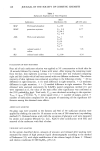
j. Soc. Cosmet. Chem., 35, 147-156 (May/June 1984) The induction of skin tightness by surfactants MICHIO KAWAI and GENJI IMOKAWA, Kao Tochigi Research Laboratories, 2606 Akabane, Ichikaimachi Hagagun Tochigi 321-34, Japan. Received September 8, 1983. Synopsis We have examined the relationship between surfactant structure and the sensation of tightness which ordinarily occurs on facial skin a few minutes after face washing. Most anionic surfactants cause various degrees of skin tightness, the order being, TEA-lauryl phosphate potassium myristate = TEA-cocoyl glutamate sodium laureth-2 sulfate sodium lauryl sulfate. The physicochemical characteristics of these surfactants, e.g., the ability to remove skin surface lipids, the ability to release amino acids and urocanic acid from the horny layers, and adsorption onto the skin were examined to learn about the causative factors responsible for the induction of skin tightness. Among these factors, the degree of tightness was shown to be related to both the lipid removal and the adsorption abilities of the surfactant. However, we conclude that residual surfactant present after removal of skin surface lipid is primarily responsible for inducing the tightness sensation. INTRODUCTION There have been a number of reports describing the cutaneous effects, including skin irritation (1,2,3) and skin roughness (4,5,6,7), of surfactants. However, little is known about other skin effects, e.g., those associated with the sensation of tightness. It is well known that facial skin is more susceptible to tightness than are other skin areas. Among various skin sensations, tightness frequently arises from washing with a surfactant. There is no available data on the cause of surfactant-induced skin tightness. The ob- jective of this paper is to describe the relationship between surfactant structure and the degree of tightness occuring on facial skin and to further analyze physicochemical factors associated with this action. MATERIALS AND METHODS SURFACTANTS Sodium lauryl sulfate (SLS), sodium laureth-2 sulfate (ES), potassium myristate (SOAP), TEA-cocoyl glutamate (AGS) and TEA-lauryl phosphate (MAP) are identical with those reported previously except for their salt type (8,9,10). Table I summarizes the analytical data on the surfactants employed in this study. 147
Purchased for the exclusive use of nofirst nolast (unknown)
From: SCC Media Library & Resource Center (library.scconline.org)