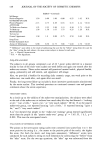
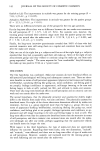
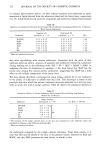
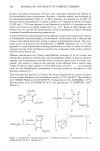
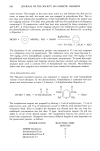
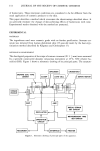
160 JOURNAL OF THE SOCIETY OF COSMETIC CHEMISTS center section. The sample in the outer moat acted as a seal between the dish and its cover to insure the seal, the entire unit was wrapped in polyethylene film. Two to four days were allowed for equilibration of free formaldehyde between the sample and the trapping solution. Two days were generally sufficient for equilibration of shampoos containing 0.1% preservative, while four days were required for those containing 0.4 and 0.8%. A 20 •1 aliquot of the trapping solution was withdrawn for analysis using the phenylhydrazine colorimetric procedure of Tanenbaum and Bricker (6), according to Equation 1. HCHO + • NHNH2' HCI + NaOH K3[Fe(CN)6] ) =N-N=CH2 + 2 H20 + NaC1 The absorbance of the condensation product was measured at 513 nm and compared to a calibration curve for quantitation. The calibration curve was linear between 0- 350 mg/kg of free formaldehyde samples containing more than 350 mg/kg of free formaldehyde were diluted prior to the colorimetric measurement. To insure that equil- ibration between sample and trapping solution had been reached, each shampoo was analyzed daily until a constant level of formaldehyde was obtained. Microdiffusion dishes that were sampled were discarded and never resealed for subsequent analysis. TOTAL FORMALDEHYDE ASSAY The Hantzsch (lutidine) reaction was employed to measure the total formaldehyde content of each shampoo. In this determination, formaldehyde is condensed with am- monia and acetylacetone to form 3,5-diacetyl-l,4-dihydrolutidine (Equation 2). O o o I1 II CH3C HCHO + NH 3 + 2CH3CCH2CCH 3 H3C O CCH 3 CH 3 + 3H20 The acetylacetone reagent was prepared by diluting 1.0 ml of acetylacetone, 1.5 ml of glacial acetic acid, and 75 g of ammonium acetate to 500 ml with distilled water in a volumetric flask. Prior to analysis the shampoo was diluted such that the total for- maldehyde concentration was less than 15 ppm. Acetylacetone reagent (10 ml) was added to 10 ml of the diluted sample. The condensation reaction was carried out at steam bath temperature. Shampoos were heated different lengths of time dependent on the preservative present, as follows: PRESERVATIVE REACTION TIME, MINUTES DMDM Hydantoin 15 Imidazolidinyl Urea 5 Imidazolidinyl Urea II 5 Quaternium 15 3

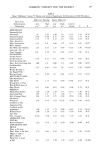
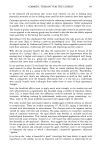
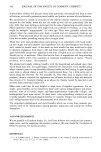
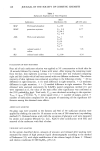
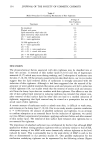
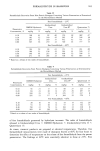
FORMALDEHYDE IN SHAMPOOS 161 Following condensation, the samples were cooled by immersion in an ice bath for one minute and diluted to 25 ml with distilled water. The diluted samples were passed through a 0.45 p, filter to remove any haze which may have formed during the con- densation step. The absorbance at 413 nm of the diacetyldihydrolutidine was measured and compared to a calibration curve. DISCUSSION ANALYTICAL Shampoos containing no protein and no preservative were analyzed for free formalde- hyde. These were found to contain 5 ppm of free formaldehyde. Overall this amount was two to three decades smaller than the concentration found in the shampoos inves- tigated and hence it was ignored because it would not distort the results of the study. ß • was ........... the ........ ch (lutidine) reaction is dependent on the type of formal- dehyde-releasing preservative and the time of reaction at steam bath temperatures. It was experimentally determined in aqueous solutions that DMDM Hydantoin, Imid- azolidinyl Urea, and Quaternium 15 required 15, 5, and 3 minutes, respectively, of reaction time to release all of their combined formaldehyde. The time required in anionic shampoos was not measured. However, it was determined that the combined formaldehyde contained in these preservatives was completely released using these reac- tion times for shampoo systems. This was true for all concentrations of each preser- vative examined (Table II). Table II Total Formaldehyde Liberated From Various Preservatives as Determined by the Hantzsch Reaction moles Formaldehyde/moles Preservative Reaction Time, Preservative Minutes Found Theory DMDM Hydantoin 15 2.0 2.0 Quaternium 15 3 6.0 6.0 Imidazolidinyl Urea 5 2.0 2.0 Imidazolidinyl Urea II 5 2.1 4.0 15 2.4 30 3.2 6O 3.3 On the other hand, Imidazolidinyl Urea II released 2.1 and 2.4 moles of its total combined formaldehyde (theory: 4.0 moles, Table II) at 5 and 15 minutes of reaction time. It never liberated its full complement of four moles, even at 60 minutes. Since the two Imidazolidinyl Ureas are similar in structure, it was decided, for comparative purposes, to utilize the total formaldehyde determined by heating Imidazolidinyl Urea II for 5 minutes. Therefore, all calculations, in this case, were based on a release of 2.0 moles of formaldehyde. The total formaldehyde content of shampoos containing formalin was calculated using the formaldehyde content of formalin. The total formaldehyde content of shampoos containing preservatives was calculated using combined formaldehyde values of 17.5%,
Purchased for the exclusive use of nofirst nolast (unknown)
From: SCC Media Library & Resource Center (library.scconline.org)