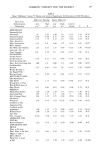
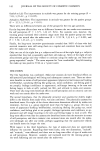
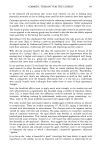
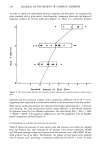
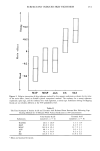
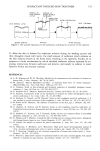
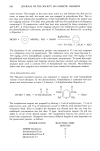
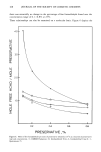
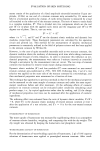
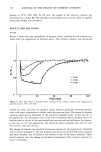
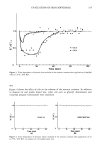
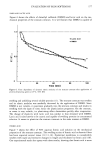
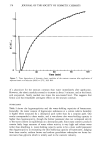
EVALUATION OF SKIN SOFTENING 177 DMSO AND LACTIC ACID Figure 6 shows the effects of dimethyl sulfoxide (DMSO) and lactic acid on the me- chanical properties of the stratum corneum. It is well known that DMSO is capable of 1.0 0.5 Lactic Acid DMSO o o i i ! i ! i i i i i i i i i i i i i i i 0 30 60 90 120 Time (min) Figure 6. Time dependence of dynamic elastic modulus of the stratum corneum after application of protein-denaturing agents at 25øC, 50% RH. swelling and unfolding several soluble proteins (11). The stratum corneum was swollen and its elastic modulus was markedly decreased by the application of DMSO. Since DMSO is not volatile, it penetrates gradually into the stratum corneum and results in swelling with the lapse of time hence the plasticization progresses. On the contrary, as water is very volatile, its plasticizing effect diminishes quickly after evaporation. The change of elasticity with lactic acid was similar to that obtained with DMSO. Lactic acid is also known to be caustic and capable of swelling proteins in concentrated solution. It seems to plasticize the stratum corneum in the same manner as DMSO. FORMIC ACID Figure 7 shows the effect of 90% aqueous formic acid solution on the mechanical properties of the stratum corneum. The swelling action of formic acid on keratin fibers has been reported several times (12, 13,14). Epidermal membrane is considerably swollen with rapid and extensive changes in length and thickness by formic acid (10). Our experimental result also agrees with these results, showing that formic acid is more

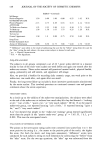
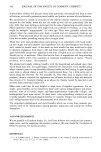
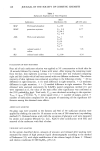
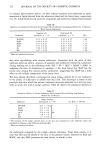
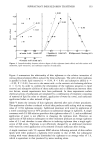
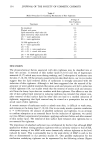
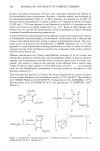
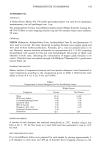
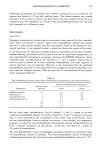
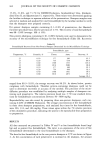
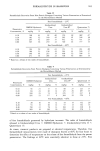
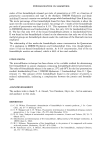
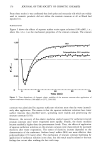
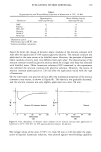
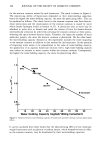
178 JOURNAL OF THE SOCIETY OF COSMETIC CHEMISTS 1.5 1.0 0.5 ! 0 30 60 90 120 Time (min) Figure 7. Time dependence of dynamic elastic modulus of the stratum corneum after application of aqueous formic acid solution (90%) at 25øC, 50% RH. of a plasticizer for the stratum corneum than water immediately after application. However, the elastic modulus started to increase in about 5 minutes, and as the formic acid evaporated, finally reached two times the non-treated level. This suggests that formic acid has remarkable astringent effects on the stratum corneum. HUMECTANTS Table I shows the hygroscopicities and the water-holding capacities of humectants. Generally, the water content of hygroscopic substances at a certain relative humidity is higher when measured by a desorption path rather than by a sorption path. Our results corresponded to these results, and it was shown that water-holding capacity is higher than hygroscopicity, though the former parameter does not correspond strictly to the water content in equilibrium on a desorption path. Since most cosmetic products contain fairly large amounts of water whose activity is very high and release water rather than absorbing it, water-holding capacity seems to be a more useful parameter than hygroscopicity in estimating the skin hydrating capacity of humectants. Judging from these results, sodium lactate and sodium pyrrolidone carboxylate are better hu- mectants than glycerin which is widely used in the cosmetic industry.
Purchased for the exclusive use of nofirst nolast (unknown)
From: SCC Media Library & Resource Center (library.scconline.org)