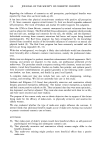
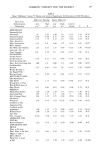
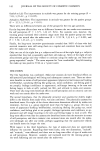
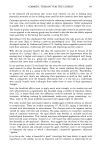
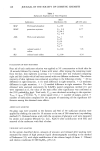
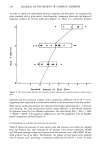
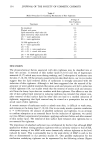
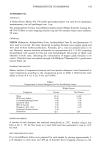
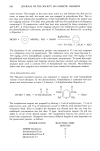
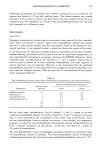
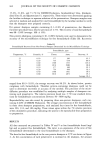
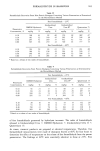
154 JOURNAL OF THE SOCIETY OF COSMETIC CHEMISTS Table V Model Procedure for Clarifying Mechanisms of Skin Tightness Treatment Average of Skin Tightness (n = 10) No treatment 0.3 Washed with water 1.3 Lipid removal by ethyl ether (A) 1.0 Lipid removal by ethyl alcohol (B) 1.0 (A) + water application 0.9 (B) + water application 1.2 5% SLS application (C) 1.3 (C) + water application 1.4 (A) + (C) 2.3 (A) + (C) + water application 2.0 (A) + (C) + rinsed with water 1.9 (A) + 5% MAP application (D) 2.1 (A) + (D) + rinsed with water 1.4 DISCUSSION The physicochemical factors associated with skin tightness may be classified into at least two actions: 1) removal of skin surface lipids (5,9, 16) and loss of hygroscopic materials (4,17) which may occur during washing, and 2) adsorption of surfactant onto the skin (7,10,18). Of the primary causative factors described above, our in vivo studies suggest that the lipid removal ability of surfactants is strongly associated with the induction of skin tightness. Although it had been suggested that the removal of hy- groscopic or water-soluble materials like amino acids and urocanic acid led to induction of skin tightness (19), our studies reveal that the removal of amino acids and urocanic acid from the horny layer does not correlate with skin tightness. Our efforts to test the role of skin surface lipid removal in inducing tightness has revealed that almost com- plete removal of skin surface lipid by ether does not lead to a marked induction of tightness, suggesting that lipid removal may be viewed as a prerequisite but not the actual cause of skin tightness. A certain amount of surfactant tends to adsorb onto skin, is difficult to wash away, and remains on the horny layer (7,10,18). Our in vivo study reveals a positive correlation (r = 0.99) between the amount of adsorbed surfactant and tightness. In an attempt to confirm adsorption as an essential factor for the induction of tightness, we carried out two different experimental procedures: applying surfactant before and after removal of skin surface lipid. The removal of skin surface lipid enhances skin tightness but is not essential for tightness. The importance of adsorbed surfactant was corroborated by the fact that although MAP application without rinsing produces tightness with an intensity similar to that of SLS, subsequent rinsing of the MAP with water dramatically reduces tightness to the level induced by water. This is presumably due to the weak ability of MAP to sorb to the skin as demonstrated in our previous studies (5). One possible explanation for the mechanism underlying tightness can be represented by the following scheme (Figure

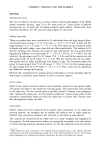
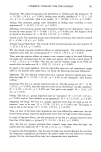
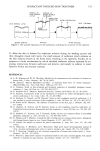
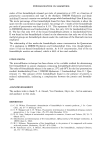
SURFACTANT INDUCED SKIN TIGHTNESS 15 5 REMOVAL OF REMOVAL OF SKIN SURFACE WATER SOLUBLE LIPIDS MATERIALS • I • SURFACTANT SKIN •DSORPTION WATER EVAPORATION SURFACE IIPID ! / • SKIN TIGH • I PERMEATION I I [ BEFORE WASHING WASHING AFTER WASHING Figure 5. One possible explanation •r the mechanism underlying the occurrence of skin tightness. 5): After the skin is defatted by surfactant solution during the washing process and then throughly rinsed with water, the small amount of surfactant which remains on the skin induces tension in the horny layer, resulting in the tightness. Studies are in progress to clarify mechanisms by which adsorbed surfactant induces tightness by an- alyzing interactions between surfactant and keratin, particularly in relation to water behavior within the stratum corneum. REFERENCES (1) A.M. Kligman and W. M. Woocling, Method for the measurement and evaluation of irritants on human skin, J. Invest. Dermatol., 49, 78-94 (1967). (2) W. Kaestner, "Mucous Membranes and Skin," in Surfactant Science Series 10: Anionic Surfactants. (Marcel Dekker, Inc., New York, Basel, 1980), pp 139-307. (3) G. Imokawa, Study on skin-irritating and biological properties of monoalkyl phosphate anionic surfactant, J. Amer. Oil Chem. Soc., 55, 839-843 (1977). (4) G. Imokawa and T. Takeuchi, Surfactants and skin, Cosmetics and Toiletries, 91, 32-46 (1976). (5) G. Imokawa, Comparative study on the mechanism of irritation by sulfate and phosphate type of anionic surfactants, J. Soc. Cosmet. Chem., 31, 45-66 (1980). (6) G. Imokawa, K. Sumura, and M. Katsumi, Study on skin roughness caused by surfactants. I. A new method in vivo for evaluation of skin roughness, J. Amer. Oil Chem. Soc., 52, 479-483 (1975). (7) M. Kawai and K. Okamoto, The influence of surfactants on the skin, Jap. J. Dermatol., 92, 465- 471 (1982). (8) G. Imokawa, K. Sumura, and M. Kastumi, Study on skin roughness caused by surfactants. II. Correlation between protein denaturation and skin roughness, J. Amer. Oil Chem. Soc., 52, 490-493 (1975). (9) G. Imokawa, H. Tsutsumi, and T. Kurosaki, Surface activity and cutaneous effects of monoalkyl phosphate surfactants, J. Amer. Oil Chem. Soc., 55, 839-843 (1977). (10) G. Imokawa and Y. Mishima, Cumulative effect of surfactants on cutaneous horny layers. Adsorption onto human keratin layers in vivo, Contact Dermatitis, 5, 357-366 (1979). (11) H. Scheff6, An analysis of variance for paired comparisons, J. Amer. Stat. Assoc., 47, 381-400 (1952). (12) K. Nakamura, Y. Morikawa, and I. Matsumoto, High speed liquid chromatographic analysis of citric, urocanic and pyroglutamic acids in cosmetic products, Jap. Analyst, 29, 314-318 (1980). (13) D. T. Downing, Variability in the chemical composition of human skin surface lipids, J. Invest. Dermatol., 53, 322-327 (1970). (14) E. Nieminen, Quantitative analysis of epidermal lipids by thin layer chromatography with special reference to seasonal and age variation, Acta Dermato. Venereol., 47, 327-338 (1967).
Purchased for the exclusive use of nofirst nolast (unknown)
From: SCC Media Library & Resource Center (library.scconline.org)