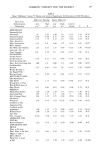
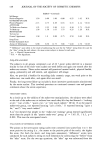
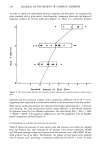
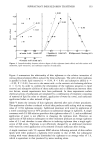
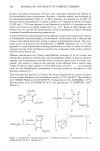
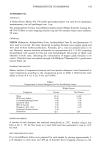
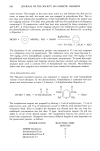
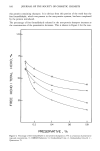
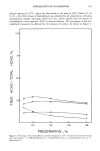
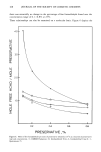
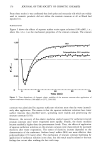
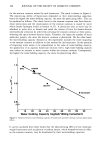
166 JOURNAL OF THE SOCIETY OF COSMETIC CHEMISTS this protein-containing shampoo. It is obvious from this portion of the work that the free formaldehyde, which was present in the non-protein systems, has been complexed by the protein introduced. The percentage of free formaldehyde released in the non-protein shampoo increases as the concentration of the preservative decreases. This is shown in Figure 4 for the non- _3 w w o• h 100 75 50 25 I I I I O. 2 0.4 0.6 O. 8 PRESERVATIVE, ø/o Figure 4. Percentage of free formaldehyde in non-protein shampoos at 23øC as a function of preservative type and concentration. O, DMDM Hydantoin [•, Imidazolidinyl Urea /•, Imidazolidinyl Urea II +, Quaternium 15.

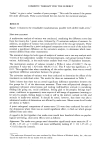
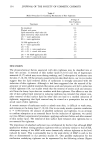
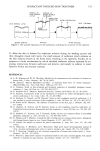
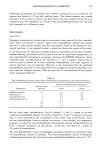
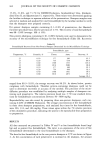
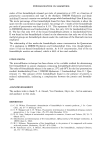
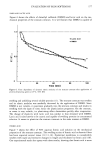
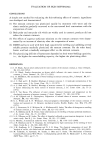
FORMALDEHYDE IN SHAMPOOS 167 protein shampoo at 23øC. Again the relationship is the same at 60øC (Table IV). At 0.1%, a 60-69% release of formaldehyde was observed for all preservatives. All plots demonstrated sharply increasing slopes at 0.1%, which implies that the release of formaldehyde would approach 100% at infinite dilution. The percentage of free for- maldehyde measured was affected by the presence of protein. As shown in Figure 5, 100 75 50 25 I I I 0.2 0.4 0.6 PRESERVATIVE, ø/o Figure 5. Percentage of free formaldehyde in protein shampoos at 23øC as a function of preservative type and concentration. ¸, DMDM Hydantoin [•, Imidazolidinyl Urea A, Imidazolidinyl Urea II +, Quaternium 15.
Purchased for the exclusive use of nofirst nolast (unknown)
From: SCC Media Library & Resource Center (library.scconline.org)