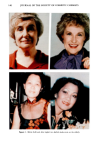
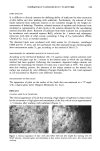
COSMETIC THERAPY FOR THE ELDERLY 135 METHOD PRELIMINARY STUDY Selection of subjects was based on a study in which stimulus photographs of 48 elderly female volunteer subjects, aged 54 to 96, were rated on 7-point scales of physical attractiveness by 10 male and 10 female similarly aged subjects. Details have been described elsewhere (12). We used the same subjects in this study. SUBJECT SELECTION Thirty-two make-overs were conducted on 16 individuals from the high range of phys- ical attractiveness (ratings 4.15 to 5.35, mean = 4.75 -+ 0.37) and 16 from the low range (ratings 2.4 to 3.9, mean = 3.17 - 0.45). The values are the combined scores of female and male judges, since these did not differ significantly. The median (4.15) was the dividing point between the attractive and unattractive, the two groups being significantly different in attractiveness (F = 119.14 1,30 d.f., p 0.001). For the attractive the age range was 65 to 87 (mean 75.8 -+ 5.6), and for the unattractive the ages ranged from 59 to 96 (mean 77.1 _+ 9.6). We also ensured that the two make- over groups did not differ significantly with respect to age. For the passive make-over group the ages ranged from 70 to 96 (mean - 79.8 -+ 8.2) for the training group the ages ranged from 59 to 87 (mean = 74.4 _+ 7.5). Thus, there were no significant age differences among these groups. Of those that remained of the original group of 48 subjects, 8 were randomly selected with respect to physical attractiveness, to serve as control subjects. STUDY DESIGN Eight of the sixteen attractive subjects were randomly allocated to the passive make- over group and eight to the make-over training group. The unattractive were divided in the same way. For the control group a specially devised "cosmetic color preference task" replaced the make-over. All the subjects completed 7-point rating scales of self- perception immediately before and after the make-over or control task. Subjects were also photographed before and after. MAKE-OVERS Passive make-overs were conducted by an expert male cosmetician. In the make-over training sessions, the emphasis was on teaching the subjects how to apply make-up. Further, they were given cosmetics and told how to use them in daily practice. The cosmetician conducted all the make-overs in a room • designed and equipped for the purpose. He was instructed to behave as consistently as possible with each subject in terms of giving attention, showing interest, etc. He also imparted a positive attitude, • Three make-overs were conducted in the hospital because although none of the subjects had been hospitalized at the time of the preliminary study, three of the subjects selected for the two attractiveness groups happened to be suffering from physical disorders at the time of the make-over sessions.

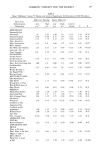
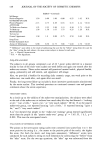
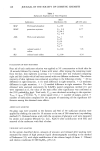
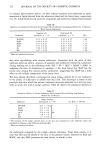
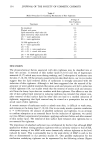
136 JOURNAL OF THE SOCIETY OF COSMETIC CHEMISTS emphasizing the importance he attached to his work. A make-over took 25 to 45 minutes depending on individual needs. Some subjects asked more questions, some were reluctant to undergo a full treatment, some were very curious, etc. A few objected to eye-area cosmetics and wanted less applied. The training sessions took a little longer because instructions were given along with a set of cosmetics for use at home. CONTROL TASK The control task was relatively simple, centering on the colors of cosmetics. Subjects were asked to select meaningful categories, viz, lipsticks, eye make-up, nail polish. Then, within each category they sorted the colors they liked and disliked into separate piles, noting how many fell in each. The time allowed for the task was similar to that for the make-overs. PHOTOGRAPHS Standardized photographs were taken immediately before and after the make-over (or control tasks), to provide a record of the changes. The "before" photographs were the subjects' usual appearance with whatever facial make-up, hair adornments, jewelry, etc. they wore day to day. RATING SCALES Short-term assessment A set of 25 seven-point scales was devised. Scales were formulated in the conventional manner: most of the 7-point scales were of the bipolar opposite type, e.g. "rate how you think you look right now: presentable/not presentable, drab/glamorous" and a few were of the unipolar type, e.g. "rate how motivated you are, if at all, to care for your general appearance--from 'not at all motivated' through to 'extremely motivated'." The scales were derived from spontaneous responses elicited in pilot sessions and our other previous research in this field which highlighted some dimensions likely to be relevant to cosmetic manipulation. This approach was thought appropriate since this is exploratory research in a new field in which the variables likely to be influenced by cosmetics are in the process of being discovered. Some traditional type social psycho- logical scales were also used. We also ensured that all traditional categories of social behavior were represented. Additionally, the subjects estimated how old they felt, and how old they thought they looked before and after the make-over. The scales are listed in Table I. The same scales were presented both before and after the treatment (or control) session, but in a different order according to the standard cross-over design. Since the time between was short, the ordering of scales was changed to help diminish memory effects as well as to discourage formation of a mental "set." Subjects were given written instructions for completing the scales, were shown exam- pies, and were told that each rating was to be an immediate response. We assured them of confidentiality and emphasized that honest answers were very important to the success of the project.
Purchased for the exclusive use of nofirst nolast (unknown)
From: SCC Media Library & Resource Center (library.scconline.org)