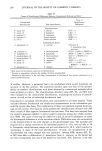
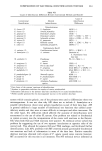
250 JOURNAL OF THE SOCIETY OF COSMETIC CHEMISTS In the present study the thickness measurements are only for the whole skin individual strata have not been examined. However, the epidermal thickness of the mature hairless mouse is only 40 [xm (31). The wide variations in thickness of the full skin are thus too large to be epidermal in origin and necessarily represent changes in the dermal layer. This conclusion is in accord with previous observations (26). COMPARISON OF THE HAIRLESS MOUSE AND MAN The gross anatomical construction of the hairless mouse skin past the initial hair cycle is similar to the human skin (hairy regions excluded) in aspects which relate to the skin's chemical barrier properties. Of particular importance, each is overlayered by tightly compacted layers of horny cells. The kinetics of turnover of the two epidermises are even similar if viewed in proportion to the masses of the respective tissues. Blem- ishes, wrinkles, and textural changes occur with aging in both skins, though the causes of these defects are likely different. The animal's weight increases to an asymptote of --40 gm at about an age of 140 days, approximately 1/3 tO 1/4 of the mean animal life span. When put in terms of fractional age, even the point of attainment of full adult size is comparable to the human. There appears to be a high similarity in the permeation of the skins of the hairless mouse and man to alkanols. Previous data from these laboratories show the permeability coefficients of the n-alkanols and water to be much the same (15,23) and, based on the data reported here, the permeabilities of water, methanol, and ethanol through mouse skin are virtually identical, further tightening the congruence with human tissue in mass transfer behavior. Literature reports covering a diversity of other compounds also suggest that a high degree of permeability similarity exists for these two tissues (32,33). Whether or not there is parallel in the age dependencies of permeability of hairless mouse skin and human skin is yet to be determined. Outside of increased permeability during the follicular cycle, the mouse skin's barrier properties are relatively independent of age. This seems reasonable as the necessary degree of protection against insensible perspiration, and heat loss which accompanies it remains constant as the animals age. Human skin is probably comparably stable with age, given that the same principle applies. There are certain experimentally important observations here for those who use the hairless mouse in toxicological and drug delivery investigations or for other purposes which involve percutaneous absorption. The skin of the immature hairless mouse un- dergoes a rapid transformation in its permeability properties and, based on the alkanol data, it is not until about 100 days of age that these effects are totally stabilized. Moreover, in early life the dorsal skin appears more permeable than the abdominal skin. To minimize variability, investigators must be careful to fix upon a specific age for the animals used in their studies and to excise skin sections from clearly defined sites. In permeation studies in these laboratories, a general technique where the dorsal surface is subjected to some trauma or treatment and the abdominal surface is used as the control has been developed (34,35). We prefer to wait to an age of--60 days when the permeability coefficients of the two sites converge to make uncomplicated com- parisons between the normal abdominal and the traumatized dorsal surfaces. ACKNOWLEDGEMENT This study was supported by National Institutes of Health Grant No. 5 R01 GM 24611.

ALKANOL PERMEATION OF HAIRLESS MOUSE SKIN 251 REFERENCES (1) (2) (3) (4) (5) (6) (7) (8) (9) (lO) (11) (12) (13) (14) (15) (16) (17) (18) (19) (20) (21) (22) (23) (24) (25) R. C. Wester, P. K. Noonan, M. P. Cole and H. I. Maibach, Percutaneous absorption of testos- terone in the newborn rhesus monkey: Comparison to the adult, red. Res. II, 737 (June 1977). M. Feiwel, Percutaneous absorption of topical steroids in children, Brit. J. Derre., 81, Supplement No. 4, 113-116 (1969-70). R. L. Nachman and N. B. Ester, Increased skin permeability in preterm infants, J. red., 79, 628- 632 (October 1971). E. Christophers and A.M. Kligman, "Percutaneous Absorption in Aged Skin," in Advances in Biology if Skin, W. Montagna, Ed. (Pergamon Press, Blumsford, N.Y., 1965), Vol. 6, pp 163-175. E. Cronin and R. B. Stoughton, Percutaneous absorption, regional variations and the effects of hydradon and epidermal stripping, Brit. J. Dermatol., 74, 265-272 (July 1962). J. G. Smith, R. W. Fischer, and I. H. Blank, The epidermal barrier--a comparison between scrotal and abdominal skin, J. Invest. Dermatol., 36, 337-343 (May 1961). F. N. Marzulli, Barriers to skin penetration, J. Invest. Dermatol., 39, 387-393 (November 1962). R.J. Feldman and H. I. Maibach, Penetration of •4C-hydrocortisone through normal skin, Arch. Dermatol., 91, 661-666 (June 1965). R. J. Feldman and H. I. Maibach, Regional variation in percutaneous penetration of •4C-cortisol in man, J. Invest. Dermatol., 48, 181-183 (February 1967). H. I. Maibach, R. J. Feldman, T. H. Milby, and W. F. Serat, Regional variations in percutaneous penetration in man--pesticides, Arch. Environ. Health, 23, 208-211 (September 1971). R. T. Tregear, Relative permeability of hair follicles and epidermis, J. Physiol., 156, 307-313 (April 1961). W. B. Shelley and F. M. Melton, Factors accelerating the penetration of histamine through normal intact skin, J. Invest. Dermatol., 13, 61-71 (August 1949). E. P. Laug, E. A. Vos, E. T. Umberper, and F. M. Kunze, A method for the determination of cutaneous penetration of mercury, J. Pharmacol. Therap., 89, 42-51 (January 1947). P. Cambell, T. Watanabe, and S. K. Chanderasekaran, Comparison of in-vitro skin permeability of scopolamine in rat, rabbit, and man, Fed. Proc.. 35, 639 (Abstract 2396) (March 1976). C. R. Behl, G. L. Flynn, T. Kurihara, N. Harper, W. M. Smith, W. I. Higuchi, N. F. H. Ho, and C. L. Pierson, Hydration and percutaneous absorption I: Influence of hydration on alkanol permeation through hairless mouse skin. J. Invest. Dermatol., 75, 346-352 (October 1980). L. T. David, Modification of hair direction and slope of mice and rats,J. Exp. Zool., 68, 519-528 (August 1934). H. Brooke, Hairless mice, J. Hered., 17, 173-174 (May 1926). F. C. Fraser, The expression and interactions of hereditary factors producing hypotrichosis in the mouse: Histology and experimental results, Cand. J. Res., 24D, 10-25 (February 1946). F. A. F. Crew, and L. Mirskaia, The character "hairless" in the mouse, J. Genet., 25, 17-24 (November 1931). S. J. Mann and W. E. Straile, New observations on hair loss in the hairless mouse, Anat. Rec., 140, 97-102 (June 1961). I. H. Blank, Penetration of low molecular weight alcohols into skin I--Effect of concentration of alcohol and type of vehicle. J. Invest. Dermatol., 43, 415-420 (November 1964). R. J. Scheuplein and I. H. Blank, Mechanisms of percutaneous absorption IV--Penetration of non- electrolytes (alcohols) from aqueous solutions and from pure liquids. J. Invest. Dermatol., 60, 286- 296 (May 1973). H. H. Durrheim, G. L. Flynn, W. I. Higuchi, and C. R. Behl, Permeation of hairless mouse skin I: Experimental methods and comparison with human epidermal permeation by alkanols. J. Pharm. Sd., 69, 781-786 (July 1980). G. L. Flynn, H. H. Durrheim, and W. I. Higuchi, Permeation of hairless mouse skin II: Membrane sectioning techniques and influence on alkanol permeabilities. J. Pharm. Sci., 70, 52-56 (January 1981). C. R. Behl, G. L. Flynn, W. M. Smith, T. Kurihara, K. A. Walters, O. Gatmaitan, W. I. Hig- uchi, C. L. Pierson, and N. F. H. Ho, Permeation of hairless mouse skin VI--Comparison of dermis and full thickness skin permeabilities in long term experiments. Presented at the 27th Annual Meeting of the American Pharmaceutical Association, November 1979, Kansas City, MO., Basic Pharmaceutics Abstract No. 53.
Purchased for the exclusive use of nofirst nolast (unknown)
From: SCC Media Library & Resource Center (library.scconline.org)