254 JOURNAL OF THE SOCIETY OF COSMETIC CHEMISTS conventional methods. Our experiences with API have indicated a relatively low degree of accuracy for NFB isolated from cosmetic sources, often requiring confirmation of API identifications with conventional methods or other identification systems. Studies utilizing clinical and food isolates (1-4) indicate that the Flow (FL) and Minitek (MT) systems are able to identify microorganisms with a high degree of accuracy. However, few studies have been reported evaluating these rapid identification systems using ENTB and NFB isolated from cosmetic sources. Therefore, we undertook to evaluate the FL, MT, and API systems with microorganisms originally isolated from-raw ma- terials used in cosmetic products. Our aim was to select an identification system or systems which could correlate with conventional media and provide accurate and rapid identifications of both ENTB and NFB. MATERIALS AND METHODS CULTURES The 94 microorganisms tested (41 ENTB and 53 NFB) included 79 commonly en- countered raw material isolates and 15 stock reference cultures obtained from the American Type Culture Collection, Flow Laboratories, New York City Department of Health, and Roche Diagnostics. The microorganisms, maintained on Trypticase soy agar (BBL, Cockeysville, MD) slants at 4øC, were checked for purity on blood (BBL) agar plates. One colony from each plate was transferred to 10 ml of Trypticase soy broth (BBL), and incubated at 25øC for 18 and 48 hr for ENTB and NFB respectively. One ml from each broth was pipetted onto a Trypticase soy agar plate and spread over the surface of the agar to produce a bacterial lawn. The plates were incubated at 35øC for 18 h, and the resulting microbial growth was used to inoculate all conventional media and test systems. TEST SYSTEMS (1) API 20E (Analytab Products, Inc., Plainview, N.Y.). Previous experiences in our hands using API have often resulted in inconsistent and variable test reactions. These problems were alleviated to some degree by increasing the recommended inoculum size to approximately a No. 5 MacFarland standard. The inoculum was then added to each strip according to the manufacturer's instructions. ENTB identifications were com- pleted at 24 h NFB identifications were checked at 24 h, reincubated, and completed at 48 h. Microorganisms were identified by accepting the first choice of the API Profile Recognition System. (2) Flow Enteric-Tek and N/F System (Flow Laboratories, McLean, Va. ). The Enteric-Tek system provides for the determination of 14 different biochemical parameters by uti- lizing a wheel of solid media. The systems were inoculated and incubated according to the manufacturer's instructions. Microorganisms were identified by accepting the first choice of the Flow Enteric-Tek System computer code book. The N/F System consists of the two tube N/F-Screen, and the Uni-N/F-Tek plate. The N/F-Screen, composed of the GNF and 42P tubes, contains five tests utilized for the identification of fluorescent pseudomonads. The Uni-N/F-Tek plate is a multicham- bered wheel designed for the determination of 12 different biochemical parameters.

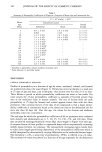
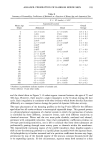
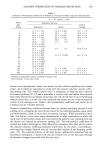
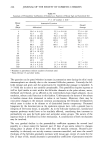
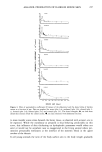
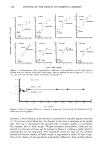
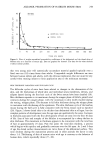
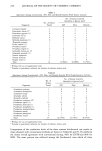
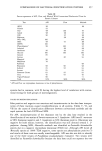
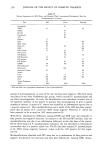
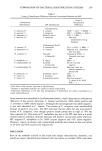
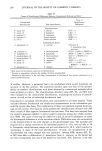
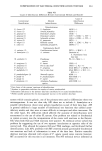
COMPARISON OF BACTERIAL IDENTIFICATION SYSTEMS 255 The N/F-Screens and Uni-N/F-Tek plates were inoculated simultaneously, and incu- bated according to the manufacturer's instructions. Microorganisms were identified by accepting the first choice of the Flow N/F System computer code book. (3) Minitek (BBL, Cockeysville, Md.). Both MT systems use disks that have been im- pregnated with the substrates to be tested. Numerous other substrate disks are available however, the disks chosen for this study were those required by the manufacturer for the Enterobacteriaceae II and Nonfermenter numerical identification system. Inocula- tions, incubations, and interpretations were performed according to the manufacturer's instructions. CONVENTIONAL MEDIA Each culture was identified by conventional biochemical tests (5,6). The tests performed on ENTB included reactions on triple sugar iron agar (H2S production) oxidase from blood (BBL) agar lysine and ornithine decarboxylase (LDC, ODC) arginine dihydrolase (ADH) citrate DNase esculin gelatin malonate methyl-red Voges-Proskauer (VP) nitrate reduction O-nitrophenyl-B-D-galactopyranoside (ONPG) phenylalanine reac- tions in SIM medium (H2S and indole production motility) Christensen urea agar and production of acid in phenol red adonitol, arabinose, cellobiose, dulcitol, glucose, glycerol, inositol, lactose, maltose, mannitol, melibiose, raffanose, rhamnose, salicin, sorbitol, trehalose, and xylose. The tests performed on NFB included reactions on triple sugar iron agar (H•S production) oxidase from blood (BBL) agar acetamide LDC and ODC ADH Cetrimide (Difco, Detroit, MI) citrate DNase escuiin gelatin growth in Trypticase soy broth (BBL) at 42øC lecithinase MacConkey agar nitrate and nitrate reduction ONPG penicillin and polymyxin B susceptibility phenylalanine Pseudo- monas F (Difco) agar Pseudomonas P (Difco) agar Pseudosel (BBL) agar reactions in SIM medium 6.5% NaCI SS agar starch 10% lactose (purple agar base) Tween 80 hydrolysis Christensen urea agar VP and oxidation of OF basal medium of fructose, galactose, glucose, lactose, maltose, mannitol, sucrose, and xylose. All media inocu- lated from the bacterial lawn were incubated at 35øC except where indicated. Oxidase tests were performed using Cepti-Seal (Marion Scientific, Kansas City, Mo.) oxidase reagent at 24 h. The reagents for indole, nitrate reduction, and phenylalanine tests were added after 24 h of incubation. After 48 h of incubation, reagents were added for DNase, methyl red, VP, and starch hydrolysis. Reactions negative after 24 h were observed for a maximum of 7 days with the exception of gelatin, which was observed for up to 30 days. RESULTS IDENTIFICATION AGREEMENT AMONG METHODS The agreements among the conventional and rapid systems for the identification of ENTB and NFB are shown in Tables I and II. Among ENTB (Table I), FL correctly identified 36 of the 41 microorganisms tested (88% accuracy level), the highest of the three systems. API and MT exhibited 80% and 76% accuracy levels, respectively, for ENTB. Closer levels of identification accuracy were observed for NFB (Table II). API and FL correctly identified 42 of the 53 microorganisms tested (79% accuracy). MT was slightly lower, exhibiting a 75% level of accuracy.
Purchased for the exclusive use of nofirst nolast (unknown)
From: SCC Media Library & Resource Center (library.scconline.org)