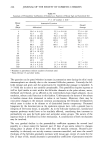
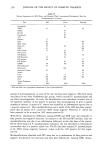
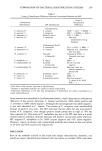
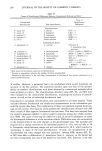
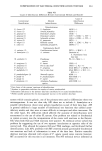
238 JOURNAL OF THE SOCIETY OF COSMETIC CHEMISTS penetration rates of organic phosphates were demonstrated for cadaver skin (7). Regional variations in percutaneous absorption of hydrocortisone (8,9) and pesticides (10) have also been noted in humans. High densities of prominent hair have been linked with high permeability to some agents (9) but not others (11). Literature reports refuting site-to-site differences in percutaneous absorption (12, 13) may not be related to per- meation per se. The hairless mouse has been used extensively in drug efficacy and drug permeation studies. In the course of work in our laboratories it became necessary to assess what influences age, animal gender, and the anatomical location of the excised skin had on the mass transfer coefficients (permeability coefficients) we were obtaining. Such data reveal the age span over which valid comparisons in permeation for a given compound are possible. Also, if two sites as expansive and separate as the abdomen and dorsum can be shown to have identical permeabilities, then it becomes possible to use one site on an animal for treatment and the other as a control in permeation experiments, a strategy with obvious advantage with respect to management of animal variability. Therefore, the permeation of select alkanols through the excised skin of the male hairless mouse has been studied over the greater part of the life span of this animal. EXPERIMENTAL CHEMICALS The radioactive homologous n-alkanols and water used in these studies were obtained from NEN • (3H-H20 , 3H-CH3OH), and ICN 2 (•4C-C2H5OH, •4C-nC4H9OH, 14C- nC6H•3OH,14C-C8H•7OH). The chemicals were diluted into 0.9% sodium chloride irrigation 3 (normal saline) to make stock solutions of 10-4M or less concentration containing about 100 •tCi/ml. ANIMALS Male hairless mice, SKH hr-• strain 4, were obtained at age 40 days or as breeding pairs in order to raise even younger animals. The animals were housed individually and had free access to food and water. MEMBRANE PREPARATION AND PERMEATION STUDIES The membranes used were full thickness abdominal and dorsal skin sections taken immediately from mice sacrificed by spinal cord dislocation. For young mice with heavy coats of hair, hair was first closely cropped to the skin surface with surgical scissors (14). Detailed procedures for excising and placing the skins in the two com- partment diffusion cells were described in an earlier report (15). Briefly, oversized sections of skin were clamped between the half cells. The skin area available for diffusion New England Nuclear, Boston, MA 02118. International Chemical and Nuclear Corp., Irvine, CA 92664. Abbott Laboratories, North Chicago, IL 60064. Skin Cancer Hospital, Temple University, Philadelphia, PA 19140.

ALKANOL PERMEATION OF HAIRLESS MOUSE SKIN 239 was about 0.6 cm 2. After assembly, each chamber was filled with 1.4 ml of normal saline and placed in a constant temperature bath. The contents of both chambers of the cell were stirred at 150 rpm. It was shown that the permeability of this skin to certain alkanols increased gradually over the first ten hours of incubation in the diffusion cell (15). Therefore, skin sections in this study were equilibrated with saline for --12 hours to obtain a stable condition of hydration before beginning an experiment. The half-cell contents were then evacuated with a syringe, rinsed twice with normal saline, and filled with 1.4 ml of saline. After waiting for five minutes for the temperature to re-equilibrate, 200 txl of saline were placed in the receiver chamber (dermis side) and 100 }xl samples of stock solutions of two differently radio-labeled (3H and14C) permeants were placed in the donor com- partment (stratum corneum side). Although charging the donor half-cell began a run, the initial donor sample was not taken until --2 minutes had elapsed to allow for thorough mixing. Samples from the receiver chamber were withdrawn at 1000-second intervals for 7000 seconds, at which time a run was terminated. The overall experi- mental design and sampling schedule led to a pseudo-steady state for the permeation process. In order to get a complete homolog profile on each skin, runs were performed serially. Between runs the cell compartments were evacuated with a syringe equipped with a flexible polyethylene tubule, rinsed three times, and refilled with saline. The triple rinse was repeated approximately on the half hour twice more. A fourth single rinse about 30 minutes later completed the clean-up procedure. The permeability coefficients of all six solutes were determined on each skin by carrying out four sequential exper- iments over a total period of about 20 hours, excluding the initial 12-hour hydration. The order of running these experiments was: first run.' 3H-water and14C-ethanol second run.' 3H-methanol and•4C-butanol third run.' 3H-methanol and•4C-hexanol and fourth run.' 3H-methanol and•4C-octanol. The previously described dual-label procedure (15) showed that the permeabilities of the co-permeants are unaffected by each other at the solute concentrations used. It also offers obvious experimental efficiencies. Since the sequential runs included either methanol or water, two solutes with permeability coef- ficients highly sensitive to the stratum corneum's integrity, their permeation rates served as a check on a membrane's condition throughout an experiment. Some of the data used in the analysis for animals 60 to 120 days of age was excerpted from earlier studies not explicitly aimed at aging influences (15). These data are only included where no essential detail of the experimental procedures were at variance with the present protocol. DATA ANALYSIS Plots of receiver concentration (counts/volume) against time were made. The perme- ability coefficient is defined by (15): JT = P'A'AC - dM at (Equation 1) where JT = the pseudo steady state flux (cpm/hr), or the instantaneous amount pen- etrating the total membrane with time, dM/dt P = the permeability coefficient
Purchased for the exclusive use of nofirst nolast (unknown)
From: SCC Media Library & Resource Center (library.scconline.org)