j. Soc. Cosmet. Chem., 35, 265-272 (August 1984) Effects of color adjuvants on the tanning effect of dihydroxyacetone M. F. BOBIN, M. C. MARTINI and J. COTTE Laboratoire de Pharmacie Industrielle et Technologie Parapharmaceutique Domaine Rockq•ller, 693 73 Lyon Cedex 8, France, and PH. POTIN, S.N.E.A. Centre de Recherche, B.P. 34 Lacq 64170 Atrix, France Received May 16, 1983. Synopsis The ability of dihydroxyacetone (D.H.A.) to react with the amino acids found naturally in the hydrolipid film and the first layers of the stratum corneum has been commonly used to produce a simulated sun tan on skin. This process results in imperfect development and wear resistance of the color. Therefore the purpose of this work was to improve the regularity, the tone, and the rate of the color development, and, moreover, to obtain a skin substantive color having affinity for the keratin of the stratum corneum. By analogy with quaternary ammonium compounds which exhibit keratin subtantivity, a sulfur-containing amino acid was made substantive without changing the amino function, the latter being necessary for the Maillard color-forming reaction. Therefore, the sulfur atom was used to form a sulfonium or a sulfoxide functional group. In vitro studies of mixtures of D.H.A. with amino acids in aqueous solutions carried out under standard conditions showed that methionine sulfoxide was the product yielding the optimum intensity and speed of color •tevelopment. In vivo studies confirmed that methionine sulfoxide in an appropriate excipient when rubbed on the skin before the application of a D.H.A.-containing cream increased the development and the intensity of color. INTRODUCTION The Maillard reaction or the reaction of dihydroxyacetone (D.H.A.) with amino acids located in the hydrolipidic film and the first layers of the stratum corneum has been commonly used (1-3) to produce a color of the skin close to natural tan. This artificial tanning system has been used since 1960 (4-6) without any modification and some improvements are needed particularly as regards the regularity of color development, the tone (7,8), the rate of color development, and the substantivity of color produced. Our approach to achieving improvements was to associate D.H.A. with an appropriate amino acid. It was necessary to select an amino acid which was both very reactive and substantive, being able to bind strongly with the stratum corneum. By analogy with the quaternary ammonium compounds whose substantivities are known, a sulfur-containing amino 265

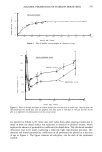
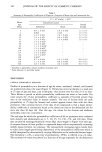
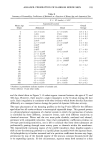
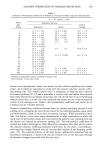
266 JOURNAL OF THE SOCIETY OF COSMETIC CHEMISTS acid was made substantive without altering the amino function which is necessary for the Maillard reaction. To achieve this a sulfur atom was used to form a sulfonium or a sulfoxide functional group. The selected product was methionine sulfoxide (M.S.O.) which has good solubility in water, can be easily prepared, and meets the previously established requirements re- garding coloration. IN VITRO STUDIES The in vitro studies permit the selection of a substance producing the optimum intensity and speed of color development without changing the formulation. This product should have appropriate organoleptic characteristics and should be technologically easy to ob- tain. AMINO ACIDS SELECTION We studied the color produced by the combination of D.H.A. and (a) sulfur-containing amino acids: cystine, cysteine, and methionine* (b) modified sulfur-containing amino acids derived from methionine: methionine methylsulfonium iodide, methionine meth- ylsulfonium bromide, and methionine sulfoxide (M.S.O.)** and (c) lysine*: a sulfur- free amino acid which reacts particularly well with D.H.A. and was therefore used as a reference product. PROCEDURE The reaction of amino acids with D.H.A. (the Maillard reaction) produces complex polymers or "melanoidins" (4, 9-13). This reaction is influenced by the temperature, the amount of water, the proportion of D.H.A. to amino acid, the nature of the amino acid, the pH, and, if the medium is buffered, the nature of the buffer and its ionic strength. The quantitative evaluation of the color obtained was difficult. The spectrum did not show any maximum of absorption (3,4) between 360 and 600 nm, for all the amino acids chosen. Because there is no maximum absorption, the intensity of the color development was measured by spectrophotometry (Beckman © 25 spectrophotometer) at 420 rim. This wavelength seems characteristic of the mixture's color. The different parameters affecting the Maillard reaction were successively studied to obtain the best development of color (14). After various experiments, the following parameters were selected: (a) a phosphate buffer, 0.5 M pH 7, with Na H2 PO4 ß I H20 (138 g/l) (39 ml) and Na2H PO4 ' 12 H•O (358.5 g/l) (61 ml) to obtain a solution of amino acid at 0.01 M and a solution of DHA at 2 M (b) a mixture of these two solutions such that D.H.A. was 20 times the concentration of the amino acid (c) reaction temperature: 32 ø C and (d) evaluation of the color development at 420 nm, 24, 48, and 72 hours after mixture of the two solutions. * Riedel, de Ha•n Seelze, Hannover: purity 99%. ** Elf Aquitaine, Centre de Recherche de Lacq, FRANCE.
Purchased for the exclusive use of nofirst nolast (unknown)
From: SCC Media Library & Resource Center (library.scconline.org)