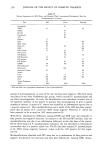
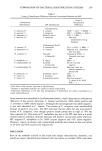
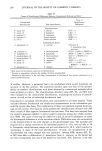
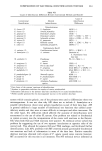
262 JOURNAL OF THE SOCIETY OF COSMETIC CHEMISTS that the positive anaerobic dextrose reactions were due to oxidation rather than fer- mentation since the wells of the MT plate are not deep enough to prevent oxidation, even with an oil overlay. Consequently, false positive anaerobic dextrose reactions did cause the misidentification of strains of P. fluorescens, P. maltophilia, P. putida, and P. putrefaciens. One other test causing problems for both ENTB and NFB was urease. Positive urea reations resulted in the identification error of two strains of P. aeruginosa, one of which was not in the data base, even though the MT urea reaction agreed with the conventional test for both microorganisms. Like APT, results with MT indicated its ability to correlate with conventional media was inferior to FL. A final area evaluated was the ease of use for each of the systems. This consideration is of prime importance to many industrial laboratories that experience manpower dif- ficulties and must rely upon personnel other than microbiologists to perform microbial identifications. This has developed an acute need for a system which can provide accurate identifications and yet be simple to use. The two FL systems were the simplest to use in our hands because they are supplied as ready-to-use products that require no further assembly or special incubation chambers and require only Kovacs as an addi- tional reagent for the indole test. In contrast, APT and MT both require further assembly prior to use and make use of humidification chambers. API also requires the use of six reagents, while MT requires six for ENTB and five for NFB biochemical reactions. FL offered other benefits by not requiring measured amounts of substrates in the wells, and the mode of inoculation, a Pasteur pipet, was quick and uncomplicated. API inoculations required higher levels of experience with respect to filling cupules properly. Even with experienced personnel, problems with air bubbles and cupules that would not fill properly were encountered, which resulted in delays and user frustration. MT inoculations were made difficult at times by the use of a pipet gun system. Often the trigger on the pipet gun would be difficult to pull, and several times the pipet tip came apart from the pipettor, resulting in spillage and loss of the inoculum. In contrast, the advanced simplicity of the 2 FL systems made them a clear choice for the easiest system to use. To some degree, our findings agreed with studies evaluating APT, FL, and MT using clinical and food isolates (2-4,8-10). However, since our intent was to select a system or systems to identify both ENTB and NFB, direct comparisons to other studies were not possible. It was our opinion that an industrial microbiology laboratory must con- sider both ENTB and NFB when making a choice of identification systems. It was clear to us that a choice of systems could not be made solely on the basis of identification accuracy. The parameter, although informative, is often misused and is not always a true indication of a system's ability, especially when dealing with industrial microor- ganisms. This is supported by the fact that the data bases for each of the systems contain information derived primarily from microorganisms obtained from clinical and reference sources. Consequently, the biochemical profiles derived from industrial iso- lates frequently are not contained in the identification scheme. Therefore, industrial laboratories must build their own information libraries to supplement information provided by the manufacturer of the system. The parameter to which we gave primary significance was the correlation between conventional and system biochemical testing. Based on this information, a final choice of a system was made. The relatively low correlation of APT, and lack of key tests required for the differentiation of NFB, contributed to the elimination of APT. It was apparent that no single system could

COMPARISON OF BACTERIAL IDENTIFICATION SYSTEMS 263 accurately identify both ENTB and NFB, which caused us to favor FL and MT. It was believed that due to the low viability of many industrial isolates, and their inability to grow well on artificial media, the system of choice should be one offering the best possible opportunity for microbial survival and optimal expression of biochemical char- acteristics. This study illustrated that the two FL systems provided excellent levels of biochemical correlation with conventional methodology. We believe that this was due to the utilization of conventional media as the basis for developing biochemical reac- tions. The use of solid media, as compared to dehydrated substrates, allowed for the optimal biochemical expression of the microorganisms, thus obtaining the most accurate identification possible. Therefore, it is the opinion of the authors that the FL systems are the most suitable single systems for quality control and research testing. It is our hope that this information will stimulate a re-evaluaion of the microbial identification systems now in use in industrial laboratories. REFERENCES (1) J. Barnishan and L. W. Ayers, Rapid identification of nonfermentative gram-negative rods by the Corning N/F system, J. Clin. Microbiol., 9, 239-243 (1979). (2) B. Chester and T. J. Cleary, Evaluation of the Minitek system for identification of nonfermentative and nonenteric fermentative gram-negative bacilli, J. Clin. Microbial., 12, 509-516 (1980). (3) A. O. Esaias, D. L. Rhoden, and P. B. Smith, Evaluation of the Enteric-Tek system for identifying Enterobacteriaceae, J. Clin. Microbial. , 15, 419-424 (1982). (4) L. S. Guthertz and R. L. Okoluk, Comparison of miniaturized multitest systems with conventional methodology for identification of Enterobacteriacae from foods, Appl. Environ. Microbiol., 35, 109- 112 (1978). (5) P. R. Edwards and W. H. Ewing, Identification of Enterobacteriaceae, 3rd ed., (Burgess Publishing Co., Minneapolis, 1972). (6) G. L. Gilardi, "Identification of Pseudomonas and Related Bacteria," in Glucose Nonfermenting Gram- Negative Bacteria In Clinical Microbiology, G. L. Gilardi, Ed. (CRC Press Inc., West Palm Beach, Fla., 1978), pp 15-44. (7) G. L. Gilardi, "Identification of Miscellaneous Glucose Nonfermenting Gram-Negative Bacteria," in Glucose Nonfermenting Gram-Negative Bacteria In Clinical Microbiology, G. L. Gilardi, Ed. (CRC Press Inc., West Palm Beach, Fla. 1978), pp 45-65. (8) L. R. McCarthy, J. B. Mayo, G. Bell, and D. Armstrong, Comparison of a commercial identification kit and conventional biochemical tests used for the identification of enteric gram-negative rods, Am. J. Clin. Pathol., 69, 161-164 (1978). (9) M. J. Morris, V. M. Young, and M. R. Moody, Evaluation of a multitest system for identification of saccharolytic pseudomonads, Am. J. Clin. Pathol., 69, 41-47 (1978). (10) N.M. Warwood, D. J. Blazevic, and L. Hofherr, Comparison of the API 20E and Corning N/F systems for identification of nonfermentative gram-negative rods, J. Clin. Microbial., 10, 175-179 (1979).
Purchased for the exclusive use of nofirst nolast (unknown)
From: SCC Media Library & Resource Center (library.scconline.org)