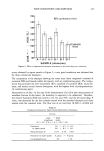
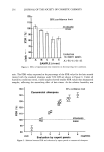
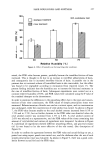
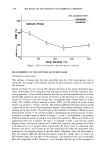
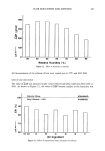
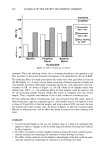
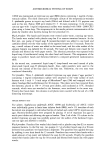
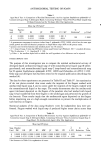
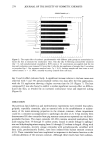
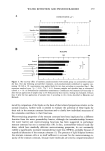
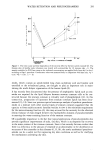
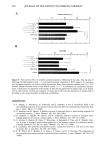
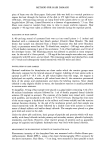
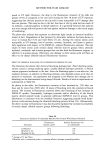
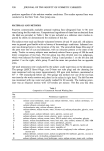
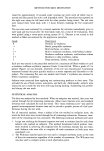
HAIR ROUGHNESS AND SOFTNESS 261 400' •200 lOO o 30 40 50 60 70 Relative Humidity [%] Figure 12. Effect of humidity on softness. 80 90 All measurements of the softness of hair were carried out at 25øC and 60% RH. RESULTS AND DISCUSSION The value of •Ap was measured under varied relative humidity conditions from 30% to 90%. As shown in Figure 12, the value of •Ap became smaller as the humidity was Cationic Rinse STANDARD o• 90 80 I 70 '" 60 no oil A B C D Oil Ingredient E F Figure 13. Effect of experimental rinse treatments on softness.

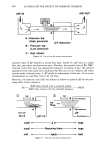
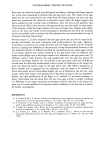
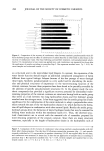
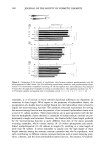
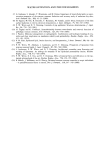
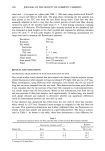
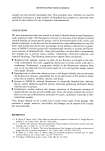
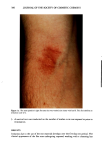
262 JOURNAL OF THE SOCIETY OF COSMETIC CHEMISTS lOO • 90 70- 60 STANDARD SHAMPOO Glycerin Propylene Butylene Glycol Glycol H u mecta nt Figure 14. Effect of humectant on softness. [• Humectant/ Hair=10% E• Humectant/ Hair----20% Plus washing by water increased. Thus, the softening of hair due to increasing humidity is the opposite to the flow resistance or functional resistance and appears to be quantified by the use of •Ap. The softening effects of simple prescription hair rinses were then quantified in terms of the ER (Figure 13). A total of seven rinses consisting of behentrimonium chloride and cetyl alcohol, and those additionally containing various oils, were subjected to the mea- surement of ER. As shown in Figure 13, the ER values of all samples tested were smaller than 100%, i.e., the softening effects of these samples could be detected. All the oil-containing samples showed smaller ER values as compared with the oil-free sample. Thus, it appears that addition of oils to hair is effective in softening hair. The hair-softening effects of humectants were also evaluated from ER values. Each of three humectants, glycerin, propylene glycol, and butylene glycol, was applied to hair at doses of 10 and 20% of the hair weight, and when a dose of 20% was used, the hair was washed with water in some cases. As shown in Figure 14, glycerin was particularly effective in softening hair, and its effect was found to persist even after washing with water. SUMMARY 1. A novel method based on the use of a pressure drop in a fluid was developed that appears to relate to changes in the frictional drag and softness of human hair induced by hair cosmetics. 2. The effect of cosmetics on hair roughness during rinsing with water could be quanti- tatively evaluated by measuring the resistance of water flowing over hairs. 3. The effect of hair cosmetics on the sleekness (smoothness) of dry hair could be quan- titatively assessed by measuring the resistance to air flowing over hairs.
Purchased for the exclusive use of nofirst nolast (unknown)
From: SCC Media Library & Resource Center (library.scconline.org)