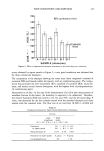
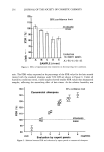
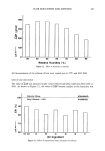
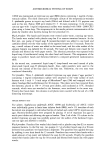
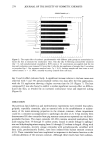
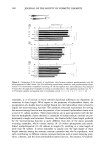
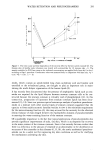
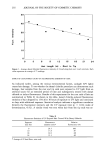
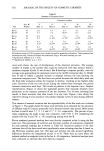
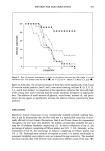
294 JOURNAL OF THE SOCIETY OF COSMETIC CHEMISTS SENSORY EVALUATION OF THE FLUORESCENCE EMISSION OF DANSYLATED HAIR The human eye is extremely light-sensitive. Therefore, an experiment was designed to determine whether visual observations can discriminate differences in the fluorescence emission of dansylated hair. Such an approach can short-cut the tedious and time-con- suming instrumental analysis for routine evaluation of dansyl chloride-treated hair samples and further obviates the necessity for expensive instrumentation for this tech- nique. To test this hypothesis, dansylated hair samples of known fluorescence intensities ranging between 0-25 fluorescence emission units (this range covers most of the hair samples analyzed so far) were selected and transferred in equal amounts to a series of glass petri dishes laminated with a filter paper disc. An undansylated hair sample was also included as a control. The samples were placed at random in a UV box and exposed to long-wavelength UV light (--366 nm). The relative fluorescence intensity of each sample was then rated on a scale of 0 (no fluorescence) to 10 (highly fluorescent) by panelists. Results of this experiment, plotted as fluorescence emission units (instru- mental values) vs. sensory scores (visual ratings), are shown in Figure 2. The graph (Figure 2) clearly shows a direct relationship between the instrumental values and visual ratings of fluorescence intensity of dansylated hair samples. Regression anal- ysis suggests a highly significant relationship between the two parameters tested (p = 0.0001 index of determination, 0.99). The fact that the relationship was found to be linear may be fortuitous, but nevertheless the relationship is highly significant. Based on the above results, one can conclude that sensory evaluation of dansylated hair 30 0 I 2 3 4 5 6 7 Visual Intensity Rating Figure 2. Fluorescence emission intensity vs sensory scores of dansylated hair samples.

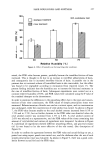
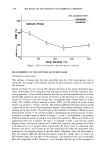
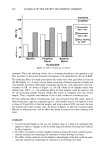
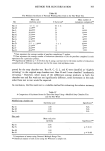
METHOD FOR HAIR DAMAGE 295 samples can also provide meaningful data. This procedure may, therefore, be used for qualitative screening of a large number of dansylated hair samples in a relatively short period of time without the use of expensive instrumentation. CONCLUSIONS We have demonstrated that hair treated with dansyl chloride shows strong fluorescence under ultraviolet light. The fluorescence intensity is a function of the amount of dansyl chloride binding to certain specific groups, such as N-terminal amino acids, thiols, and phenolic hydroxyls, in the hair and can be measured in a spectrofluorometer at very low levels. Our studies have shown that any damage to hair leading to destruction or gener- ation of DANS-C1 reactive groups will correspondingly decrease or increase the fluores- cence emission of dansylated hair. Using this procedure, we were able to demonstrate hair damage due to various causes, namely, weathering, ultraviolet radiation, and chemical bleaching. The following observations support these conclusions: ß Weathered hair samples, namely tip ends, do not fluoresce as strongly as the rela- tively unweathered root ends, suggesting destruction of certain amino acids due to weathering. Furthermore, a progressive decline in the fluorescence emission from root to tip was observed over the entire length of a 61-cm-long hair sample treated with dansyl chloride. ß Exposing hair to ultraviolet radiation prior to the dansyl chloride reaction decreases the fluorescence emission, presumably due to the destruction of UV-sensitive amino acids such as tyrosine, histidine cysteine, and lysine. ß Increase in DANS-Cl-induced fluorescence of chemically bleached hair indicates bleach- and/or alkalinity-mediated protein hydrolysis generating additional dansyl chloride reactive groups. ß Furthermore, studies indicate that sensory evaluation of fluorescence emission of dansylated hair can also provide reliable data. Thus, the sensory method may serve to short-cut the spectrofluorometric procedure for quick, qualitative screening of dan- sylated hair samples. Thus, dansyl chloride can be a useful tool to study certain types of hair damage. The procedure is simple, sensitive, and reliable, and damage can be assessed both visually and instrumentally. REFERENCES (1) R. Beyak, F. Meyer, and G. Kass, Elasticity and tensile properties of human hair. I. Single fiber test method. J. Soc. Cosmet, Chem,, 20, 615-626 (1969). (2) J. C. Garson, The transverse vibrational properties of keratin fibers in the presence of water and other materials, Int. J. Cosmet, Sci., 2, 231-241 (1980). (3) J. A. Swift and A. C. Brown, The critical detemination of fine changes in the surface architecture of human hair due to cosmetic treatments, J, Soc. Cosmet, Chem., 23, 695-702 (1972). (4) R. Beyak, G. S. Kass, and C. F. Meyer, Elasticity and tensile properties of human hair. II. Light radiation effects, J. Soc. Cosmet. Chem., 22, 667-678 (1971). (5) E. Tolgyesi, Weathering of hair, Cosmet. Toilet. 98, 29-33 (1983).
Purchased for the exclusive use of nofirst nolast (unknown)
From: SCC Media Library & Resource Center (library.scconline.org)