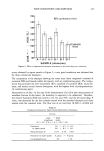
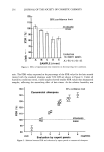
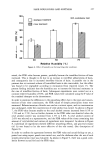
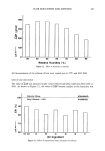
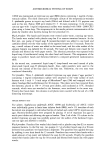
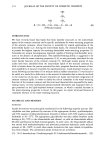
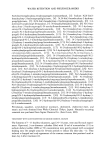
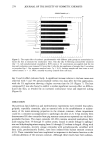
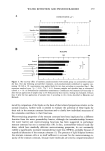
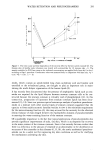
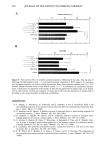
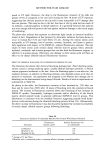
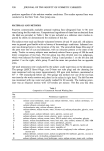
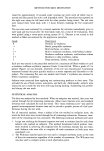
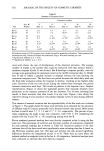
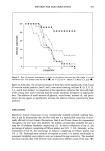
HAIR ROUGHNESS AND SOFTNESS 259 95% confidence limit STANDARD SHAMPOO Cationic Rinse • 90 Cetyl Alcohol ß 2.0% no oil A B C D E F Oil Ingredient Figure 8. Effect of oil ingredient in cationic rinse. Oils A, B, C, D, E, and F are glyceryl stearate, stearic acid, dimethicone, octyldodecanol, cetyl octanoate, and squalene, respectively. LI.I --2 Cationic Rinse 2 95% confidence limit 015 1' '5 ' .5 2. 4'.0 2.5 plus Oil A Cetyl Alcohol [%] Figure 9. Sleekness evaluated by expert panels (dry condition). Oil A = glyceryl stearate.

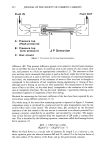
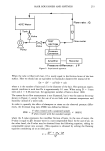
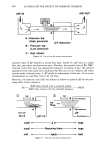
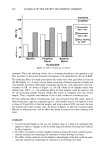
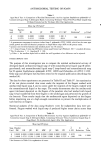
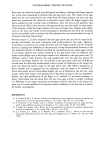
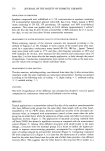
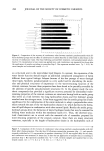
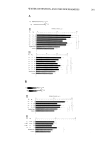
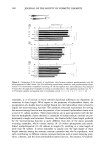
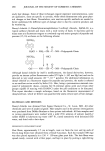
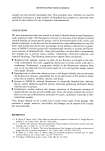
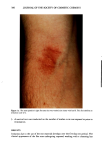
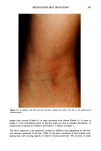
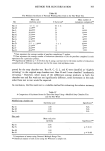
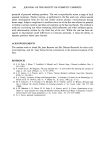
260 JOURNAL OF THE SOCIETY OF COSMETIC CHEMISTS AIR IN A ß Pressure tap (High pressure) Z• P Detection B' Pressure tap (Low pressure) C' Hair strand Figure 10. Test section for softness measurement. AIR OUT summed values of Ap obtained at several flow rates, instead of a Ap value at a single flow rate, may reduce the observation error. Therefore, the summed value of Ap, lEAP, obtained at five flow rates was adopted for evaluation of softness of hair. We selected appropriate flow rates under such conditions that flow rates do not influence Ap values because under a balanced state, 2, Ap should be independent of flow rate. In the actual measurements we used flow rates of 40-60 l/min. Moreover, the elasticity ratio (ER) was defined as follows to quantify Ap for the soft- ening effect of hair cosmetics: LAP when treated with a purposed sample ER = LAP when treated with the standard shampoo X 1001%] hair (•) flow rate A [ Q----0 Z•P=0- Air Flow hair ••• B i low pressu A high pressure z•P ß f (softness) , small small soft Z•P Restoring force HAIR Figure 11. Principle of softness measurement. large large hard
Purchased for the exclusive use of nofirst nolast (unknown)
From: SCC Media Library & Resource Center (library.scconline.org)