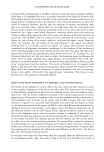
158 JOURNAL OF COSMETIC SCIENCE in the horny layer (more than 80% of it in the first five strips [unpublished result]) only 0.1 (+ 171%) l•g/cm 2 was recovered from the underlying skin. In contrast, when apply- ing ES, 97.2 (+5%) l•g/cm 2 of vitamin Etota I deposited at the skin surface, 46.5 (+8%) lag/cm 2 in the horny layer, and 58.2 (-+9%) lag/cm 2 in the underlying skin. For encap- sulated vitamin E acetate distributed in the horny layer and in the underlying skin, the following amounts were detected. For EL: surface 68.3 (+8%) l•g/cm 2, horny layer 52.6 (+8%) l•g/cm l, underlying skin 79.7 (+3%) l•g/cm 2. For ET: surface 54.4 (+3%) l•g/ cm 2, horny layer 53.2 (+4%) l•g/cm 2, viable skin 97.3 (+4%) l•g/cm l. The relative distribution of vitamin Etota I under non-occlusive conditions is illustrated in Figure 1 and summarized in Table I. DISTRIBUTION OF VITAMIN ET½)TAL UNDER OCCLUSIVE CONDITIONS Under occlusive conditions, with EM, 166.9 (+7%) lag/cm 2 vitamin Etota I was found on the skin surface and 38.2 (+36%) l•g/cm 2 in the horny layer, again concentrated in the first five strips. No vitamin Etota I was detected in the underlying skin. In contrast, after application in ES 108.8 (+5%) lag/cm 2 of vitamin Etota I was localized at the skin surface, 61.9 (+8%) l•g/cm 2 in the horny layer, and 35.7 (+7%) l•g/cm 2 in the underlying skin. A preference of encapsulated vitamin Etota 1 for the horny layer and for the underlying skin was observed also under occlusive conditions, yet to a lesser extent. For EL: surface 91.2 (+7%) l•g/cm 2, horny layer 74.0 (+3%) l•g/cm 2, underlying skin 43.4 (+15%) !ag/cm 2. For ET: surface 65.2 (+7%) l•g/cm 2, horny layer 68.2 (+5%) l•g/cm 2, under- 4- 100 , ! EL EM ES 80 6o 40 ,, ,, ,, ET vitamin E acetate ,:r"•'] free vitamin E Figure 1. Influence of formulation on distribution of vitamin E acetate and vitamin E in human skin. Application on excised human skin under air exchange (non-occlusive conditions). Vitamin E acetate was dissolved in Mygliol (EM), solubilized in water (ES), and encapsulated in liposomes (EL) and in Nano- topes TM (ET).

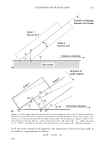
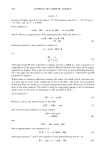
CONVERSION OF VITAMIN E ACETATE TO VITAMIN E 159 Table I Relative Amount (mol %) of Topically Applied Vitamin E .... • Recovered From Different Sites of Human Skin I• Vitro Surface Horny layer Underlying skin Formulation Non-occlusive Occlusive Non-occlusive Occlusive Non-occlusive Occlusive EM Vitamin E ..... 1 79.2 74.2 12.6 17.0 0.4 -- Free vitamin E 1.2 1.2 0.1 0.1 -- -- ES Vitamin E .... • 43.2 48.4 20.7 27.6 26.6 16.6 Free vitamin E 1.3 1.4 0.9 1.3 9.3 8.1 % Conversion 34.8 48.9 EL Vitamin E .... l 30.6 40.6 23.6 33.0 36.8 20.2 Free vitamin E 1.3 1.9 1.3 1.7 14.5 10.5 % Conversion 39.4 51.2 ET Vitamin E .... l 24.5 29.5 24.0 31.1 45.3 31.7 Free vitamin E 1.1 1.5 1.1 1.5 19.5 15.6 % Conversion 43.1 49.2 Topical application of vitamin E acetate onto excised human skin. Vitamin E acetate was dissolved in Mygliol (EM), solubilized in water (ES), and encapsulated in liposomes (EL) and in Nanotopes TM (ET). The amount of vitamin E acetate and vitamin E was quantified by HPLC in the respective extracts. All experiments were carried out in triplicate. lying skin 66.3 (+7%) lag/cm 2. The relative distribution of vitamin Etota 1 under occlu- sive conditions is illustrated in Figure 2 and summarized in Table I. BIOCONVERSION OF VITAMIN E ACETATE TO VITAMIN E The extent of conversion of vitamin E acetate to vitamin E was calculated from the molar ratio of vitamin Etot• • recovered in each compartment as vitamin E, i.e., on the skin surface, in the horny layer, and in the underlying skin. Consequently, the absolute amount of vitamin E depends on both the amount of vitamin Etota 1 transported to a compartment and the local activity of ester hydrolysis. At the skin surface or in the horny layer, the vitamin E determined in all instances essentially corresponded to the less than 2% of the vitamin E contained in the vitamin E acetate formulations prior to application, indicating the absence of relevant esterase activity. In the underlying skin, however, substantial amounts of free vitamin E were detected. If applied as ES, EL, or ET, 26-45% of vitamin Etot• • was recovered from the underlying skin under non-occlusive conditions (Figure 1) and 16-30% under occlusive conditions (Figure 2). Findings are summarized in Table I. Accordingly, the highest absolute concentration of vitamin E in the skin was obtained after application of ET under non-occlusive conditions (ET: 20% EL: 15% ES: 9% Figure 1), as well as under occlusive conditions (ET: 16% EL: 11% ES: 8% Figure 2). The conversion rate of vitamin E acetate to vitamin E, i.e., the molar amount of vitamin E•o• l transformed to vitamin E, was calculated as 35% (ES), 39% (EL), or 43% (ET) under non-occlusive conditions. Though the amount of vitamin E acetate deposited
Purchased for the exclusive use of nofirst nolast (unknown)
From: SCC Media Library & Resource Center (library.scconline.org)