226 JOURNAL OF COSMETIC SCIENCE In a report on research on healthy volunteers, the same College stated (3) that "Cosmetic and other substances, e.g. domestic washing powders, used on or by man, may need to be tested on healthy human volunteers and so come within the scope of this Report." EU rules governing testing of cosmetic ingredients and finished products requires adoption of the World Medical Association Declaration of Helsinki and the EU Direc tive on GCP for Trials on Medicinal Products, for protocols to be submitted to an authorized ethics committee, and for trials to be conducted and monitored under the direction of suitably trained personnel. The Royal Society of Chemistry issued guidance (4) to members who could be involved professionally, or as potential volunteers, in healthy human volunteer experiments. Advice included submission of test proposals to a research ethics committee. The pro fessional and ethical elements of market research are covered in a Code of Conduct (5 ). IMPLEMENTATION OF ETHICAL REVIEW Since the ethical review of studies of non-medicinal products in healthy volunteers is currently not regulated, there is some flexibility in how the general principles are applied in a pragmatic manner to match the needs to product sector, while protecting the trial subjects. However, it is clear that this research must conform to international guidelines and that investigators should not be the sole judge of whether their work complies with such standards. RESEARCH ETHICS COMMITTEES (RECS) In theory, investigators could submit proposals for healthy human volunteer trials to existing, recognized, independent RECs/IRBs. Some, though not all, of these RECs are formally recognized for review of Phase 1 trials on healthy volunteers, but European legislation as it applies specifically to these committees is currently in flux. In the UK these RECs are government-funded to provide ethical review of trials on medicinal products only, and at no cost to the drug industry. Depending on workload and inter pretation of the regulations, these committees may vary in their willingness to undertake reviews of non-medicinal trials. The applicant would need to arrange separate funding arrangements with the committee. Alternatively, sponsors could submit proposals for review by fully independent but not government-recognized RECs, e.g., those established by contract research organizations. Sponsor companies could also set up their own RECs, though clearly this would be perceived to be even less independent. To minimize the opportunity for sponsor influ ence on an internal REC, the committee could comprise only external members em powered to appoint (and dismiss) the chairperson. A less-transparent arrangement is to staff the committee with a mixture of external members and internal employees. The latter must at least be independent of the staff and reporting-line of those conducting the trials under review. Criticism could include the opportunity for covert or overt man agement pressure on staff members to provide a favorable review. Ideally the Chair should be an external member. The sponsor company should arrange indemnity for external members. The approach of one multi-national has been described elsewhere (6).

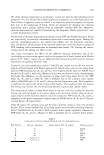
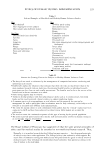
ETHICS OF HUMAN TESTING: IMPLEMENTATION 227 MEMBERSHIP OF RECS REC membership should be balanced for age, gender, and lay/expert background. The size of the quorum, e.g., 5-7 (to include at least one lay and one expert member), should first be agreed upon, and then the committee size defined to ensure a minimum quorum for any meeting. Typically, the REC may comprise 10 to 18 members maximum. As a guide, at least one third should be lay. OFFICERS A decision must be reached on how the Chair and Vice-chair should be elected. This may be an appointment by the authorizing authority or election by and from within the REC members. A secretary or administrator is required to arrange the meetings, take minutes, maintain REC files/library, and interface with applicants, although written decisions of the committee on specific submissions should be signed by the Chair or Vice Chair. FUNCTIONS The aim of the REC is to provide independent advice to parttctpants, researchers, sponsors, employees, and professionals on the extent to which proposals for studies on healthy human volunteers comply with recognized ethical standards, and to approve, require amendment, or reject studies submitted to it. Its prime responsibility is to protect the dignity, rights, safety, and mental and physical well-being of potential or actual research subjects. Concern over the volunteer must prevail over the interests of science or society. A secondary responsibility is the protection of researchers and insti tutions where any matter of an ethical nature might affect them, provided that the interests of the trial volunteers take priority. The scientific robustness of submissions for ethical review should have received prior, separate peer review. While safety and science quality are not the direct responsibility of the REC, it is advisable for the committee to become familiar with the salient ethical components of each type of test that it reviews, including any potential risks to volun teers. For example, • Transepidermal water loss measurements are affected by race, gender, site of appli cation, and emotional state of the test subject. Experimental design is crucial, and studies should be carried out in a controlled environment at a standard temperature and relative humidity, with time allowed for subjects to reach equilibrium before each assessment is made. • Ethical considerations for compatibility testing of finished cosmetic products in healthy human volunteers are highlighted in Table III (7). • Tests should not cause irreversible damage. Trials on products containing ingredients known to be teratogenic (e.g., in animal studies), depending on safety margins, may need to be restricted to males or post-menopausal women. The committee may require ongoing review and will need to be kept informed of adverse and seriously adverse events and ensure that these are followed through to resolution. Depending upon the type of product being studied and the type of tests undertaken, common potential adverse effects include skin or eye irritation, itching, contact allergy, contact urticaria, pigment changes, hair and nail changes, and subjective symptoms.
Purchased for the exclusive use of nofirst nolast (unknown)
From: SCC Media Library & Resource Center (library.scconline.org)