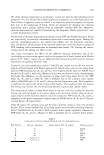
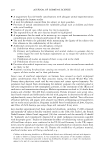
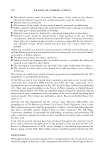
228 JOURNAL OF COSMETIC SCIENCE Table III. Recommended Ethical Considerations for Compatibility Testing of Finished Cosmetic Products in Healthy Human Volunteers (after ref. 7) • Not a substitute for animal testing. • Performed only to confirm, in a limited number of subjects, that products do not damage skin and mucous membrane, as already expected from other sources. • Before the trial commences the study supervisor must possess product formulation, pre-clinical safety assessment, its conditions of use, and any warnings. • Protocols should be based on sound science and potential risks. Even if no risks are associated with the work, the studies must not be conducted if they do not comply with scientific criteria. • Tests should not be performed unless the importance of the objective is in proportion to the inherent risks to the subject. • The study muse cease as soon as any risk outweighs the potential benefit of the trial. • Skin compatibility testing should only be carried out by technically qualified persons under medical superv1s10n. • While acceptability tests in consumers do not need review by an REC, compatibility test protocols possibly posing a risk to volunteers should be submitted to an REC for review. • Volunteers are adequately informed of the aims, methods, and potential risks/discomfort, and give their free written consent before being recruited. • Subjects with current dermatitis or who know of past allergic contact dermatitis related to the ingredients should be excluded. • Pregnant or lactating females should be excluded, except in very special listed circumstances. • Children should be excluded, except in very limited identified circumstances when their own free informed consent should be obtained in addition to that of their parent or guardian. • Study reports should include all experimental details to provide a rationale of the trial and to preserve the accuracy of the results. The sourcing of human tissues and other samples from, e.g., hospitals, universities, and commercial establishments for industrial research should also be considered by a REC. These samples are often supplied by patients as part of their medical treatment, e.g., for routine clinical testing or donated through local health services and then sold for research usually without the patient's awareness. Researchers should be able to confirm that their supplier has the necessary consents. From 2006, UK law relating to collection, storage, and use of human samples in research will be tightened by implementation of the Human Tissue Act 2004 (8), which addresses informed-consent and ethical review (9). The Committee should issue an annual report to the "appointing authority," and for internal committees, this should be sent to the most senior manager, e.g., Director of Research or Managing Director. The REC administrator should hold on file CV s for each member and record any relevant training that they receive. Induction training for new members should include back ground and history to RECs, their role within the organization, the REC constitution, implementation of REC SOPs, and overview of the types of healthy human volunteer studies routinely submitted. Ongoing training in more specialized elements should be provided as required. MEETINGS Meetings should be arranged to meet demand, and proceedings should be documented. Minutes should not link individual members to comments. They should be copied to

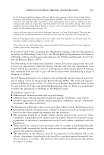
ETHICS OF HUMAN TESTING: IMPLEMENTATION 229 members, but it is arguable whether minutes should receive wider distribution (see Confidentiality, below). Sufficient time should be allowed for members to study applications prior to meetings. The meeting should reach unanimous decisions by consensus wherever possible. Where a consensus is not achievable, a formal vote should be taken based on a one-member one-vote principle. Expedited reviews by post should be reserved for the most simple applications they should be the exception rather than the rule. Reasons for deferment or rejection should be clearly stated. The committee should notify applicants of its deci sions in writing as soon as possible after the meeting. CONFIDENTIALITY All business of the committee should be conducted in private to preserve confidentiality, and documentation related to the committee and its meetings should be confidential so as to encourage full and frank debate. When applicants attend meetings to present their proposals and answer questions, they should be requested to leave while the committee formulates its response. They will not be permitted to take part in voting. Similarly, the confidentiality of data relating to individual trial volunteers (medical history, compen sation, adverse events) should be ensured. FINANCIAL The committee should be provided with facilities, administration assistance, and an annual budget from its appointing authority to cover training, site visits, etc. In addi tion, consideration should be given to awarding external members an honorarium to cover their travel expenses, loss of earnings, and time preparing for, and attending, meetings. REC PROCEDURES The REC should have a constitution and portfolio of SOPs describing its modus oper andi. ETHICS REVIEW DOCUMENTATION Applications could mirror the documentation required for ethical review of trials on medicinal products. This is good practice for true clinical studies but is likely to be over burdensome for more routine, low-risk studies such as hot-room sittings, sensory studies, patch testing, and flavor trials. For routine tests that conform to a general pattern using substances recognized to be safe, SOPs could be submitted for generic review by the REC. These should contain • a description of the methodology • the definition of expected adverse reactions (e.g., irritation levels) • the nature of products to be tested (i.e., comprising standard ingredients) • the decisions and justification for prior assessment of safety • means of monitoring for adverse reactions • the subject information sheet and consent form
Purchased for the exclusive use of nofirst nolast (unknown)
From: SCC Media Library & Resource Center (library.scconline.org)