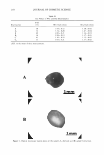
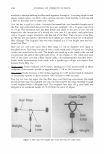
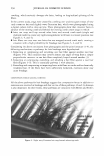
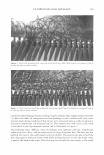
CHITOSAN BEADS IN COSMETICS 207 PREPARATION OF CHITOSAN BEADS LOADED WITH MENTHA PIPERITA E.O. Three different chitosan-based polymeric dispersions were prepared for the beads using glycolic acid as an anionic system, as described in a previous study (8). Briefly, a preweighed amount (1 % w/w) of different types of chitosan (hC, mC) or a mixture of chitosans (hC/mC 1: 1 w/w) were slowly dissolved in a water solution containing glycolic acid (1 % w/w) under magnetic stirring for two hours. Mentha piperita E.O. (1 %) was then added to the dispersions while stirring gently. The corresponding beads were prepared using two different gelling solutions: (a) by dropping the bubble-free polymeric dispersion (-5 g) through a disposable sy ringe onto a polyanionic solution of 5% TPP (-50 ml) as an ionically crosslinking agent (TPP-bead batches A 1 , B 1 , and C 1 ). (b) by dropping the bubble-free polymeric dispersion (-5 g) through a disposable sy ringe onto an alkaline solution of 10% NaOH (-50 ml) as a coacerving agent (NaOH-bead batches A, B, and C). The formation time of the beads may change, depending on the different type of chitosan dispersion (molecular weight, degree of deacetylation, apparent viscosity, etc.) and the different gelling solutions (a or b) used. Generally, formation time may vary from 30 minutes to 60 minutes when the system is kept under gentle magnetic stirring with a speed of not more than 50 rpm. After this time, the gelled beads are separated, rinsed with distilled water, and then air-dried in a dryer to a constant weight. OPTICAL MICROSCOPE ANALYSIS A Carl Zeiss Axiostar Plus (transmitted-light) optical microscope with three magnifi cations (5x, lOx, 40x), equipped with a Sony DSC-575/585 camera connected to a computer program to process images, was used to evaluate the size and morphology of the dry beads. The size was assessed using the 5 x magnification on an average of about twenty dried beads. The size of the fresh and swelled beads was assessed with reference to a standard measure ( 10 mm). UV SPECTROPHOTOMETER ANALYSIS The absorbance of Mentha piperita E.O. was measured at a wavelength of 273 nm with a Hitachi U-2000 UV spectrophotometer. A calibration curve was developed using methanol solutions of Mentha piperita E.O. at concentrations ranging from 1.70 to 11 µg/ml). EVALUATION OF THE ENCAPSULATION OF MENTHA PIPERITA E.O. A preweighed amount of each batch of beads was suspended in methanol (10 ml). The beads were next subjected to vigorous mechanical shaking with a vortex mixer for one minute and subsequently sonicated for one hour with a Branson 1200 ultrasound bath. The filter solutions were analyzed at a wavelength of 273 nm. All loaded determinations were run in triplicate and the mean values were reported.

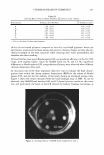
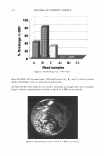
208 JOURNAL OF COSMETIC SCIENCE SWELLING RATIO MEASUREMENTS The swelling ratio or water uptake was determined gravimetrically. The weight of the completely dried bead samples was measured directly (W 0). The beads were then in troduced in bottles containing 50 ml of the swelling medium (0.9% NaCl) and stirred at 50 rpm at 37 ° C. At predetermined times (30, 60, and 120 min), the beads were removed from the medium, blotted to remove excess water, and immediately weighed. This procedure was repeated until the beads reached a constant weight (W t ) (equilib rium water uptake). The swelling ratio of the bead samples was calculated according to the following equa tion: Swelling ratio = W /W 0 where W0 and W t are the weights of the dry and swollen beads, respectively, measured at time t with constant weight. All determinations were run in triplicate and the obtained mean values were reported. BEAD ST ABILITY IN BBF A predetermined amount of each bead sample ( ~ l 0) was introduced in bottles contain ing 50 ml of BBF. The amount of unchanged beads was visually assessed at predeter mined times (five days for the first month and then every month) up to six months at room temperature. A temperature stability assay (9) was performed: A predetermined amount of each bead sample (~ 10), in 50 ml of BBF, was treated in freeze-thaw cycle cabinets (-10°C to +42°C, two cycles every 24 hours) for two weeks. Daily checks were performed to visually assess the amount of unchanged beads. All determinations were run in triplicate. BEAD BREAKAGE ASSAY IN BBF A predetermined amount of each bead sample ( ~ 10) was introduced in bottles contain ing 20 ml of BBF and 5 ml of distilled water. The next step was to submit this blend to a five-second vigorous mechanical shaking in a vortex mixer three times. Each time the number of the broken beads were assessed. The percent of broken beads was defined as: Number of broken beads ---------x100 Given number of beads All determinations were run in triplicate and the mean values were reported. RES UL TS AND DISCUSSION In this work six chitosan bead samples with different molecular weights were produced. Thanks to the presence of cationic and free hydroxide groups (10) in chitosan, it is possible to obtain polymeric systems capable of loading different types of molecules of pharmaceutical and cosmetic interest (11, 12).
Purchased for the exclusive use of nofirst nolast (unknown)
From: SCC Media Library & Resource Center (library.scconline.org)