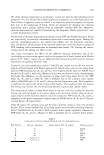
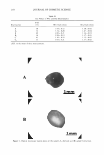
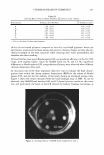
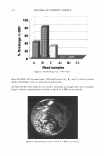
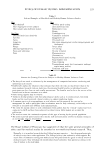
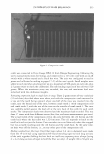
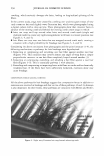
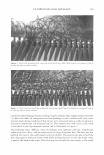
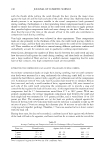
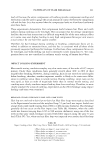
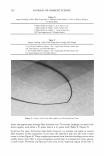
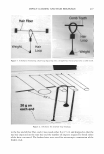
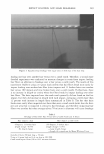
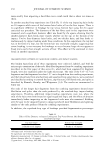
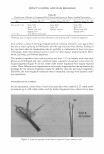
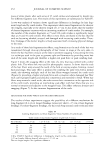
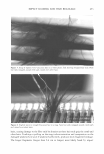
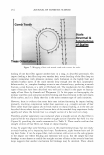
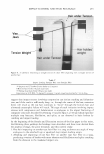
252 JOURNAL OF COSMETIC SCIENCE piece of white plastic after each series of 25 comb strokes and separated by length into five different fragment sizes. The results of this experiment are summarized in Table IV. A two-way analysis of variance shows significant differences in breakage by hair frag ment length and by comb strokes. This experiment shows more fragments at the shortest two lengths, especially at the shortest length of 1.27 cm. It also shows that the number of shorter fragments increases with an increasing number of comb strokes. For example, the number of the smallest fragments at 7 5 and 100 comb strokes is significantly larger than at 25 and 50 comb strokes. This effect is most likely attributed to the fact that the ends are becoming abraded, stressed, and damaged with increasing comb strokes. There fore, breakage of the shorter lengths is likely associated with increasing physical damage to the ends. As a result of these hair fragmentation effects, snag formation at the ends of the hair was reexamined through close-up photographs of hair tresses in snags at the very ends, in which the hair had been crosscut at the ends to promote snagging. Crosscutting the tress is a technique used in the past to generate split-end formation by providing more hair ends of the same length and therefore a higher end peak force or peak combing load. Figure 5 shows the snagging effect at the ends of a tress that was combed with a white plastic fork. The white fork was used for photographic reasons. It shows that the ends of the hair fibers wrap around the teeth of the fork at varying angles, forming crossed hairs and snags. This same effect is produced by combing the same tress with a normal comb, also showing multiple ends of the hair fibers wrapped around the comb teeth (Figure 6), providing a higher end peak force and a situation where damaged hair fiber ends can be gripped tightly and abraded, compressed, and extended to break. When hair fibers wrap around a comb tooth, the ends reverse their orientation on the opposite side of the comb tooth, providing an interlocking scale effect with hair fibers that are in a normal orientation and adjacent to the wrapped hairs. This effect enhances abrasion and snagging (Figure 7). It also increases fragmentation of the ends. MECHANISMS FOR SHORT-VERSUS-LONG-FRAGMENT BREAKAGE The results of these experiments suggest the possibility of a different mechanism for long-fragment (6.4 cm or longer) breakage versus very short (-2.5 cm or less) fragment breakage. For short-fragment breakage, the hair ends wrap around comb teeth and other Table IV Combing Experiment and Shore Fragments Versus Number of Comb Strokes Comb strokes versus broken fragment length from 4 tresses No of Strokes 1.27 cm 1.27-6.4 cm 6.4-12.7 cm 12.7-17.8 cm 25 99 56 13 4 50 149 44 12 4 75 226 94 21 3 100 194 74 13 4 2-Way ANOVA: Significant differences in breakage by length and by comb strokes. 1.27-cm Lengths different from all others as is 1.27-6.4 cm. The two longer lengths: No significant difference. 17.8 cm

IMPACT LOADING AND HAIR BREAKAGE 253 Figure 5. Snag of slightly wavy Caucasian hair on a white plastic fork showing wrapped hair ends. Note hair ends wrapped around teeth and crossed over other hairs. Figure 6. Slightly wavy to straight Caucasian hair in a snag. Note hair ends wrapped around comb teeth and crossed over other hairs. hairs, causing damage to the fiber ends by abrasion as these hair ends grip the comb and other hairs. Combing or pulling on the snag induces extension and compression on the damaged weakened site and, if weakened sufficiently, produces short-fragment breakage. The longer fragments (longer than 6.4 cm or longer) most likely break by impact
Purchased for the exclusive use of nofirst nolast (unknown)
From: SCC Media Library & Resource Center (library.scconline.org)