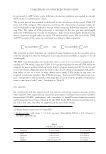
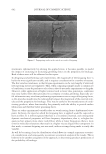
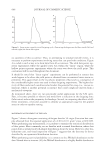
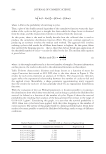
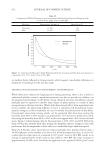
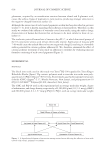
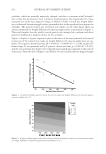
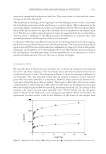
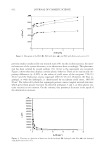
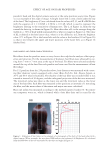
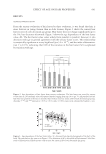
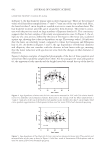
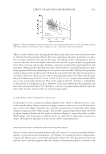
JOURNAL OF COSMETIC SCIENCE 602 treatments. Alternatively, by altering the applied stress, it becomes possible to model the impact of increasing or decreasing grooming forces on the propensity for breakage. Both of these areas will be addressed in this report. In designing and performing such experiments, the magnitude of the fatiguing force is by far the most signifi cant variable, and it requires consideration for a number of reasons. The fi rst involves timeliness, in that fatigue experiments can be very lengthy if relatively low repeating stresses are employed. Thus, when comparing samples under a common set of conditions, it may be prudent to select forces that do not make experiments too lengthy. However, while application of higher stresses leads to faster data generation, conditions may stray further from those presumed to accompany everyday grooming. Especially use- ful information may arise from performing experiments across a range of fatiguing forces, as this provides insight into the relationship between the magnitude of the external stim- ulus and the propensity for breakage. This may be useful to the manufacturers of condi- tioning products, where functionality lies primarily with the ability to provide surface lubrication and therefore lower grooming forces. There are other experimental variables that are worth noting from a fundamental view- point. In theory, the speed at which the fatiguing force is applied would be expected to have an effect. It is well recognized that hair is a viscoelastic material, and consequently dynamic mechanical properties will have frequency dependence that is, at higher fre- quencies hair appears more elastic (solid-like), while at lower frequencies there is more time for molecular relaxations that result in a higher viscous (liquid-like) component. In this work, a constant fatiguing rate was used, with no attempt being made to study this variable. As will be becoming clear, the distribution of such fl aws in a sample represents a statisti- cal consideration, and consequently necessitates a statistical analysis of the results. This is believed to be another uniqueness of the approach, in that testing produces predictions of the probability of breakage. Figure 2. Propagating cracks in the cuticle as a result of fatiguing.

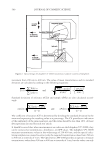
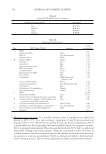
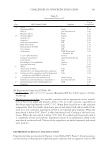
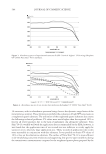
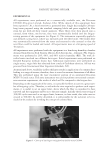
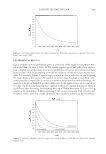
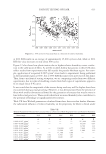
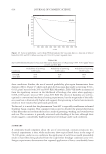
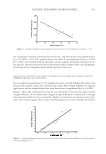
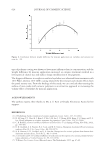
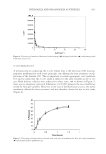
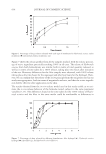
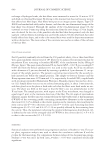
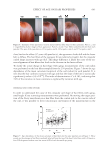
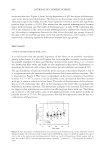
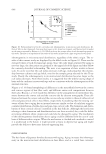
FATIGUE TESTING OF HAIR 603 EXPERIMENTAL All experiments were performed on a commercially available unit, the Dia-stron CYC800 (Dia-stron Limited, Andover, UK). While details of this equipment have been reported (7,8), a brief overview is presented here. Single hair samples (28-mm- long) were prepared using the standard crimping block and press supplied by Dia- stron for use with all their tensile analyzers. These fi bers were then placed onto a carousel, from where, one-by-one, they were automatically loaded into the fatigue- testing portion of the equipment (see Figure 3). The instrument repeatedly applied a user-defi ned cycling force, which was repeated until the fi ber broke. The broken fi ber was automatically removed from the tester and returned to the carousel so that the next fi ber could be loaded and tested. All experiments were at a fatiguing speed of 40 mm/sec. All experiments were performed with the equipment in a bench-top humidity chamber obtained from Electro-Tech Systems (Electro-Tech Systems Inc., Glenside, PA). Experi- ments were performed at 20%, 60%, and 90% relative humidity (RH). The work de- scribe herein involved two different hair types. Initial experiments were performed on blended European medium brown hair. Additional experiments were performed on single-source, virgin Afro hair obtained from a male of Caribbean ethnicity. All hair was procured from International Hair Importers (Glendale, NY). As mentioned above, variability in fi ber thickness results in application of a common force leading to a range of stresses therefore, there is a need to measure dimensions of all fi bers. This was performed using the laser micrometer portion of an automated Dia-stron MTT675 tensile tester. This same instrument was used to perform conventional constant- rate extension experiments, the results of which will be compared to the fatigue data. Depending on the magnitude of the stress, it is possible for fi bers to survive a great num- ber of fatiguing cycles. Therefore, to aid with the time required to perform such experi- ments, it is useful to set an upper limit, above which the fi ber is considered to have survived and the equipment moves on to the next sample. Initially the factory setting of 300,000 cycles was used as an upper limit however, in later work, this value was in- creased to 500,000. As will be described, it is still possible for the survivors to be in- cluded in the analysis by invoking the concept of censored data. Figure 3. Close-up of the fatigue testing head on the Dia-stron CYC800.
Purchased for the exclusive use of nofirst nolast (unknown)
From: SCC Media Library & Resource Center (library.scconline.org)