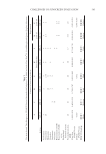
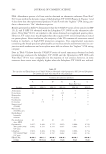
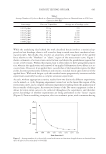
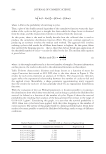
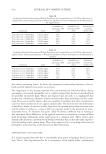
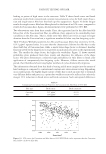
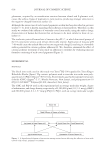
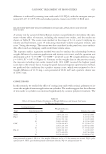
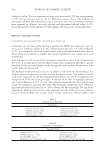
JOURNAL OF COSMETIC SCIENCE 630 Analytical methods. The concentrations of drugs were measured by UV-spectrophotometry at 223 nm for Aloe vera and at 322 for Hydrocotyle asiatica (λmax). The method was previously validated and verifi ed for accuracy, precision, and linearity. Standard solutions were prepared by diluting the stock solution with phosphate-buffered saline. A UV- spectrophotometer (Perkin-Elmer UV/VIS Lambda 40) was used for all measurements. RESULTS AND DISCUSSION PREPARATION AND ORGANOLEPTIC DESCRIPTION OF FORMULAE In formula one, the base of the hydrogel, provided by BASF, was adapted to our cos- metic active substances (Table I). In the cold production process (4° C ± 0.1), Pluronic F-127® was completely dissolved in the formula, with water added immediately after ad- dition of the active substances. Finally, the process of gelifi cation was carried out at room temperature. Aloe hydrogel at 10% is consistent, transparent, and pink in color, with a characteristic aloe scent. It is easily spread over the skin, leaving a fi ne, transparent fi lm that is quickly absorbed. It does not leave behind a sticky feeling and can be washed off with water, leav- ing the skin soft and smooth. The hydrogel with Hydrocotyle asiatica at 7% differs in color from the Aloe hydrogel. It is slightly orange in appearance and has its own distinctive aroma. Our reference for the study of the organogel was the formula published by Pince (24), which we adapted for the incorporation of the two active principles. A solution of lecithin in isopropyl palmitate and a gel of Pluronic F-127® at 30% were prepared separately and then mixed using gentle electromagnetic agitation (800 rpm). The remaining components were added dur- ing homogenization and then left to cool to obtain the fi nal organogel. No signifi cant organoleptic differences between the Aloe organogel and the Hydrocotyle asiatica organo- gel were observed. Both were creamy, with a viscous consistency, without bubbles, and Table I Composition of Hydrogels Hydrogels Aloe gel side 10:1 10 g Hydrocotyle asiatica 7 g Propylene glycol 19,8 g Propylene glycol 19,8 g Pluronic F-127® 18 g Pluronic F-127® 20,46 g Distilled water 52.2 g Distilled water 52.7 g Table II Compositions of Organogels Organogel PLOs Aloe gel side 10:1 10 g Hydrocotyle asiatica 7 g Propylene glycol 13.5 ml Propylene glycol 14 ml Lecithin/IPP 19.8 ml Lecithin/IPP 20.4 ml Pluronic F-127® 30% gel 56.7 ml Pluronic F-127®30% gel 58.6 ml

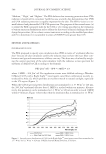
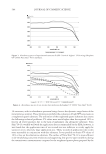
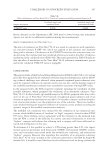
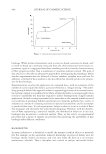
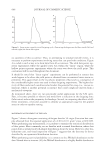
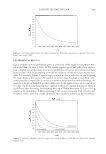
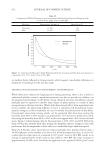
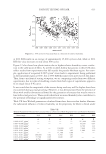
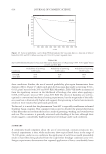
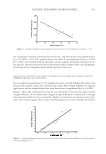
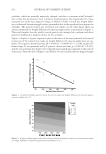
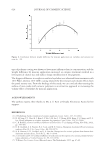
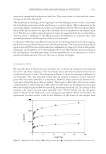
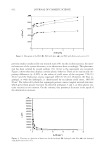
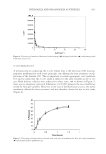
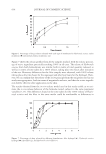
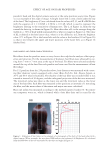
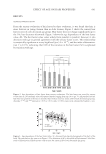
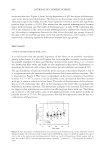
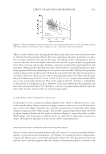
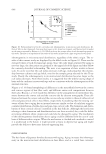
HYDROGELS AND ORGANOGELS AS VEHICLES 631 were easily spread and absorbed into the skin. They were ochre in color and had a pene- trating soy lecithin-like smell. The fundamental advantage of the organogel over the hydrogel system is that it facilitates the transdermic penetration of the medication to a greater degree. This is important in the case of anticellulitic treatments, given that active ingredients must be able to reach the deepest layers of the skin in order to act upon the cells where fat is accumulated at the adipose tissue level. The skin is a complex organ designed to isolate the organism from the external milieu, and thus poses a challenge to the pharmaceutical development of excipients that yield optimal permeation and absorption of the active principles. In the early 1990s Jones and Kloesel (cited in ref. 25) developed pluronic lecithin organo- gel (PLO) as a transdermal drug carrier and delivery system. The most promising medical applications of PLO are for nonsteroidal anti-infl ammatory drugs (26) such as ketoprofen, piroxicam, and diclofenac (27). Our fi ndings (28) reveal that PLO has great potential in the development of transdermal drug delivery formulations, as an alternative to oral or parenteral administration. They are also easy to prepare and apply. RHEOLOGICAL STUDY We used the data of shear stress of each shear rate to obtain an estimated concentration for each of the three replicates. The mean shear stress and their standard deviations are included in Figures 1 and 2. The rheogram in Figure 1 shows the rheological behavior of our hydrogels. The data obtained reveals that all samples displayed a plastic behavior given that they were semisolid in consistency. However, these systems are known to be- come more liquid the more they are shaken. They begin to fl ow when shear stress reaches a limit known as yield stress (σ0). The values of yield stress are determined as the point when the sample begins to fl ow after reaching maximum viscosity (29). According to this criterion, the values of yield stress obtained were 3549.67 D/cm2 for the excipient, 2639.33 D/cm2 for the Hydrocotyle asiatica hydrogel, and 1092.33 D/cm2 for the Aloe. An explanation for these results could be the difference in pH found in the samples from Figure 1. Rheogram of the hydrogel ( ), hydrogel with Aloe (▲), and hydrogel with Hydrocotyle asiatica (○).
Purchased for the exclusive use of nofirst nolast (unknown)
From: SCC Media Library & Resource Center (library.scconline.org)