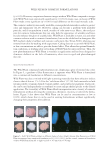
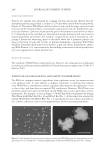
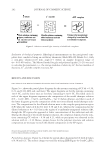
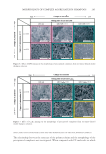
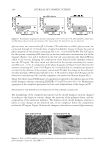
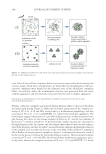
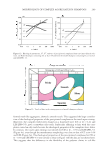
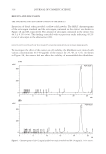
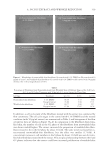
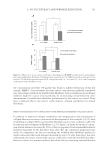
JOURNAL OF COSMETIC SCIENCE 286 WILD PLUM PARTICLE SIZE Particle size analysis data obtained by scanning electron microscopy showed that the amorphous particles ranged from 2.19 μm to 23.63 μm when mixed with talcum powder. (Figure 6). This makes Wild Plum ideal for toiletries, and avoids the range associated with toxicity and the biological effects of nanometer-sized particles (24,25). Furthermore, par- ticle sizes between 2 μm and 20 μm provide good color properties and soft-focus effects (17). Depending on the intended use, the preferred average diameters will vary, based on desired granularity and texture. For example, a liquid facial cosmetic formulation com- prising a fl uorescent whitening agent as described above has a preferred particle size range of between 10 μm and 30 μm. A lipstick formulation containing Wild Plum should be formulated with particle sizes between 2 μm and 20 μm. Furthermore, admix- ing Wild Plum in a 2% concentration by ball-milling in micronized talcum powder does not cause aggregation to larger particle sizes. WILD PLUM SYNTHESIS The synthesis of Wild Plum is still proprietary. However, the compound was synthesized according to similar procedures published in United States patent application 11/863,475 (fi led in 2007). WILD PLUM, FDA REGULATIONS, AND SAFETY CONSIDERATIONS The FDA act exempts cosmetic ingredients from regulation except for sunscreens and color additives (26). A color additive is defi ned, essentially, as anything that imparts color. Wild Plum is considered a cosmetic ingredient that improves skin appearance, is not a color or dye, and thus does not require FDA certifi cation. However, Wild Plum is an off-white powder and can be mixed with colored FD&C dyes to suit a particular cosmetic formulation. For example, as seen in Figure 5, Wild Plum Pink was prepared by mixing Wild Plum with FD&C Red No. 40 and FD&C Red No. 3. A blue shade was achieved by mixing Wild Plum with FD&C Blue No. 1 to specifi cally decrease redness and dark cir- cles, enhance whiteness, and even out pigmentation, thereby increasing luminosity. Figure 6. (Left) Scanning electron microscopic image of zoomed-out Wild Plum particles demonstrating an aver- age particle size of 2–20 μm (bar = 500 μm). (Right) Image of individual Wild Plum particles (bar = 20 μm).

WILD PLUM IN COSMETIC FORMULATIONS 287 The chemical composition of Wild Plum includes the fl uorescent moiety 4,4′- diaminostilbene-2,2′-disulfonic acid. This component has been safely used in many cos- metic applications in the market, and is therefore not expected to be toxic (27). Preliminary skin irritancy studies have already indicated that there are no short-term adverse side effects, such as redness, swelling, or itching. More extensive skin irritancy studies are underway. Little or no skin irritancy is expected, given the facts that the con- centration of Wild Plum in cosmetic formulations is low, at a level of 0.005% to 0.1%, and that the average particle is between 10 and 20 microns. WILD PLUM OUTLOOK The leading edge of the baby boomer generation (born between 1946 and 1964) is a very important generation with purchasing power. Anti-aging products like Wild Plum offer this discerning and quickly growing demographic a solution to skin problems and imper- fections without having to undergo painful and costly surgeries and peels this also appeals to the growing male grooming market. The development of this new photolumi- nescent technology as an additive to existing cosmetic and toiletry formulations gives added value to the consumer. CONCLUSIONS Wild Plum imparts optical brightness, color purity, and photoluminescence for use in ap- plications such as cosmetic and toiletry formulations. The addition of Wild Plum to com- mercially available makeup indicates a dramatic improvement in skin appearance. Wild Plum leads to youthful-looking skin, as the appearance of wrinkles, pigmentations, and discoloration are diminished. Wild Plum powder can be incorporated into makeup prod- ucts and is highly effective in covering skin troubles and creating a uniform, natural look. Preparations of Wild Plum could include any number of cosmetic and toiletry prepara- tions, and work is under way to explore these possibilities. Future studies also include the development of Wild Plum particles that photoluminesce other colors such as green and red. Wild Plum is commercially available from Novel Chemical Solutions (Crete, NE). ACKNOWLEDGMENTS The project is supported by NIH grant P20 RR016469 from the INBRE Program of the National Center for Research Resources, by NSF CHE-0747949, and by the NCS. We thank Marilyn Miglin for providing commercial makeup samples for the Wild Plum formulation. REFERENCES (1) B. Davies, State of the industry: Eco-values escalate, Global Cosmetics Industry (June 2007). http://www. gcimagazine.com/marketstrends/regions/world/11296906.html. (2) A. Wells, US advertising spending grew 0.2% in fi rst nine months of 2007, TNS Media Intelligence (11 December 2007). http://www.tns-mi.com/news/12112007.htm. (3) “New Beauty for New Consumers 2009,” Diagonal Reports (9 July 2009). http://www.diagonalreports. com/pdfs/gsp08ww_pr.html.
Purchased for the exclusive use of nofirst nolast (unknown)
From: SCC Media Library & Resource Center (library.scconline.org)