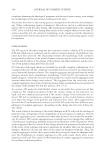
JOURNAL OF COSMETIC SCIENCE 290 Complex precipitation (CP) regions have been systematically studied in terms of phase diagrams in basic research on the interaction between oppositely charged polyelectrolytes and surfactants (10–12). The binding of surfactants to polymers was the main subject of these studies at surfactant concentrations lower than those used in the precipitation re- gion (13–15), and the structure of solubilized complexes in solution was also observed (16). In contrast, the complexes were solubilized due to the adsorption of surfactant mi- celles at higher surfactant concentrations in the CP region. The interactions between polymer chains and micelles increased with the increasing anionic charge of the surfac- tant (17) and with the decreasing concentration of the surfactant (18), and the shielding effect of salts was also revealed to affect the interaction (19,20). The solubilized com- plexes near the CP region were observed to grow in size probably because of the decreas- ing surfactant and salt concentrations in the solution (18). Shampoos contain anionic surfactants at high concentrations where cationic polymers are solubilized in micelles however, the change in the CP region by mixing amphoteric and nonionic surfactants and the morphology of the surfactant–polymer complexes deposited during the dilution process of the shampoo solution have not been investigated systematically. The present study aims to develop the relationship between the mixed surfactant compo- sition and the complex precipitation during the dilution process and to observe the mor- phology of the complexes precipitated by the dilution of a model shampoo solution, which contains typical cationic polymers used in shampoo, cationic cellulose and cationic dextran, and anionic surfactants with LES as the base component. In addition, the rela- tion between the morphology and rheological properties of complex aggregates on the hair surface was elucidated, and the effects of the structure of the polymer molecules and the composition of the surfactants on the morphology are discussed. MATERIALS AND METHODS MATERIALS Three kinds of cationic cellulose (CC) were obtained from Lion Chemical Co. (Leogarde® series). The degrees of cationic substitution per unit of glucose (α) were 0.38, 0.21, and 0.10, and the average molecular weights determined by light scattering were 5.3 × 10⁵, 5.1 × 10⁵, and 5.5 × l05, respectively. Cationic dextran (CD) was obtained by the reaction of dextran (Meito Sangyo Co., Ltd.), with a molecular weight of about 2 × l05, with gly- cidyltrimethylammonium salt in solution in the presence of NaOH as a catalyst in a ni- trogen stream, and the product was neutralized and dried. The values of the degrees of cationic substitution of the obtained CD were 0.30 and 0.38. Figure 1 shows their chem- ical structures. Anionic sodium poly(oxyethylene) lauryl ether sulfate (LES, with a mean oxyethylene chain length of 3 mol), and amphoteric lauryl amidopropyl betaine acetate (LPB) were purchased from Taiko Oil & Fat Company and Ipposha Oil Industries Co., Ltd, respec- tively. Nonionic poly(oxyethylene) stearyl ether (C18EO25) was supplied by Nihon Emul- sion Co., Ltd. All of these surfactants were used as supplied. The salt used to adjust the ionic strength of the solution was reagent grade sodium sulfate (Na2SO4) (Tokyo Kasei Ind. Co.). All experiments were performed with distilled water.

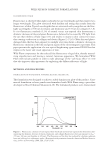
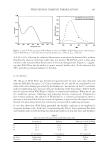
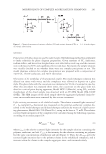
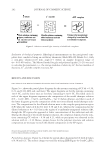
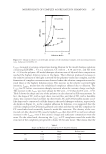
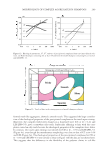
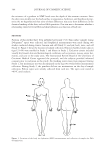
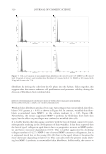
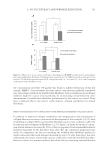
MORPHOLOGY OF COMPLEX AGGREGATES IN SHAMPOOS 291 METHODS Preparations of the phase diagrams and the model shampoo. The following method was performed to make solutions for phase diagram preparation. Given amounts of CC, surfactant, sodium sulfate, and water were weighed into a test tube with a screw cap, and the contents were well mixed at 60°C and equilibrated for several days. Afterward, the sample solution was visually checked to see whether there were any complex precipitates or not. The model shampoo solution for complex precipitation was prepared with a composition of 1wt% CC, 15wt% surfactant, and 3wt% electrolyte. Observations of the morphology of the precipitated complex. The model shampoo solution was diluted ten times with water, and the complexes were allowed to deposit on a glass slide. The glass slide with the coacervate was immersed in 50 ml of acetone for one day. After this procedure was repeated three times, the coacervate on the glass slide was dried in a critical point drying apparatus, Model HCP-2 (Hitachi), using CO2, and the morphology of the dried sample was observed with an FE-SEM Model JSM-6300F (JOEL). The SEM images of the dried sample show the aggregated polymer chains be- cause excess surfactants were removed by the acetone treatment. Light-scattering measurements on the solubilized complex. The relative scattered light intensity I (I = I90 (sample)/I 90 (benzene)) was measured on the polymer–surfactant complex dis- solved in the model shampoo and diluted shampoo solutions by means of a light-scatter- ing photometer, Model DLS-700 (Photal Co.), using an Ar laser at 75 mW. The relative scattered light intensities of the complexes were calculated using the following equation, according to an earlier paper (19): complex whole micelle I I I c = ' (1) where Iwhole is the relative scattered light intensity for the sample solution containing the polymer, surfactant, and salt. I′micelle is the intensity for the solution containing no polymer but the same concentrations of surfactant and salt (Figure 2). Then, the Δ Icomplex gives the scattered light intensity due to the polymer chains in the solubilized complexes, and it increases when the chains in the complex aggregate intra- and intermolecularly. Figure 1. Chemical structures of cationic cellulose (CC) and cationic dextran (CD). m = 2~3. α is the degree of cationic substitution.
Purchased for the exclusive use of nofirst nolast (unknown)
From: SCC Media Library & Resource Center (library.scconline.org)