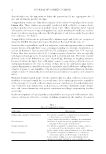
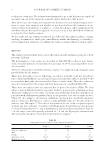
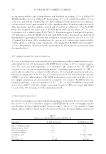
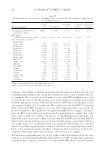
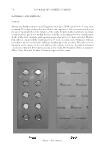
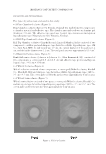
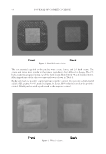
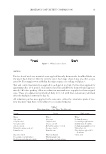
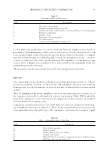
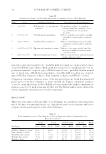
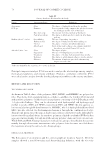
JOURNAL OF COSMETIC SCIENCE 2 clinical studies are also important to defi ne the instructions for use, appropriate site of use, and informative product labeling. Compatibility studies are clinical assessments of the safety of topical products on the human skin. These studies are generally conducted with occlusive or semiocclusive patches (patch tests) or in open models (open tests). These literature-based topical safety protocols consist of repeated applications under maximized conditions, and the absence of adverse reactions indicates that the product is safe for use under the specifi ed test conditions. See Table I. Compatibility evaluations are performed by a dermatologist and results are interpreted using the ICDRG (International Contact Dermatitis Research Group) scale (2). Sensitive skin is generally accepted as a subjective cutaneous hyperreactivity to environ- mental factors, although there is no consensus regarding its etiology, classifi cation, or criteria for diagnosis. Surveys across EU, the US, and Japan estimate that 50% of people believe they have sensitive skin (3,4). Consumer reports of sensitive skin are typically self-diagnosed and appear to be increasing both in women and men. The term sensitive skin has come to be defi ned as an onset of prickling, burning, or tingling sensation because of ultraviolet light, heat, cold, wind, cosmetics, soap, water, pollution, stress, or endogenous hormones (4). One or several of these factors in combination may lead to greater skin irritation caused by a decreased stimulation threshold of nerve endings (hence a higher response to any stimulus), or by decreased epidermal barrier function, therefore a higher index of skin permeation and an increased irritative response and sensation effect. From the dermatological point of view, sensitive skin is a skin condition of greater ir- ritability to external stimuli due to several causes. It is a skin hyper-reactive, regardless of the etiology (5). Several conditions may lead to or contribute to the underlying etiol- ogy of sensitive skin: dermatoses, such as rosacea, seborrheic dermatitis, atopic derma- titis, and contact dermatitis, and specifi c sensitizations (allergy) perpetuating the skin sensitivity. In the development of topical products intended for use in people with sensitive skin, various criteria are critical to consider, including minimizing the number of required Table I Types of Compatibility Studies Study name Methodology Primary and cumulative skin irritation Test product is applied to volunteers in an open-patch, semiocclusive, or occlusive fashion Contact length and timeline for readings are standardized Photoirritation Irradiation is applied at the test product application site, typically on the forearm or on the back Dermal sensitization Test product is applied to volunteers in a semiocclusive or occlusive patch (on the forearm or on the back) Study consists of three phases: Induction, rest, and challenge Photosensitization Test product is applied to volunteers in an occlusive or semiocclusive patch (on the forearm or on the back) Study consists of induction, rest, and challenge phases An ultraviolet light (A-band) is used to irradiate test area

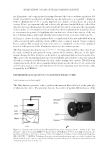
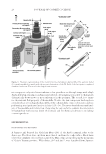
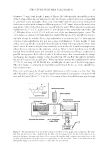
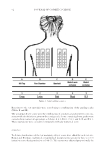
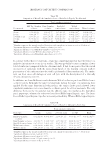
LIP BALM: SUMMARY OF THREE DERMATOLOGICAL STUDIES 3 ingredients and using minimal concentrations of ingredients known to be irritants. In addition, the use of ingredients known to be sensitizing or revulsive/hyperaemic/vasodilator agents should be avoided. Thought should be given to the use of ingredients which may play a role in the reconstruction of the epidermal barrier, and the use of fragrances and dyes should be carefully considered (6). Functionally, for the study of a product intended for sensitive skin, volunteers with a clinical diagnosis of sensitive skin are recruited. A method used for assessing the level of skin sensitivity is the “stinging test,” which is a straightforward, reliable way to identify the required study population (7). Data generated from three studies with the prototype lip balm are summarized herein. Study 1 was designed to demonstrate the absence of irritant (primary and cumulative dermal irritation) and allergic (sensitization) potential of the product. Study 2 was de- signed to demonstrate the absence of photoirritation or photosensitization of the product when exposed to UVA radiation through the phototest assay. The objective of Study 3 was to prove the suitability, under normal conditions of use, of the product for people with a diagnosis of sensitive skin. MATERIALS AND METHODS The three studies described herein were sponsored by GlaxoSmithKline Brazil Ltda. and conducted at the Medcin Instituto da Pele Ltda. clinical research site in São Paulo, Brazil. The Medcin Instituto da Pele has a Quality Management System that is in compliance with Good Clinical Practices (GCP) guidelines and Number Standard International Or- ganization for Standardization/International Electrotechnical Commission 17025/2005, which specifi es the general requirements for assessing the qualifi cation of assay and cali- bration laboratories. The quality control is performed in every step of the method described in the protocols to allow the investigation and the accurate assessment of the test product, ensuring the reliability of data analyzed according to standard procedures. The studies were conducted in accordance with GCP regulations, the Declaration of Helsinki, and the Rules on Research Involving Human Subjects (Resolution National Health Council 196/96 and others) per the National Health Council, Brazilian Ministry of Health. The list of ingredients in the study product includes purifi ed water, butyrospermum parkii butter, D-glucose-monohydrate, olus oil, elaeis guineensis oil, glycerin, oryza sativa cera, behenyl alcohol, oryza sativa bran oil, hydrogenated lecithin (hydrogenated phosphatidylcholine), capryloyl glycine, pentylene glycol, caprylyl glycol, hydroxyethyl cellulose, squalane, sodium hydroxide, dehydroxanthan gum, dl-alpha tocopherol, galac- toarabinan, acrylates/C10-30 alkyl acrylate crosspolymer, sodium carbomer, palmitamide monoethanolamine, trisodium ethylenediamine disuccinate, ascorbyl palmitate, ceramide 3, and phytosphingosine. In the observational studies 1 and 2, the product and controls were applied to the volun- teers’ backs under patches and dermatological assessments were performed at specifi ed times per protocols or when there was evidence of positivity (grade 2, 3 or 4 on the ICDRG scale) or an adverse event. The patches were semiocclusive and were comprised of 1 cm in diameter fi lter paper discs (100% cellulose) and Micropore® semipermeable adhesive tape.
Purchased for the exclusive use of nofirst nolast (unknown)
From: SCC Media Library & Resource Center (library.scconline.org)