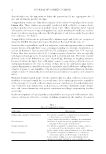
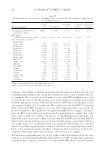
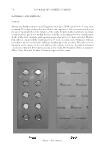
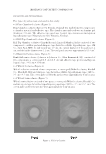
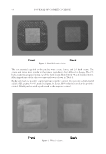
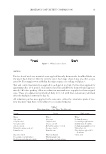
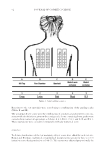
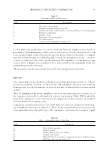
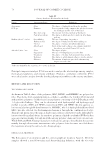
JOURNAL OF COSMETIC SCIENCE 4 The study product (undiluted), 0.02 mL, was applied under a patch to the volunteers backs along with the following controls under a separate patch each: • Saline solution • Mineral oil • No product on the fi lter paper disc • Adhesive tape (Micropore® with no fi lter paper disc). During the studies, volunteers were instructed not to move or wet the patches, not to start using new topical products during the assessment period, and not to be exposed to direct sunlight. Volunteers were requested to report the use of any medication or treatment dur- ing the studies. Dermatological assessments for studies 1 and 2 measuring dermal irritability and sensi- tization, photoirritation, and photosensitization, were performed using the scale recom- mended by the ICDRG (2). See Table II. If any evidence of positivity was observed (grade 2, 3, or 4), a new reading was performed after 30 min at rest, and if the evidence remained unchanged, the volunteer was referred to a dermatologist. In the case of positivity evidence confi rmed by the dermatologist, the applica- tion of the sample would be discontinued and a retest would be performed on the volunteer. For these situations, the adverse event was followed up as required until event resolution. If a retest was required, a semiocclusive patch containing the sample suspected of positiv- ity was applied on an application-naive area of the volunteer’s back or forearm. Sample reapplication would be performed on the same day on which the reaction was observed if the reaction was classifi ed as mild in accordance with the ICDRG reading scale. If the reaction was classifi ed as moderate or severe, the sample reapplication was performed in a minimum of 48 h. Readings were performed 24 h after application to determine positivity. Studies 1 and 2 were conducted in healthy volunteers of both genders between 18 and 60 year of age who were classifi ed with skin type as Phototype I–IV per the Fitzpatrick scale, a numerical classifi cation scale, which classifi es a person’s complexion and their tolerance to sunlight and ultraviolet radiation (8). Study 1 consisted of three phases of separate assessments for primary dermal irritation, cumulative dermal irritation, and dermal sensitization. In the primary dermal irritation phase, patches were removed after 2 d (48 h) and the initial assessment was conducted. A second assessment was made 2 d later (96 h) after a patch free interval. Assessments at 48 and 96 h were recorded. In parallel to the primary dermal irritation phase, patches were applied to a separate area of volunteers’ backs to assess cumulative dermal irritation. Volunteers returned for patch Table II ICDRG Scale ICDRG reading Result Grade No lesion Negative 0 Mild erythema Uncertain 1 Clear erythema Positive (+) 2 Erythema + edema + papules Positive (++) 3 Erythema + edema + papules + vesicles Positive (+++) 4

LIP BALM: SUMMARY OF THREE DERMATOLOGICAL STUDIES 5 assessment and reapplication for 3 weeks at 48 h intervals or 72 h intervals over a week- end (±1 d) for a total of eight applications. After the last assessment for cumulative dermal irritation, the sensitization (challenge) phase of the study was initiated. Volunteers completed a 2-week wash out period, and then returned to the clinic for the application of patches with test product and controls to skin areas on the back or forearm that had not been previously occluded. After 48 h, the patches were removed and initial sensitization assessments were recorded. Volunteers returned the following day for their 72-h assessment. Study 2 consisted of two phases of separate assessments for dermal photoirritation and dermal photosensitization. For the assessment of dermal photo irritation, patches with test product and controls were applied to volunteers’ backs after 2 h, the patches were removed and the patch area was irradiated by UVA-emitting equipment at the 10 J/cm2 dose. The volunteers returned after 24 h for a dermal assessment of the patch area. In parallel to the photo irritation phase of the study, the accumulated photosensitization effect was measured. On day 1, patches with test product and controls were applied to a different area of volunteers’ back. During a 12-d period, the procedure included the re- moval of the patches, the UVA irradiation to the area at 4 J/cm2 dose, and the reapplica- tion of the patches on days 2, 4, 5, 8, and 10. On day 12, the patches were removed and irradiation performed. After the last irradiation, volunteers were off product for 2 weeks and then returned for a challenge phase. Two sets of patches containing the same test product and controls were applied to volunteers’ back in areas that had not been previously occluded. Twenty-four hours later, volunteers re- turned for patch removal. One area received UVA irradiation at 4 J/cm2 dose, and the other area received no irradiation. Assessments were performed on both areas 48 h after irradiation. After the last assessment, volunteers had a new dermatological assessment performed to compare the baseline and end of study skin condition. Study 3 was a single-center, noncomparative, blind study, where the product was assessed at the site of use (on the lips) for 28 ± 2 d in volunteers with a clinical diagnosis of sensi- tive skin. Assessments performed by dermatologists were conducted at the beginning and end of the study. The study was conducted in healthy volunteers of both genders between 18 and 60 years of age who met criteria of sensitive facial skin as diagnosed using the stinging test proce- dure (7), as follows: Two different cotton swabs were soaked, one with 10% lactic acid and the other with saline solution, and applied in different areas of the volunteer’s alar groove. Five minutes after the application, the grade for sensation of burning was recorded, according to the following scale: 0 - None, 1 – Little, 2 – Moderate, and 3 – High/Severe. Volunteers re- porting a grade of ≥2 meet the criteria for Sensitive Facial Skin. After confi rmation of sensitive skin diagnosis, the tubes of test product, including in- structions for use (as many times as needed, at least twice daily) and the Diary of Use, were dispensed to the volunteers. Volunteers were provided instructions for the correct completion of the diary (date, number of times the test product was applied and whether there were any sensations of discomfort) and were required to bring the completed diary
Purchased for the exclusive use of nofirst nolast (unknown)
From: SCC Media Library & Resource Center (library.scconline.org)