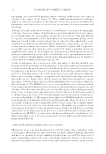
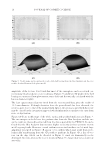
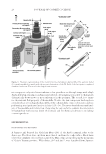
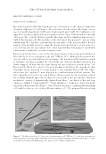
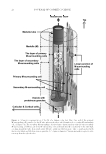
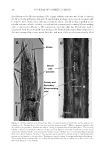
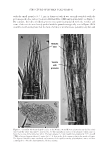
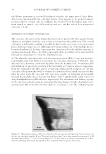
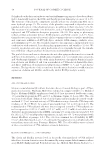
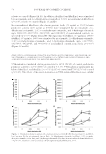
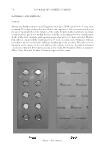
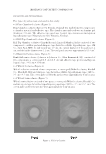
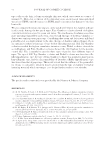
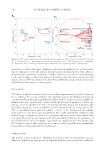
JOURNAL OF COSMETIC SCIENCE 30 the M was premature or not well developed thereby, the inner part of their fi bers, which was surrounded by the cuticular region, often appears to be packed homoge- neously with the cortical cells. Accordingly, the overall look of the human hairs varies from sample to sample, especially with age and race, and has indeed been interpreted variously (13,14). MATERIAL FLOW PROPERTY OF THE MEDULLA The cuticular cell region of the human hair functions to protect the fi ber against foreign substances and physical shocks such as heat action and mechanical friction. The cortical cell region is deformable, making it possible for hair to take an eccentric cross section and have a wavy line-shape (11,16). Although the biological function of the medulla has not been well understood, the hair component was characterized by the tubular structure as explained previously. Hence, we further investigated the possibility of the material fl ow through the Asian hairs to obtain the following results. (i) The relatively large molecules such as bromocresol green (BG), Congo red, and phe- nolphthalein were very diffi cult to penetrate the cuticular cell region cf. Figure 1. The dye molecules, however, entered the hair fi ber from the medulla ends. For instance, BG traveled about 30 μm (about one-third of the hair width) in 30 min at ambient temperature from the terminal of the fi ber (jm67) as typically demonstrated in Figure 10. (ii) The cuticular cell region worked well as a barrier for intrusion of even small ions into the hair fi ber. In other word, H+ ions and OH- ions were capable of migrating preferentially through the medulla tube as displayed in Figure 11A–C and D and E, using Congo red and phenolphthalein as pH-indicators, respectively. The aforementioned barrier property of the cuticular cell region may be rationalized by the presence of CuP—the large homo- geneous layer which encircles the fi ber shaft (1) see Figure 1. (iii) The conduit property Figure 10. The slow penetration of BG in to a hair fi ber through the cuticular layer and the fast intrusion of the dye into the fi ber from the M end. The white hair fi bers (jm67) were fi rst warmed in a mixture of 8 M urea and 4 wt.% SDS at 55°C for 2 h, then dipped in 0.5% BG solution at ambient temperature for 30 min. After brief washing with water, the hair fi bers were examined with the upright microscope.

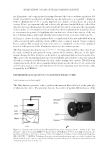
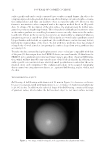
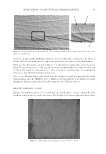
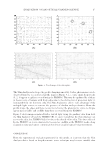
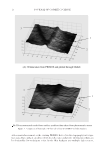
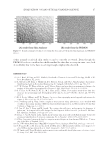
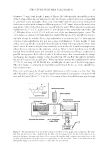
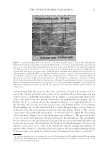
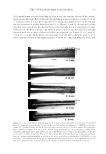
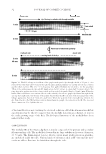
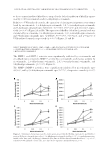
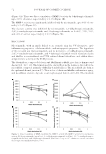
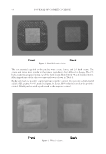
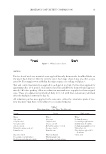
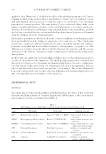
STRUCTURE OF HUMAN SCALP HAIR−II 31 of the medulla was assisted electrically. In other words, the aqueous solution of the cationic anthocyanine dye easily fl owed through the medulla in a direction from a positive electrode to a minus electrode when more than DC 500 voltage was applied between the tip and the root positions of a white hair fi ber (jm67) see Figures 3 and 12. As expected, (i) the dye-fl ow was completely blocked and hence the medulla was not stained at all when either one of the fi ber ends was capped with gelatin, and (ii) the fl ow was directionally reversed with the polarity of the electrodes interchanged see Figure 12 (1–3 min vs. 3 min 40 s–5 min). Furthermore, the hair shaft itself (80 μm in diameter and 20–25% water content) showed a very high resistance of about 109 ohms/cm when the both ends Figure 11. (A–C) The H+ ion-fl ow through t he M of the black hair fi ber (jf8) at 25°C bar 100 μm. The fi ber was thoroughly stained with Congo red, then its left end was acidifi ed by 0.5 M HCl see the pro- cedure “H+ ion-fl ow through the M: The use of Congo red as an indicator” for more details. The time-lapse after acidifi cation is printed in each picture. The M changed gradually in color from gray to reddish black toward the right hand side, as indicated by the arrow. The M tube was isotropic to the fl ow of H+ ions. (D and E) The OH- ion-fl ow through the M at 25°C bar 100 μm. The white hair fi bers (jm67) were stained by an aqueous solution of phenolphthalein, and then one of the two ends was alkalifi ed by 1 M NaOH cf. the procedure “OH--fl ow through the M: the use of phenolphthalein as an indicator” of the experimental section. The color change (to red) occurred only in the M, taking less than 10 min to extend to the other end.
Purchased for the exclusive use of nofirst nolast (unknown)
From: SCC Media Library & Resource Center (library.scconline.org)