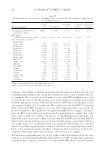
JOURNAL OF COSMETIC SCIENCE 36 in a test sample is represented by a value of an RLU ratio that is greater than 2 in com- parison with an RLU for negative control without ATP. The calculated RLU ratio is based on the RLU of an incubated test sample versus the RLU of a non-incubated test sample (negative control). By using the ATP bioluminescence test kits from Charles River Labo- ratories, Inc. (Charleston, SC), an ATP bioluminescence assay is able to detect the presence or absence of microorganisms in either a nonsterile raw ingredient or a personal care fi nished product formulation that is susceptible to microbial contamination by using an incubation period of 24 h for most applications (1,3,4), 30 h for bacteria and fungi screening (5), or 48 h (6) However, the application of this technology may be limited for most test samples if they are contaminated with a slow-growing microorganism such as mold. The reason for this limitation in detection is that only low levels of ATP are released by growing mold after 24–30 h of incubation which may lead to a false-negative test result. This limitation becomes more signifi cant if a higher nonmicrobial ATP level is also detected to be present in a test sample from a nonmicrobial source. Thus, the increased RLU background signal of the test sample will minimize the RLU ratio, especially when the RLU signal of the microbial ATP level is low from the growth of mold unlike that from bacteria. Based on information from Machlis, it led us to study if the detection of mold microor- ganisms can be enhanced by adding L-glutamic acid to R-TAT broth (7). The effi cacy of L-glutamic acid in shortening the lag phase of the fungal growth cycle was also studied and discussed by Griffi n (8). The application of this information in a rapid microbial detection system has yet been studied or published. In the light of the observed limita- tion in using an ATP bioluminescence assay for detecting the presence or absence of mi- crobial contamination in a test sample, our goal is to increase the detectable level of ATP that is produced by a slow-growing microorganisms, such as mold, by creating a new enrichment broth that can promote the growth of these microorganisms. This new en- richment broth should not affect the growth of bacteria and/or yeasts that may also be part of the microbial bioburden of a test sample. In addition, the new enrichment broth should have either no or very low levels of nonmicrobial ATP present. Before an ATP bioluminescence assay is routinely implemented to screen for the presence or absence of microbial contamination in either a nonsterile raw ingredient or product formulation, the test method needs to be validated by inoculating 1% test suspensions in enrichment broth to demonstrate recovery. This validation testing involves the use of indicator test microorganisms. In our case, we used Staphylococcus aureus ATCC 6538 for demonstrating the recovery of Gram-positive cocci, Bacillus subtilis ATCC 6633 for dem- onstrating the recovery of spore-forming Gram-positive bacilli, Escherichia coli ATCC 8739 for demonstrating the recovery of Gram-negative bacilli, Candida albicans ATCC 10231 for demonstrating the recovery of yeasts, and Aspergillus brasiliensis ATCC 16404 for demonstrating the recovery of mold in a 1% test sample suspension of an ATP biolu- minescence assay by using R-TATP broth as the enrichment broth. MATERIALS AND METHODS TEST MICROORGANISMS The following test microorganisms were used in this study: EZ-colony-forming unit (CFU) cultures of S. aureus ATCC 6538 (Catalog number 0485C), E. coli ATCC 8739

DETECTING MOLDS IN PERSONAL CARE PRODUCTS 37 (Catalog number 0483C), B. subtilis ATCC 6633 (Catalog number 0486C), and C. albicans ATCC 10231 (Catalog number 0443C) had been purchased from Microbiologic, Inc. (St Cloud, MN) Spore suspensions of A. brasiliensis ATCC 16404 and Aspergillus oryzae ATCC 10124 were prepared in-house by harvesting spores from potato dextrose agar slants. ENRICHMENT BROTH COMPONENTS AND CHEMICALS The following microbial growth media and enzymatic digest of protein were purchased from Becton Dickinson Company (Franklin Lakes, NJ): Difco™ TAT Broth Base, potato dextrose broth (PDB) (Difco), and Letheen broth (Difco), and Bacto™ Neopeptone. Sucrose, sodium thiosulfate, polysorbate 20, and sodium thiosulfate 1 N solution were purchased from Thermo Fisher Scientifi c. L-glutamic acid and antifoam (Sigman A 5757) were purchased from Sigma-Aldrich Products. ATP BIOLUMINESCENCE REAGENTS AND GLASS BEADS Sterile 0.5 millimeter (mm) glass beads (Catalog number 11079105 Biospec Products Inc., Bartlesville, OK) and Celsis® AKuScreen test kit (Celsis Catalog number AS1310 containin the Celsis LuminAMP and LuminEX reagents) were purchased from Charles River Laboratories, Inc. TEST MICROORGANISM PREPARATION For each of the EZ-CFU product microorganism, one pellet of a lyophilized bacteria and C. albicans culture was aseptically transferred to a separate 1.0 milliliter (ml) aliquot of pre-warmed 10 millimolar (mM) phosphate buffer pH 7.2 solution at 35.0°C ± 2.0°C. Each culture aliquot was then immediately incubated at 35.0°C ± 2.0°C for 30 min for com- plete hydration in which there is a 103 CFU/ml suspension. An in-house method was used to prepare spore suspensions of A. brasiliensis ATCC 16404 and A. oryzae ATCC 10124 in which each of the Aspergillus cultures were grown on several on potato dextrose agar slants until sporulation had occurred at a temperature of 20.0°–25.0°C for a minimum of 7 d. After sporulation, the spores for each culture were harvested from the potato dextrose agar slants by using sterile 0.85% saline solution (0.85% NaCl) with 0.05% polysorbate 80 to a level of 107 CFU/ml that was then diluted to a spore suspension level of 103 CFU/ml by using sterile 0.85% saline solution with 0.05% polysorbate 80. PREPARATION OF ENRICHMENT R-TAT BROTH AND R-TATP BROTH R-TAT broth was prepared in two parts. Part A starts by warming up 2 liters (L) of deion- ized water to 50.0°C. After warming to 50.0°C, 50.0 g of PDB is added to the deionized water and stirred until dissolved, and then heated to boiling for 1 min to completely dis- solve the dehydrated PDB powder. Part B starts by warming 7.6 L of deionized water to a temperature of 50.0°C. After reaching a temperature of 50.0°C, the following ingredients
Purchased for the exclusive use of nofirst nolast (unknown)
From: SCC Media Library & Resource Center (library.scconline.org)