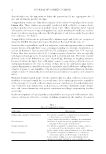
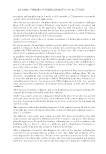
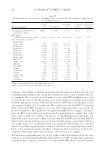
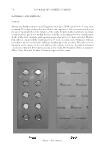
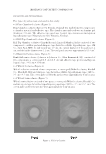
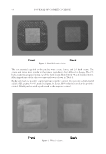
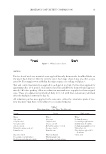
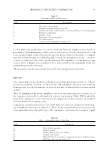
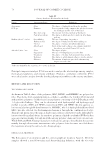
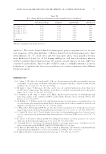
JOURNAL OF COSMETIC SCIENCE 38 are separately added to the deionized water and dissolved by stirring: 250.0 g of Difco™ TAT Broth Base, 100.0 g of Bacto™ Neopeptone, 25.0 g of sodium thiosulfate, 50.0 g of sucrose, and 400 ml of polysorbate 20. After adding all of the ingredients, the mixture is stirred for at least 30 min or until all of the ingredients have been thoroughly dissolved. After dissolving, part B is added to part A and stirred for an additional 5 min. R-TATP broth was prepared the same way as R-TAT broth with the exception of 7.35 g of L-glutamic acid is added to part B (see Table I). After mixing part A and part B together, 100 ml aliquots of the R-TATP broth and/or R-TAT broth is dispensed into individual widemouthed square plastic bottles and sterilized at a temperature of 121.0°C ± 1.0°C at 15 pounds for 40 min. After sterilization, the caps on each container are tightened after cooling down to ambient room temperature. The fi nal pH of R-TATP broth should be 6.5–6.6. Preparation of Letheen broth is performed by following the instructions from the manufacturer. TEST SAMPLE PREPARATION AND INCUBATION A 1.0 g or ml aliquot of a raw ingredient or personal care product formulation is asepti- cally transferred to 100 ml aliquots of R-TATP broth to make a 1% test sample suspen- sion. For each test microorganism, a 10 microliter (μl) aliquot of the 103 CFU/ml suspension (in test microorganism preparation) containing approximately 10 CFU is aseptically inoculated to a container with/without a 1% test sample suspension and incu- bated at a temperature of 30.0°C ± 1.0°C with agitation of 150 revolutions per minute (RPM). One uninoculated aliquot of R-TATP broth and one uninoculated aliquot of a 1% test sample suspension are also incubated as negative test controls. R-TAT broth con- taining L-glutamic acid concentrations of 1.0, 5, 10, 20, and 30 mM were prepared. A. brasiliensis ATCC 16404 inoculums containing 20 and 30 CFUs were aseptically added to each of the 100 ml aliquots of the enrichment broth. ATP BIOLUMINESCENCE ASSAY Incubated test samples are removed from the incubator shaker after 18 or 24 h of incuba- tion at 30.0°C ± 1.0°C. For those aliquots of R-TATP broth or 1% test sample suspen- sion that have been inoculated with A. brasiliensis and C. albicans, 15.0 g of sterile 0.5 mm glass beads are added to break up the mycelium and release the intracellular constituents Table I Ingredients in R-TAT Broth and R-TATP Broth Ingredient R-TAT broth (g/L) R-TATP broth (g/L) Difco™ TAT broth base 25.0 25.0 Potato dextrose broth 5.0 5.0 Difco™ neopeptone 10.0 10.0 Sodium thiosulfate 2.5 2.5 L-glutamic acid — 735 mg (5 mM) Sucrose 5.0 5.0 Polysorbate 20 4.0 ml 40.0 ml

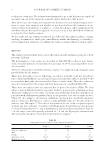
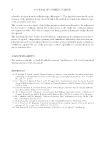
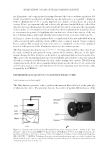
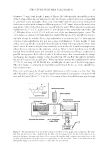
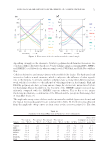
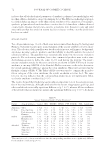
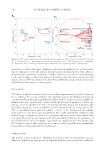
DETECTING MOLDS IN PERSONAL CARE PRODUCTS 39 including ATP. An additional 100 μl aliquot of antifoam is also added to these aliquots to prevent foaming during shaking. Each of these aliquots is then shaken side to side in a linear shaker for 30 min at an RPM of 200–300. After linear shaking, 2 × 50 μl aliquots are aseptically removed and transfer to two separate 12 × 55 mm cuvettes. For those en- richment broth containers that had been inoculated with bacteria only, 2 × 50 μl aliquots are aseptically removed and transferred to two separate 12 × 55 mm cuvettes. DETECTION OF ATP An ATP bioluminescence assay was conducted by using the Celsis AKuScreen test kit (Catalog number AS1310 Charles River Laboratories, Inc.) to determine the RLU from the ATP in each of the incubated test sample suspensions. To perform the assay, a rack of 12 × 55 mm cuvettes is prepared. In four for the 12 × 55 mm cuvettes, four separate 50 μl aliquots of R-TATP broth is pipetted separately into each cuvette. Two of the 50 μl aliquots of R-TATP broth will serve as a negative control. In the two remaining 50 μl aliquots of R-TATP broth cuvettes, 10 μl of ATP is aseptically added to each cuvette as a positive test control. After incubation, aseptically transfer 2 × 50 μl aliquots of the incu- bated 1% test sample suspension in enrichment broth into two separate 12 × 55 mm cuvettes. For the non-incubated 1% test sample suspension in enrichment broth, 2 × 50 μl aliquots is transfer into two separate 12 × 55 mm cuvettes. All of the cuvettes are placed into a Celsis Advance luminometer and the unit is started to process the cuvettes. The bioluminescence reagents are added to each cuvette by the luminometer and the amount of RLU detected in each cuvette is recorded by the luminometer. For each two cuvettes of a test sample, an average of the RLU is calculated and then the RLU ratio was calculated based on the RLU from an inoculated enrichment broth sample versus an uninoculated enrichment broth sample. Positive ATP bioluminescence test result for each of the test microorganisms is reported with an RLU ratio of greater than two. RESULTS AND INTERPRETATION NONMICROBIAL ATP CONTENT OF R-TATP BROTH One of the key factors for using an enrichment broth in an ATP bioluminescence assay is that it must have a low nonmicrobial ATP background in order not to provide false- positive test reactions for the presence of microbial contamination in a test sample. In comparing the RLU values for the presence of nonmicrobial ATP in uninoculated 100 ml aliquots of R-TAT broth, R-TATP broth, and Letheen broth, R-TATP broth had the low- est mean RLU value of 78 with a standard deviation value of 15 (Figure 1). The mean RLU values and standard deviations for nonmicrobial ATP in R-TAT broth were found to be 91 ± 14. The mean RLU values and standard deviations for nonmicrobial ATP in Letheen broth were found to be 105 ± 28. These RLU test results confi rm that R-TATP broth is an appropriate enrichment broth that can be used in an ATP bioluminescence assay for detecting the presence or absence of microbial contamination in nonsterile raw ingredients and personal care product formulations because of the fact that it contains a low level of nonmicrobial ATP.
Purchased for the exclusive use of nofirst nolast (unknown)
From: SCC Media Library & Resource Center (library.scconline.org)