JOURNAL OF COSMETIC SCIENCE 56 wrinkle reduction benefi ts of a cosmetic niacinamide/peptide/retinyl propionate product regimen vs. a prescription 0.02% tretinoin product regimen, Br. J. Dermatol., 162, 647–654 (2010). (44) A. Kawada, N. Konishi, N. Oiso, S. Kawara, and A. Date, Evaluation of anti-wrinkle effects of a novel cosmetic containing niacinamide, J. Dermatol., 35, 637–642 (2008). (45) A. Pinkas-Sarafova, N. G. Markova, and M. Simon, Dynamic changes in nicotinamide pyridine dinu- cleotide content in normal human epidermal keratinocytes and their effect on retinoic acid biosynthesis, Biochem. Biophys. Res. Commun., 336, 554–564 (2005). (46) M. R. Namazi, Nicotinamide-containing sunscreens for use in Australasian countries and cancer- provoking conditions, Med. Hypotheses, 60, 544–545 (2003). (47) V-M. Kahari, Y. Q. Chen, M. M. Bashir, J. Rosenbloom, and J. Uitto, Tumor necrosis factor-alpha down-regulates elastin gene expression. Evidence for the role of AP-1 in the suppression of promoter activity, J. Biol. Chem., 267, 26134–26141 (1992). (48) P. P. Kung, J. L. Berk, D. C. Rishikof, J. A. Foster, D. E. Humphries, D. A. Ricupero, R. H. Goldstein, NF-kappaB induced by IL-1beta inhibits elastin transcription and myofi broblast phenotype, Am. J. Physiol. Cell Physiol., 283, C58–C65 (2002).

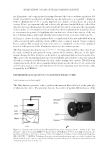
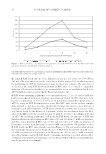
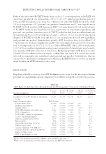
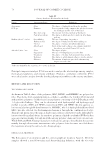
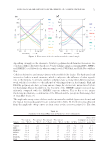
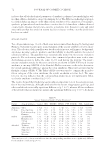
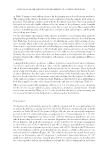
J. Cosmet. Sci., 69, 57–66 ( January/February 2018) 57 Comparing the Infl uence of Five Patch Types on the Result of a 12-Day Cumulative Irritancy Patch Test XI WANG, XIAOHONG SHU, LIN ZOU, ZHAOXIA LI, and LI LI, Department of Dermatology, West China Hospital, Sichuan University, Chengdu, China (X.W., L.L.) and Cosmetics Evaluation Center, West China Hospital, Sichuan University, Chengdu, China (X.S., L.Z., Z.L.). Accepted for publication November 2, 2017. Synopsis A 12-day cumulative irritancy patch test is available for predicting skin irritation potential. This study is important to determine the ideal patch type to be used in the irritancy patch test. This study was conducted to determine the cumulative skin irritation potential of fi ve different patch types using predictive patch test techniques. Five types of patches were tested in a 12 day repeated insult test. The patch types were Hill Top Chamber occlusive, Finn Chamber occlusive, Band-Aid semiocclusive, Webril® semiocclusive, and Webril® occlusive. The test materials applied to the patches were cream, lotion, 2% bath cream, and controls of 1% sodium lauryl sulfate (1% SLS), respectively. A dermatologist performed the grading. The test results revealed that with cream, the cumulative scores of Hill Top Chamber occlusive, Finn Chamber occlusive, Band-Aid semiocclusive, Webril® semiocclusive, and Webril® occlusive were 22, 27, 16, 9, and 21, respectively with lotion, the cumulative scores were 192, 200, 192, 200, and 70, respectively with 2% bath cream, the cumulative scores were 523, 306, 523, 306, and 506, respectively with 1% sodium dodecyl sulfate solution, the cumulative scores were 792, 801, 753, 526, and 841, respectively. Comparison of the fi ve different patch types revealed that Webril®semiocclusive had the lowest cumulative irritation scores and incidence of adverse reactions. Comparison of the three test materials revealed that cream was the mildest material with the lowest cumulative irritation scores. IN TRODUCTION The cumulative irritation patch test is the industry standard and is used to determine and compare the dermal irritation potential and safety of test materials (1,2). Patch testing involves a patch test unit and patch test materials. The type of patch test system is one of the factors that infl u ences patch test results (3,4). At present, various patch types are available for clinical tests. However, to our knowledge, comparison of the cumul ative irritation po- tential of fi ve patch types using a 12-d cumulative irritation study has not been reported in the literature. This study was performed to determine the cumulative irritation potential of three test materials and to compare the irritation potential of different patch types. Address all correspondence to Li Li at lily2058@126.com.
Purchased for the exclusive use of nofirst nolast (unknown)
From: SCC Media Library & Resource Center (library.scconline.org)