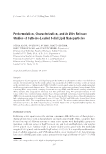
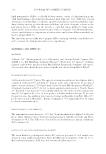
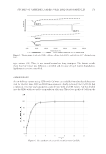
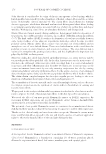
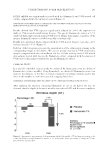
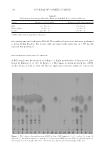
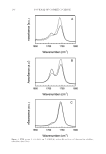
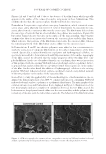
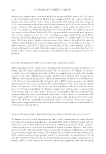
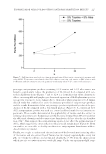
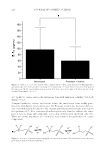
JOURNAL OF COSMETIC SCIENCE 196 Figure 2. FTIR spectra (1,60 0–1,800 cm-1) of BSF (A), cricket (B) and locust (C) fats raw fats solid line, refi ned fats dotted line).

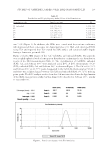
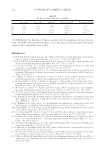
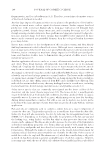
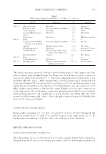
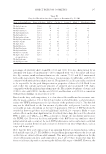
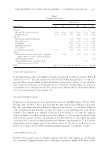
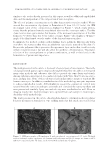
INSECT FATS FOR COSMETICS 197 percentage of relatively short chain FA’s (C12 and C14). It is also characterized by an extremely low degree of unsaturation (~21%) compared with ~61% for cricket and locust fats. By contrast, mink and macadamia nut oils contain 75.2% and 83% unsaturated fatty acids, respectively. All insect fats have a low percentage of palmitoleic acid (C16:1) compared with mink and macadamia nut oil. The palmitoleic acid is generally considered to be responsible for the good skin penetration properties of these oils (14). Both locust and cricket fats contain signifi cant amounts of saturated and unsaturated C18 chains, comparable with the mink and macadamia nut oils. The relative abundance of stearic acid (C18:0), oleic acid (C18:1), linoleic acid (C18:2), and linolenic acid (C18:3) is consistent with previous fi ndings on insect fats (14,24). Based on the fatty acid composition, it is clear that cricket and locust fats are more suit- able for use in cosmetics. Oils or fats rich in linoleic acid and linolenic acid are known to reduce the TEWL and regenerate the lipid barrier of the epidermis (24,25). The skin feel may not be ideal based on the low amount of palmitoleic acid present, but this is not necessarily an issue, depending on the type of application. The use of BSF fat should be avoided in leave-on products as it its high lauric acid (C12:0) content is likely to cause adverse effects on the skin’s lipid structure. It is likely that a large fraction of the observed FFAs is lauric acid, which—as a FFA—is known to disrupt the skin barrier and increase the TEWL (26). However, the fatty acid profi le of the BSF fat is very similar to that of palm kernel oil and coconut oil. As such, BSF fat derivatives such as surfactants could fi nd similar uses as palm kernel oil and coconut oil derivatives in rinse-off products, such as soaps and shower gels. Note that the fatty acid composition of an organism depends on various factors, such as feed and life stage (24,27). The BSF fat is obtained from pre-pupae whereas the locust and cricket fats are extracted from adult animals. This may provide an explanation for the observed discrepancy in fatty acid composition. Liu et al. (27) have shown that large dif- ferences in fatty acid profi le occur among the different life stages of the BSF. However, the Table IV Fatty Acid Profi le in three Insect Species as Determined by GC–MS Fatty acid methyl ester Fatty acid-chain BSF % Cricket % Locust % Mink % Macadamia nut % Methyl decanoate C10:0 1 / / / / Methyl laurate C12:0 58 1 1 1 1 Methyl myristate C14:0 8 1 2 4 1 Methyl myristoleate C14:1 / 1 1 1 / Methyl palmitate C16:0 10 26 24 16 8 Methyl palmitoleate C16:1 2 1 1 15 22 Methyl heptadecanoate C17:0 1 / 1 1 / Methyl stearate C18:0 1 11 12 3 3 Methyl oleate C18:1 10 24 30 41 59 Methyl linoleate C18:2 9 35 17 17 3 Methyl linolenate C18:3 1 2 14 1 / Methyl arachidate C20:0 1 1 1 1 2 Methyl eicosanoate C20:1 / / / / 2 Methyl 5,8,11,14,17 eicosapentanoate C20:5 / 1 1 / / Methyl behenate C22:0 / / / 1 / Methyl lignocerate C24:0 / / / 1 /
Purchased for the exclusive use of nofirst nolast (unknown)
From: SCC Media Library & Resource Center (library.scconline.org)