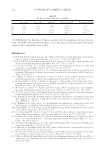
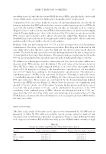
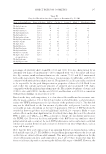
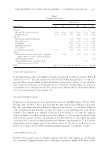
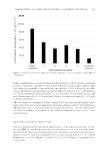
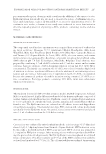
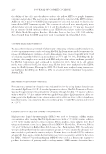
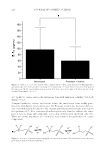
JOURNAL OF COSMETIC SCIENCE 198 amount of lauric acid is high from the larvae stadium up to the adult fl y, suggesting that the high C12-content is probably species specifi c. SPREADABILITY AND VISCOSITY OF THE INSECT FATS The appreciation of a cosmetic product not only depends on its functionality, for instance hydrating or anti-wrinkle properties, but also on the skin feel. Major factors in skin feel are the lubricity, spreadability, and perceived greasiness (14).The latter is related to the rate at which an oil or fat penetrates the skin. The fatty acid composition plays an impor- tant role in skin feel. As a general trend it is expected, for natural plant and animal de- rived oils, that the higher the degree of unsaturation, the lower the viscosity, and the higher the penetration rate will be. This will result in a less greasy skin feel. This is, however, just a trend line, as notable exceptions exist. Often these deviations from the trend line are related to the presence of an unsaponifi able fraction. Mink oil, for example, is such a deviant oil with a good skin penetration despite its relatively high viscosity. The viscosity and spreadability of the insect fats were determined and compared with those of mink and macadamia nut oil (Tables V and VI). The viscosity of several other oils were measured as a control. A comparison of the values obtained in this work with those reported by Dietz (22) using a falling ball viscometer results in a correlation plot with r2—value of 0.889. This suggests that the relative order of the viscosities of the oils is correct. Both mink and macadamia nut oil, which have comparable fatty acid profi les, are charac- terized by a high viscosity and a low spreadability according to the classifi cation by Dietz (22). The value of 8.08 mm for macadamia nut oil is consistent with that reported by Akhtar et al. (28) The low spreadability is also the reason for adding dimethicone (with a viscosity of 350 cSt) to the formulation, as this will increase the spreadability of the hand cream. It is clear that the three insect fats have a lower spreadability and viscosity. This lack of any correlation with what would be expected according to the trend line is prob- ably due to the presence of a considerable amount of unsaponifi ables, as also seen in the TLC results. This demonstrates the diffi culty of making generalizations in the presence of compounds other than triglycerides. Table V Viscosity of Insect Fats and Selected Reference Oils Fat Viscosity (cP) Viscosity (cP) (18) Isopropyl myristate 13.3 4.6 Cyclopentasiloxane 13.3 4.6 Locust oil 20 / Cricket oil 23.3 / Octyl stearate 23.3 12.2 C12-C15 alkyl benzoate 25 11.8 Decyl oleate 25 13.5 C8/C10 Triglyceride 36.7 / BSF oil 41.7 / Octyldodecanol 60 44.7 Macadamia nut oil 83.3 / Mink oil 98.3 / Dimethicone 396.7 90

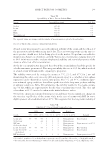
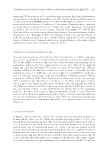
INSECT FATS FOR COSMETICS 199 PROOF OF PRINCIPLE: A HAND CREAM PREPARATION A hand cream was prepared to assess the physical stability of the cream and the effi cacy of the preservative system when using insect fats. These are two important criteria any cos- metic product should meet before being placed on the market. No perfume was added to monitor any changes in odor more carefully. Various fat concentrations ranging from 1% to 10% (w/w) were tested to evaluate the physical stability and sensorial properties of the cream as a function of fat concentration. As the fat concentration was increased the color of the cream darkened and the specifi c fat odor became more pronounced. This was particularly the case at 10% fat, which resulted in a hand cream with undesirable organoleptic properties. The stability was tested by storing the creams at 5°C, 21°C, and 45°C for 2 mo and monitoring the color, scent, viscosity, pH, and general aspect (i.e., whether or not a phase separation can be observed) at various time points. The 5°C and 45°C conditions repre- sent enhanced aging conditions that allow a prediction of the long-term product stability at ambient conditions. Table VII summarizes the stability results for the cream contain- ing 5% fat, which are representative for all other concentrations tested. The odor and color values at 21°C can also be taken as the initial reference values. Overall the emulsions remained homogeneous and there was no signifi cant change in the viscosity or pH value of the cream. Only in the case of creams with BSF fat was a slight syneresis observed after 4 wk at 45°C. This suggests that the long-term stability of Table VI Spreadability of Insect Fats on Gelatin Films Species Spreadability (mm) Std. Dev. Cricket 6.07 (8) 0.2 Locust 5.86 (8) 0.2 BSF 6.44 (4) 0.6 Mink 8.76 (4) 0.9 Macadamia nut 8.08 (4) 0.4 The reported values are averages and the number of measurements is given between brackets. Table VII Stability of 5% Insect Hand Creams after 2 mo Cream Odor Color Aspect Remark 5°C 21°C 45°C 5°C 21°C 45°C 5°C, 21°C, 45°C Locust raw ++ ++ ++ 7 7 8 Homogeneous Discoloration Cricket raw -- - ++ 2 3 3 Homogeneous BSF raw - - + 3 2 3 Homogeneous Slight syneresis at 45°C Cricket decolored -- - - 1 2 2 Homogeneous Locust decolored ++ ++ ++ 6 7 7 Homogeneous Discoloration Locust decolored/ deodorized -- -- -- 6 7 7 Homogeneous Discoloration BSF deodorized + - + 3 2 3 Homogeneous Slight syneresis at 45°C Color scale: 1 = white to 10 = dark yellow (or green in case of locust fat). Odor scale: -- Negligible smell - Odor noticeable, but not off-putting + Odor noticeable and slightly off-putting ++ Clear, off-putting odor.
Purchased for the exclusive use of nofirst nolast (unknown)
From: SCC Media Library & Resource Center (library.scconline.org)