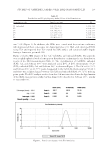
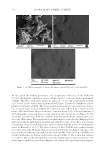
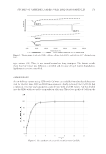
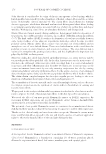
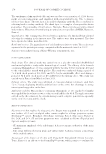
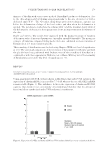
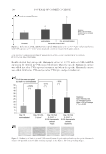
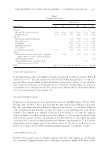
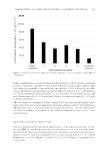
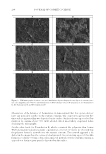
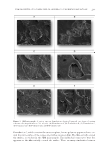
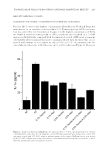
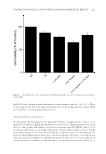
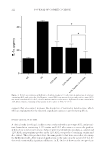
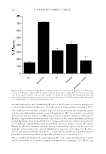
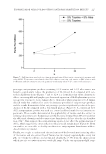
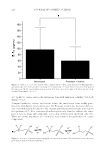
JOURNAL OF COSMETIC SCIENCE 220 when tissue cultures were co-treated with both taurine and aloe extract at 0.1%, there is an even further reduction in IL-1α levels compared with the control and tissue treated with only taurine or aloe extract. Treatment with taurine and aloe extract at 0.1% concentrations resulted in a statistically signifi cant (p 0.05) reduction in IL-1α levels compared with treatment with just taurine or aloe extract at either 0.1% or 0.5% concentrations. Although EpiDerm tissue treated with 0.1% taurine and 0.1% aloe extract released lower levels of IL-1α compared with tissue treated with only tau- rine or aloe extract at 0.1% or 0.5% concentrations, the combined, boosted effects were not observed in EpiDerm tissue co-treated with 0.5% taurine and 0.5% aloe ex- tract. We found that at higher concentrations of aloe extract, the pH of the aqueous solution and formulations decreased signifi cantly because of the high percentage of malic and citric acid ( 18%). Thus, the concentration of aloe extract must be careful se- lected with regards to the pH. From this study, we were able to conclude that the 0.1% taurine and 0.1% aloe extract concentration would be the ideal concentration for our test products. BOOSTED ANTI-IRRITATING EFFECTS OF TAURINE AND ALOE EXTRACT BLEND After experiments were conducted to determine the optimal ratio and concentration of taurine and aloe extract, which was found to be a 1:1 ratio at 0.1% (Figure 2), we pro- ceeded to assess the irritancy potential of AlCl3 in a simple aqueous solution by measur- ing the levels of pro-infl ammatory cytokine, IL-1α, after treatment with or without the addition of the anti-irritating actives. AlCl3 treatment alone resulted in a 3.4-fold increase in IL-1α levels compared with the untreated control. MTT assay to measure cell viability after treatment was used to normalize IL-1α data (Figure 3). In tissue that are treated with 0.2% taurine or 0.2% aloe extract, we observed drastic reductions in IL-1α levels, up to a 50% reduction (Figure 4). However, when tissue cultures were co-treated with 0.1% taurine and 0.1% aloe extract, there is an even further reduction in IL-1α levels compared with the tissue treated with only taurine or aloe extract. Co-treatment with 0.1% taurine and 0.1% aloe extract resulted in a statistically signifi cant (p 0.05) reduc- tion in IL-1α levels compared with treatment with 0.2% taurine or 0.2% aloe extract. These results suggest that the blend of taurine and aloe extract leads to a signifi cant boost in their anti-irritating effects. TAURINE AND ALOE EXTRACT REDUCE IRRITATION POTENTIAL OF PROTOTYPE ALCL3 PRODUCT To further test the boosted anti-irritating effect of the taurine and aloe extract blend, prototype antiperspirant formulations containing AlCl3 with or without taurine and aloe extract was assessed for irritation potential. A commonly used 12% AlCl3 over-the- counter product was selected as a benchmark for irritation testing. Figures 5 and 6 illus- trate the results of IL-1α and IL-8 release assays after treatment of EpiDerm tissue with our prototype product and controls. Topical application of the benchmark product, 12% AlCl3 solution and prototype product results in signifi cantly increased levels of IL-1α and IL-8. However, when tissues are treated with prototype product containing 0.1% taurine and 0.1% aloe extract, we observed statistically signifi cant reductions in IL-1α

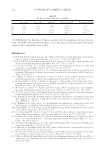
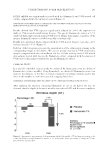
TAURINE/ALOE VERA FOR BOOSTING ANTI-SKIN IRRITATION EFFECTS 221 and IL-8 levels compared with formulations without taurine and aloe (p 0.05). These results suggest that the boosted anti-irritating effect of the taurine and aloe extract blend are kept intact even in dermatological vehicle. CELLULAR TAURINE ACCUMULATION To investigate the mechanism of the interaction between taurine and aloe extract, accu- mulation of taurine in EpiDerm keratinocytes was assessed. EpiDerm tissue was lysed after set time points and taurine concentration was measured by HPLC. After 2 h of treatment with solutions containing only taurine or both taurine and aloe extract, similar intracellular taurine levels were observed (Figure 7). However, after 6 h of treatment, dif- ferential intracellular taurine levels were observed and after 24 h there is a twofold, sta- tistically signifi cant difference in intracellular taurine levels (p 0.05). Our results reveal increased taurine accumulation in keratinocytes co-treated with aloe extract. Therefore, it Figure 3. Cell via bility data were obtained from the MTT assay and reported as % of the untreated negative control (NC).
Purchased for the exclusive use of nofirst nolast (unknown)
From: SCC Media Library & Resource Center (library.scconline.org)