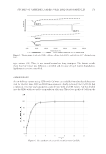
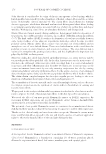
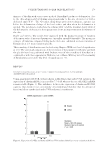
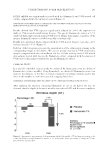
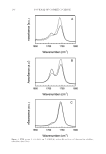
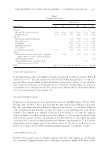
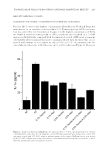
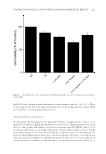
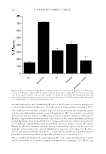
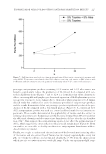
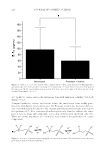
JOURNAL OF COSMETIC SCIENCE 222 suggests that aloe extract increases the absorption of taurine by keratinocytes, which offers an explanation for the observed, signifi cant increase in anti-irritating effects. HUMAN CLINICAL STUDY DATA A clinical study involving 12 subjects was conducted with a prototype AlCl3 antiperspi- rant formulation containing 0.1% taurine and 0.1% aloe extract to assess the predict- ability of our in vitro results in vivo. Subjects were treated with two products, a commercial 12% AlCl3 antiperspirant product and a 12% AlCl3 test product containing taurine and aloe extract. These two products were the same products that were assessed in vitro using the EpiDerm model. After repeated application on the same area for a period of 4 d, we observed a statistically signifi cant difference in IL-1α levels between the two products Figure 4. IL-1α con centrations in EpiDerm cell culture media (n = 3) after topical application of solutions containing AlCl3 and actives for 1 h. Negative control (NC) was untreated tissue and positive control (PC) was tissue treated with 14% AlCl3 solution without taurine or aloe extract. EpiDerm tissue was treated with 14% AlCl3 solution containing either taurine or aloe extract or both. *p 0.05.

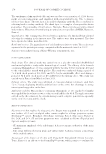
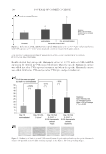
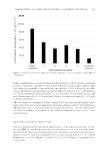
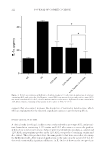
TAURINE/ALOE VERA FOR BOOSTING ANTI-SKIN IRRITATION EFFECTS 223 (p 0.05) (Figure 8). Topical application of the benchmark product resulted in higher IL-1α levels compared with our prototype formulation containing taurine and aloe ex- tract. Our results are analogous to those demonstrated in the in vitro EpiDerm model (Figure 5) and reveal the applicability of the anti-irritating effects of taurine and aloe extract in vivo. CONCLUSIONS AlCl3 is a strong skin irritant and is known to cause the formation of ROS and induce lipid peroxidation (6,7). The low pH of AlCl3 containing formulations leads to the release of pro-infl ammatory cytokines, chemokines and causes tissue damage. However, the low pH is necessary to maintain the effi cacy of AlCl3. Higher pH environments result in the formation of larger, ineffective aluminum species (19). Therefore, the addition of Figure 5. IL-1α conce ntrations in EpiDerm cell culture media (n = 3) after topical application of AlCl3 products for 1 h. Negative control (NC) was untreated tissue and positive control (PC) was tissue treated with 12% AlCl3 solution without taurine or aloe extract. A commercial 12% AlCl3 antiperspirant product was used as a benchmark product to assess irritancy potential. Prototype 12% AlCl3 product with and without 0.1% taurine and 0.1% aloe extract actives were tested.
Purchased for the exclusive use of nofirst nolast (unknown)
From: SCC Media Library & Resource Center (library.scconline.org)