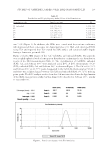
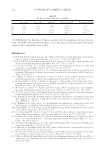
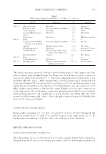
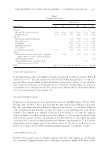
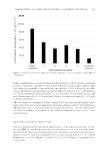
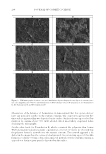
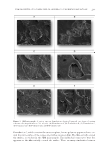
JOURNAL OF COSMETIC SCIENCE 172 Caf-SLNs best fi t the Korsmeyer-Peppas equation with the anomalous transport mecha- nism. The SLNs can be used potentially as a topical carrier for Caf with improved loading capacity and a controlled release profi le. REFERENCES (1) N. Belhaj, E. Arab-Tehrany, E. Loing, and C. Bezivin, Skin delivery of hydrophilic molecules from lipo- somes and polysaccharide-coated liposomes, Int. J. Cosmet. Sci., 39(4), 435–441 (2017). (2) P. Desai, R. R. Patlolla, an d M. Singh, Interaction of nanoparticles and cell-penetrating peptides with skin for transdermal drug delivery, Mol. Membr. Biol., 27(7), 247–259 (2010). (3) C. H. Liu, C. T. Wu, and J. Y. Fang, Characterization and formulation optimization of solid lipid nanoparticles in vitamin K1. Drug Dev. Ind. Pharm., 36, 751–761(2010). (4) H. Ma, M. Yu, M. Lei, F. Tan , and N. Li, A novel topical targeting system of caffeine microemulsion for inhibiting UVB-induced skin tumor: characterization, optimization, and evaluation. AAPS PharmSciTech, 16(4), 905–913 (2015). (5) C. Puglia, A. Offerta, G. G. Tirendi, M. S. Tarico, S. Curreri, F. Bonina, and R. E. Perrotta, Design of solid lipid nanoparticles for caffeine topical administration. Drug Deliv., 23(1), 36–40 (2016). (6) H. Hamishehkar, J. Shokri, S . Fallahi, A. Jahangiri, S. Ghanbarzadeh, and M. Kouhsoltani, Histo- pathological evaluation of caffeine-loaded solid lipid nanoparticles in effi cient treatment of cellulite. Drug Dev. Ind. Pharm., 41, 1640–1646 (2015). (7) M. Chorilli, G. Calixto, T. C. Rimério, and M. V. Scarpa, Caffeine encapsulated in small unilamellar liposomes: Characerization and in vitro release profi le. J. Disper. Sci. Technol., 34, 1465–1470 (2013). (8) X. Liu, X. Liang, X. Fang, an d W. Zhang, Preparation and evaluation of novel octylmethoxycinnamate- loaded solid lipid nanoparticles. Int. J. Cosmet. Sci., 37, 446–453 (2015). (9) D. Kazemi, M. Salouti, K. Ros tamizadeh, and A. Zabihian, Development of gentamicin-loaded solid lipid nanoparticles: evaluation of drug release kinetic and antibacterial activity against Staphylococcus aureus. IJPRI, 7, 1–6 (2014). (10) E. Korkmaz, E. H. Gokce, and O. Ozer, Development and evaluation of coenzyme Q10 loaded solid lipid nanoparticle hydrogel for enhanced dermal delivery. Acta Pharm., 63, 517–529 (2013). (11) S. Lankalapalli, V. S. V. K. Tenneti, and K. M. Nimmali, Design and development of vancomycin lipo- somes. Indian J. Pharm. Educ., 49, 208–215 (2015). (12) S. A. Abouelmagd, B. Sun, A. C. Chang, Y. J. Ku, and Y. Yeo, Release kinetics study of poorly water- soluble drugs from nanoparticles: Are we doing it right? Mol. Pharm., 12, 997–1003 (2015). (13) B. Balzus, M. Colombo, F. F. Sahle, G. Zoubari, S. Staufenbiel, and R. Bodmeier, Comparison of differ- ent in vitro release methods used to investigate nanocarriers intended for dermal application. Int. J. Pharm., 513, 247–254 (2016). (14) The United States Pharmacopeia 27 ed. The National Formulary: NF22, United States Pharmacopeial Convention, Rockville, p. 2622–2625. (2003). (15) P. Khazaeli, A. Pardakhty, a nd H. Shoorabi, Caffeine-loaded niosomes: characterization and in vitro release studies. Drug Deliv., 14, 447–452 (2007). (16) M. Uner and E. F. Karaman, P reliminary studies on solid lipid microparticles of loratadine for the treat- ment of allergic reactions via the nasal route. Trop. J. Pharm. Res., 12, 287–293 (2013). (17) C. H. Loo, M. Basri, R. Isma il, H-L. Lau, B. A. Tejo, H. A. Kanthimathi Hassan, and Y. M. Choo, Effect of compositions in nanostructured lipid carriers (NLC) on skin hydration and occlusion. Int. J. Nanomedicine, 8(1), 13–22 (2013). Table III The Release Kinetics Results of Caf-SLNs Zero order First order Higuchi Hixson–Crowell Korsmeyer–Peppas R 0.71 0.64 0.85 0.8584 0.97 R2 0.49 0.41 0.73 0.7369 0.95 m 5.95 0.05 27.38 0.3113 0.51 (n) k 5.95 0.11 27.38 1.414 58.76

STUDIES OF CAFFEINE-LOADED SOLID LIPID NANOPARTICLES 173 (18) H. Hamishehkar, S. Same, K. Adibkia, K. Zarza, J. Shokri, M. Taghaee, and M. Kouhsoltani, A com- parative histological study on the skin occlusion performance of a cream made of solid lipid nanoparti- cles and vaseline. Res. Pharm. Sci., 10(5), 378–387 (2015). (19) M. Schneider, F. Stracke, S. Hansen, and U. F. Schaefer, Nanoparticles and their interactions with the dermal barrier. Dermatoendocrinol., 1(4), 197–206 (2009). (20) C. H. Liu, C. T. Wu, and J. Y. Fang, Characterization and formulation optimization of solid lipid nanoparticles in vitamin K1 delivery. Drug Dev. Ind. Pharm., 36(7), 751–61 (2010). (21) R. M. Khalil, A. A. El-Bary, M. A. Kassem, M. M. Ghorab, and M. Basha, Infl uence of formulation parameters on the physicochemical properties of meloxicam-loaded solid lipid nanoparticles. Egypt Pharmaceut. J., 12, 63–72 (2013). (22) R. Shah, D. Eldridge, E. Pal ombo, and I. Harding, Optimisation and stability assessment of solid lipid nanoparticles using particle size and zeta potential. Int. J. Phys. Sci., 25, 59–75 (2014). (23) F. G. Yener and M. Uner, Imp ortance of solid lipid nanoparticles (SLN) in various administration routes and future perspectives. Int. J. Nanomedicine, 2, 289–300 (2007). (24) P. Costa and J. M. S. Lobo, Modeling and comparison of dissolution profi les. Eur. J. Pharm. Sci., 13, 123–133 (2001).
Purchased for the exclusive use of nofirst nolast (unknown)
From: SCC Media Library & Resource Center (library.scconline.org)